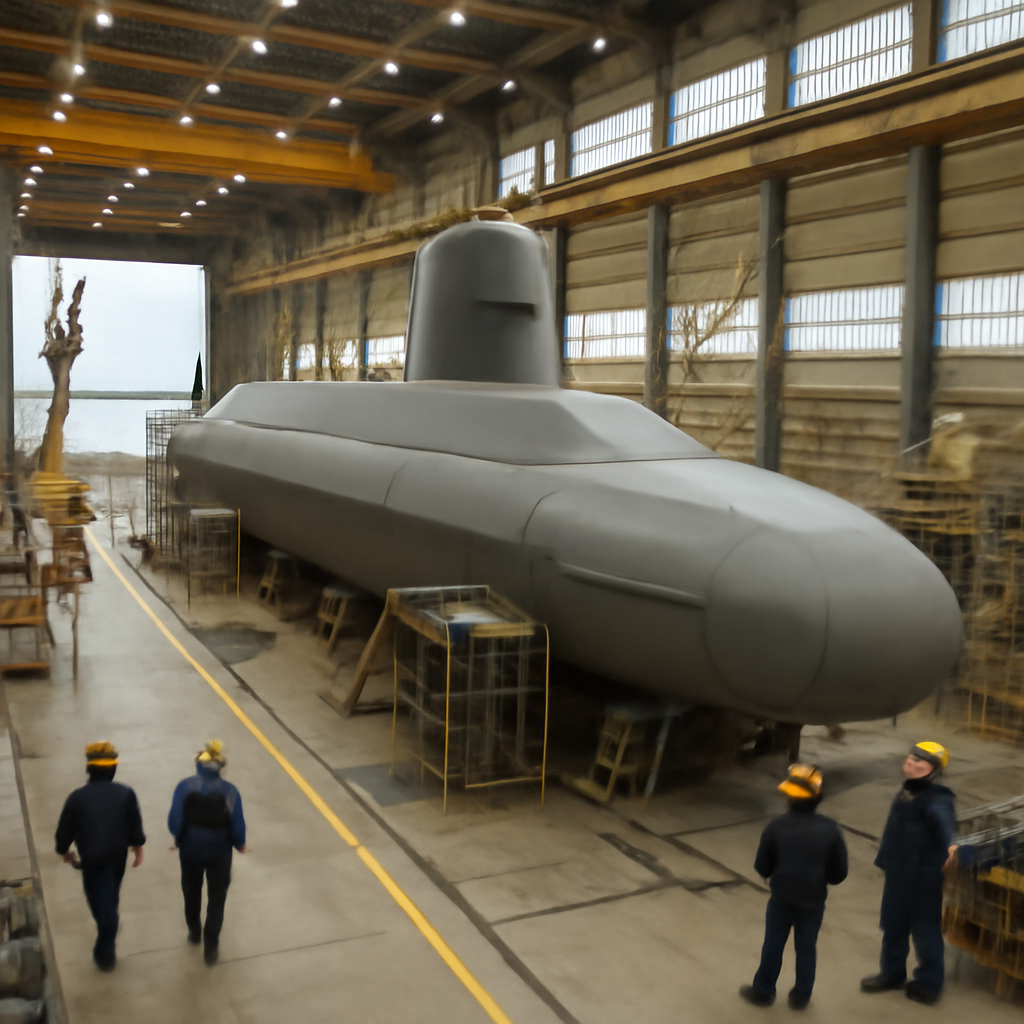
The MİLDEN will have a surfaced displacement of approximately 2,700 tons, a length of 80+ m, a beam of 7+ m, and a draught of 6.8 m, according to ASFAT.
What ASFAT announced in late August 2026
In late August 2026 the Turkish state-owned defence contractor ASFAT Inc. (Military Factory and Shipyard Management Inc) published official specifications for the MİLDEN (National Submarine) platform. ASFAT assigned a surfaced displacement of approximately 2,700 tons, an overall length greater than 80 meters, a beam exceeding 7 meters and a draught of 6.8 meters. The company withheld figures for submerged displacement and diving depth.
Armament details released include eight 533 mm torpedo tubes capable of launching heavyweight torpedoes and anti-ship cruise missiles, plus an undisclosed number of MİDLAS vertical-launch system (VLS) cells. ASFAT said the design will employ HY-100 class steel, a fuel-cell air-independent propulsion (AIP) system, lithium-ion (Li-ion) batteries and a range of indigenously developed subsystems. The public statement also noted plans for six boats.
How the MİLDEN maps on to Pakistan Navy planning
Türkiye is already a major supplier and partner to the Pakistan Navy (PN). The source records a USD $350 million 2016 contract to upgrade three Khalid-class (Agosta 90B) submarines and a $1.5 billion-plus agreement to co-produce four Babur-class (MILGEM) corvettes and design Jinnah-class frigates. The Jinnah-class program, the source notes, is expected to trigger further multi-billion-dollar construction programs.
Pakistan’s near- and medium-term submarine plans, according to the material, prioritise shallow-water attack submarines (SWATS). The PN’s current leadership has also signalled interest in an eventual original-submarine programme, but that project is projected to follow completion of the Hangor-class (S26P/Type 039B) procurement. The MİLDEN is explicitly presented in the source as one candidate that Naval Headquarters (NHQ) could consider for the next generation of boats.

Audit-ready is a season. It shouldn't be.
Evidence in spreadsheets, controls drifting between audits, frameworks multiplying on flat headcount. Nubivance runs continuous compliance on Rapid7 Cyber GRC - SOC 2, HIPAA, ISO 27001, PCI, CMMC.
End the scrambleTechnologies, indigenization, and the road to larger ambitions
ASFAT frames the MİLDEN as the product of decades of incremental industrial growth and an effort to indigenize critical inputs. The design uses HY-100 class steel and pairs a fuel-cell AIP stack with Li-ion batteries—an architecture that the company says supports endurance and quieter operation relative to older conventional systems. The MİLDEN is also tied to Türkiye’s broader ambitions: the source says the platform will launch into more ambitious goals, notably a nuclear-powered submarine initiative under the name NUKDEN.
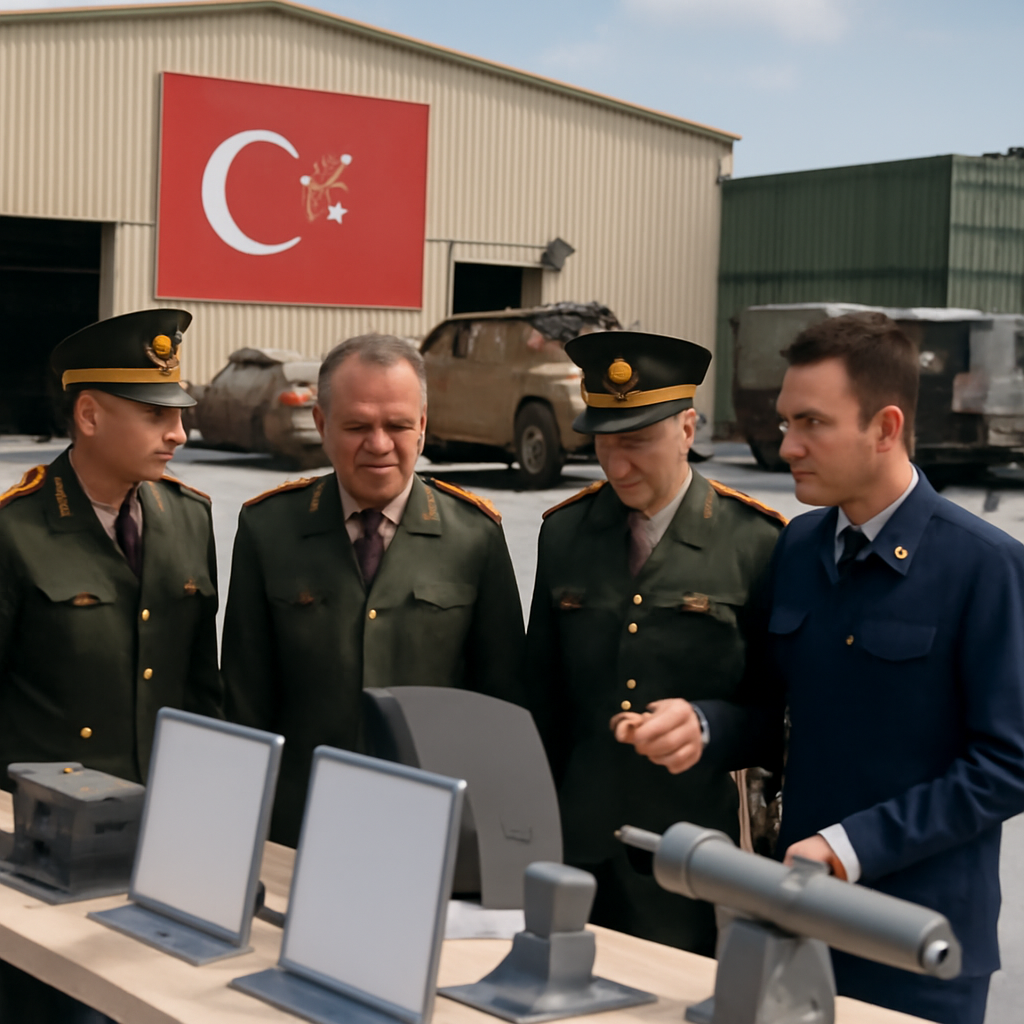
Turkey’s export and co-production pitches have not been limited to ASFAT; STM (Savunma Teknolojileri Mühendislik ve Ticaret A.Ş.) has promoted the STM 500 SWATS and the TS1700 attack submarine to the PN. At the November 2022 launch of the PNS Khaibar corvette, then-ASFAT general manager Esad Akgün expressed the company’s “desire and enthusiasm” to bring the Jinnah-class frigate and MİLDEN projects to Pakistan, the source records.
“Hybrid” deterrence and the MİLDEN’s strategic envelope
Retired PN Vice Adm. Ahmed Saeed and Rear Adm. Saleem Akhtar, the source reports, have described a Pakistan preference for a “hybrid” solution—deploying strategic capabilities from a conventional platform while maintaining an ultimate goal of acquiring a nuclear-powered boat. The MİLDEN, by virtue of its size, VLS capability and endurance-focused design, is presented as a platform that could support that intermediate concept.
Specifically, the presence of MİDLAS VLS cells creates a technical pathway for land-attack cruise missiles (LACM) and, in theory, submarine-launched ballistic missiles (SLBM), the reporting notes. Combined with AIP and Li-ion energy storage, the vessel is portrayed as providing endurance and quieter operation desirable for both patrol and deterrence missions in littoral and regional waters.
What this means for Pakistan naval planners, Turkish industry, and regional procurement leaders
- Pakistan naval planners (NHQ, PN): They will evaluate whether MİLDEN’s dimensions, AIP/Li-ion architecture and VLS offer a practical bridge between SWATS requirements and any future strategic or “hybrid” deterrent ambitions, while also weighing program timing against completion of the Hangor-class buy.
- Turkish defence builders (ASFAT, STM): ASFAT and STM will measure commercial viability in Pakistan by coupling the MİLDEN’s announced technical package with existing bilateral contracts (Khalid upgrades, MILGEM/Jinnah work) and by leveraging declared indigenization to reduce export control friction.
- Regional procurement leaders and navies: Navies seeking endurance-focused conventional submarines or a notional path toward strategic capabilities from non-nuclear platforms will likely monitor MİLDEN’s operational claims—especially its VLS integration and AIP/Li-ion combination—for lessons on capability-versus-cost trade-offs.
The MİLDEN announcement is both a technical specification and a diplomatic signal: ASFAT has provided a platform that aligns with articulated PN preferences and with Türkiye’s export momentum. Whether Pakistan elects a licensed co-production, a direct purchase, or simply continued interest remains a decision for NHQ in the coming years; the source emphasises that an original-submarine programme would follow Hangor-class deliveries and that the MİLDEN could serve as an interim or formative step toward a longer-term nuclear submarine ambition under NUKDEN.