“The advancements are real, they’re genuine, they’re anchored in actual R&D investment and a growing industrial base,” Bilal Khan said.
Turkish Aerospace Industries, Roketsan, and Aselsan: real products, growing base
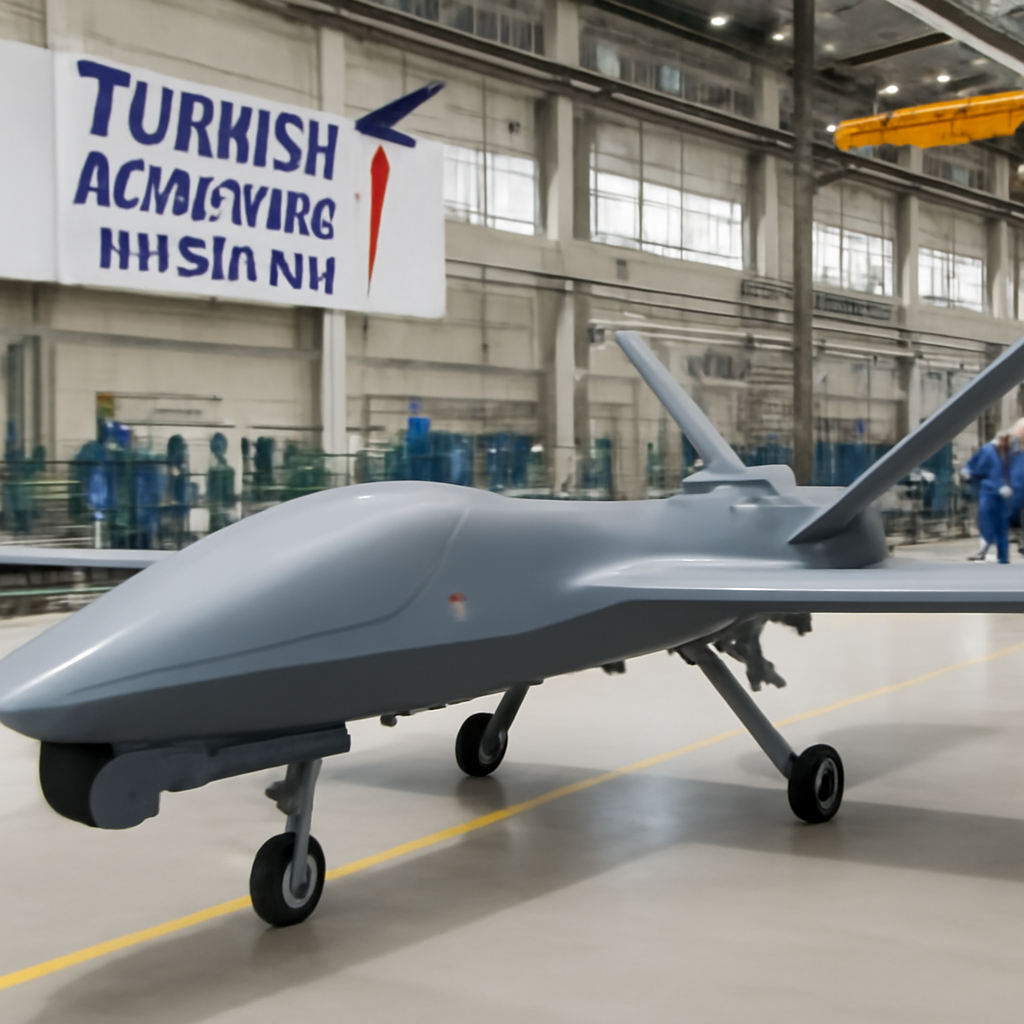
Turkey, described in the reporting as a newly industrialized member of the OECD and the G20, is producing visible defence hardware. Products from Turkish Aerospace Industries (TAI), Roketsan, and Aselsan appear each year at exhibitions such as IDEF and SAHA and, the podcast hosts argued, are not vaporware. The portfolio cited spans fighter programs, attack helicopters, ballistic missiles, surface-to-air systems, and armed drones—and those programs are backed by "actual R&D investment and a growing industrial base," in Bilal Khan’s words.
Unit costs and the scale problem
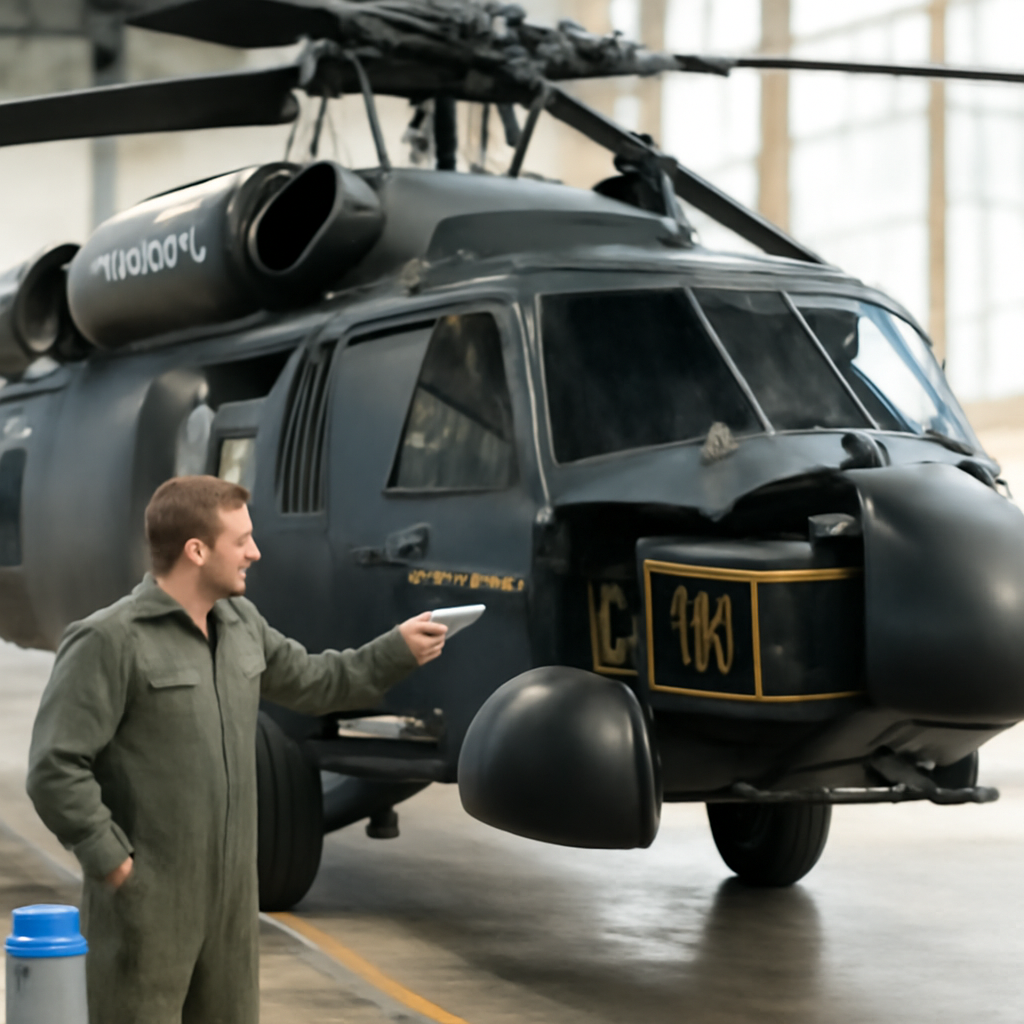
The central constraint is economic, not technical. The T129 ATAK attack helicopter deal that Pakistan signed before the United States blocked it is presented as a case study: a reported contract of around $1.5 billion for roughly 30 helicopters—offsets and MRO included—produced a unit price “not too far off from the AH-1Z Viper,” roughly $50 million per airframe, Bilal Khan noted. The point the hosts made is that Turkey’s hardware is neither as expensive as Western European equivalents nor as cost-competitive as Chinese alternatives. That gap, they argued, stems from volume: only two countries—according to the discussion—sustain end-to-end defence industries at genuine scale, the United States and China. France and Russia were described as “half examples.”

Audit-ready is a season. It shouldn't be.
Evidence in spreadsheets, controls drifting between audits, frameworks multiplying on flat headcount. Nubivance runs continuous compliance on Rapid7 Cyber GRC - SOC 2, HIPAA, ISO 27001, PCI, CMMC.
End the scrambleTurkey’s institutional model versus Pakistan’s approach
The conversation highlighted institutional design as a multiplier for technical capacity. Turkish Aerospace and TAI Engine Industries (TEI) were established as separate state-owned enterprises under the Turkish Armed Forces Foundation, a pension fund, and run by long-tenured industry professionals. Bilal Khan emphasized that managers “stayed for 10, 15, or 20 years,” building institutional memory and commercial relationships with firms such as Airbus and Boeing, and that these entities are managed with some business discipline because the pension fund requires returns.
By contrast, the JF-17 Thunder program is described as having offloaded most design and development work to China’s Chengdu Aerospace Corporation (CAC). Aseem said, “Pakistan says it’s going to make the Azm, but you have to look at what Pakistan has done for this. Not much. The JF-17 was primarily developed by China. You don’t have any qualification or design infrastructure inside Pakistan. It’s all in Chengdu.” Bilal Khan added the blunt economic assessment: “We basically paid Chengdu to go improve its R&D, which it could then reapply into things like the J-10 and J-20. That investment money did not flow back to Pakistan. And now we’re seeing the cost of it.”
Western supply-chain access: a hidden but decisive constraint
Access to basic industrial inputs from Western markets was raised as a decisive operational constraint. The panel pointed to items such as specialized carbon-fibre sheeting, CNC machining centres, supersonic and hypersonic wind-tunnel systems, and specialised sensors, which are produced by a small number of Western or Western-co-invested firms and move quickly inside those supply chains. Aseem said, “If you want to do the same thing in Pakistan, that material is not even on an export control list somewhere. But as soon as someone sees the word Pakistan, they’re like, no, we’re not going to do business with you.” Bilal Khan added that even with engineering talent, countries outside these supply chains are “always going to be delayed by a number of years compared to your rivals or your allies.”
What this means for Turkey, Pakistan, and a potential consortium of partners
- Turkey: Needs export partners and production volume to amortize R&D across multiple concurrent programs. The hosts argued Turkish firms are already pursuing offices and relationships abroad—in Pakistan, Malaysia, Indonesia, and Saudi Arabia—to seed those markets and supply chains.
- Pakistan: Faces a choice between continuing the buyer-producer pattern with limited industrial return or restructuring procurement and industrial governance to produce long-tenured commercial entities capable of deep program participation. The TFX pitch to Pakistan—where Turkish Aerospace would seek PAC to produce parts rather than simply sell finished airframes—was presented as a structural alternative to the J-35/finished-systems model.
- Consortium partners (Saudi Arabia, Indonesia, Malaysia, Bangladesh, Egypt and others): Pooling market demand and sharing production could, the hosts argued, generate the volume needed to make Turkish programs economically viable and to “start taking collective ownership of critical technologies and supply chains.”
The speakers closed on a succinct framing: the challenge is political economy more than engineering. “Whether Islamabad and Ankara can turn a decade of warm rhetoric into the kind of binding, long-term industrial partnership that the economics require – with shared production, shared IP, and shared risk – is the real test,” Bilal Khan said. That question—whether rhetoric becomes durable industrial architecture—will determine if Turkey’s capabilities can be sustained and whether Pakistan can secure meaningful industrial return from its defence purchases.