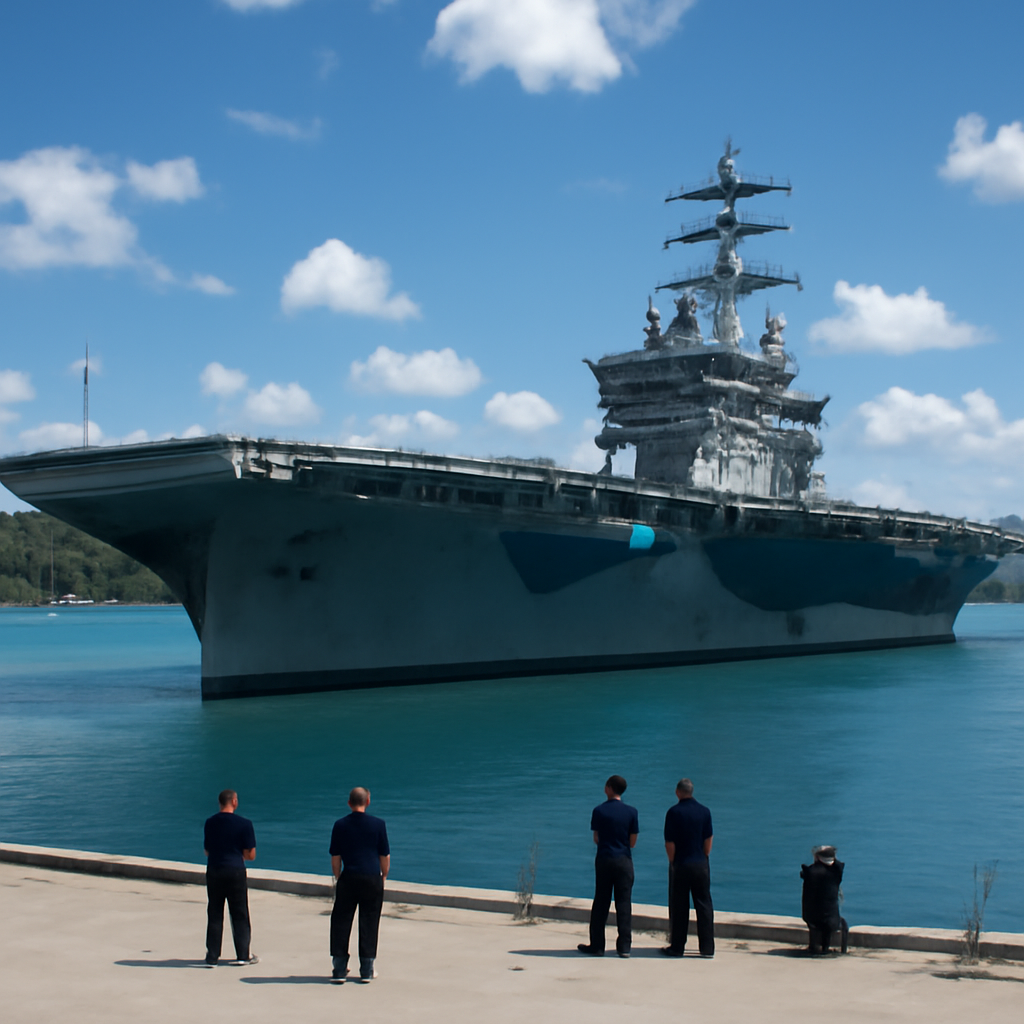
"With the sales agreement we signed with Romania, Türkiye exports a warship to a NATO and EU member country for the first time in its history," President Recep Tayyip Erdoğan said at the handover on 20 June at the Istanbul Naval Shipyard Command.
The handover at Istanbul Naval Shipyard Command
The ceremony on 20 June saw President Recep Tayyip Erdoğan and Romanian President Nicușor Dan oversee the formal transfer of the Hisar‑class offshore patrol vessel CAm. Roman to the Romanian Naval Forces, an event also attended by Defence Minister Yaşar Güler. The delivery was reported by TurDef and Daily Sabah and was paired with the commissioning of TCG Koçhisar (P‑1221), a sister Hisar‑class ship entering Turkish Navy service at the same event. Erdoğan noted both ships were built at the same yard and by the same engineering teams.
The vessel: TCG Akhisar becomes Rear‑Admiral August Roman (261)
Formerly the Turkish Navy’s TCG Akhisar, the ship enters Romanian service as Rear‑Admiral August Roman and will carry pennant number 261. Built by the state shipbuilder ASFAT at the Istanbul Naval Shipyard Command, the hull is described in reporting as an offshore patrol vessel or a light corvette. Images reported by TurDef appeared to show MKE’s 76mm DENİZHAN naval gun on the Romanian vessel, and Romanian authorities are expected to adjust the baseline configuration to their own requirements—including plans reported by Naval News to integrate the Naval Strike Missile (NSM) to add an anti‑ship capability beyond the platform’s delivered fit.

The cyber insurance questionnaire just landed. Now what?
SOC 2, HIPAA, insurance renewals - someone has to own security strategy. Nubivance provides fractional CISO leadership without the full-time salary.
Get a security leadTurkish systems, domestic content, and propulsion
Erdoğan said the ship’s combat management system, its search and fire‑control radars, the sonar and the close‑in weapon systems were developed by Turkish companies, specifically naming Aselsan, Roketsan, Havelsan, the state firm MKE and research council TÜBİTAK. Quwa’s reporting and related commentary note that the combat management system aboard the ship is from Havelsan; radars, electro‑optics and the Gökdeniz CIWS are from Aselsan; the sonar and fire‑control are Turkish; and the 76mm main gun comes from MKE. Erdoğan put domestic content across Türkiye’s naval programmes at more than 80 per cent. Propulsion remains an area where Turkish warships "still lean on foreign engines," the reporting observes—underscoring that Türkiye supplies the platform and core systems while buyers may select their preferred strike weapons.
Romania’s procurement history and the Black Sea context
The delivery follows a prolonged search by Bucharest to renew its fleet. Naval Group had won Romania’s 2019 programme for four Gowind corvettes and the modernization of two Type 22 frigates, but that effort collapsed in 2023 after disputes over costs, industrial arrangements and implementation. Several lost years from that programme overlapped with Russia’s full‑scale war against Ukraine, during which the Black Sea became an active theatre of missile strikes, mine threats and contested sea control—conditions that the reporting says left Bucharest needing a naval solution in a far harsher environment than the one in which its original corvette plan had been drawn up. Türkiye could hand over a ship that was already built, which the coverage says mattered more to Bucharest after those developments.
What this means for Romania, Türkiye, and Korean and European shipbuilders
- Romania: The vessel provides an immediately available hull and invites planned national modifications—Romania has welcomed plans to develop maintenance facilities at home and intends to fit NSM to extend anti‑ship reach.
- Türkiye: The transfer marks Türkiye’s first export of a combat‑capable warship to a NATO and EU member and moves Turkish naval industry into the Alliance combat‑vessel segment beyond earlier exports such as STM’s auxiliary oiler to Portugal. Erdoğan framed the sale within broader export growth—citing $996 million in defence and aerospace exports the previous month—and said Türkiye has more than 50 warships under construction, including over 15 for allied and friendly states.
- Korean and European yards: The reporting positions South Korea as Türkiye’s sharpest competitor—Hanwha and HD Hyundai offer fast delivery, deep local production and scale in shipbuilding. Romania’s recent purchases of Korean K9 howitzers and the start of a large Hanwha armoured‑vehicle plant in Romania in early 2026 are cited as part of the competitive landscape that will test whether Türkiye can sell heavier frigates or destroyers into the same market.
The sale is at once practical and political: it strengthens a littoral NATO member’s fleet quickly and in a way that does not transgress the Montreux Convention’s limits on non‑littoral warships in the Black Sea, but it also raises a larger question left by the reporting—whether Türkiye can translate this first combat‑vessel export into sustained orders for heavier designs against seasoned Korean and European shipyards. The coming years and the competitive pressure from Seoul will show whether this delivery is an opening act or an isolated case.