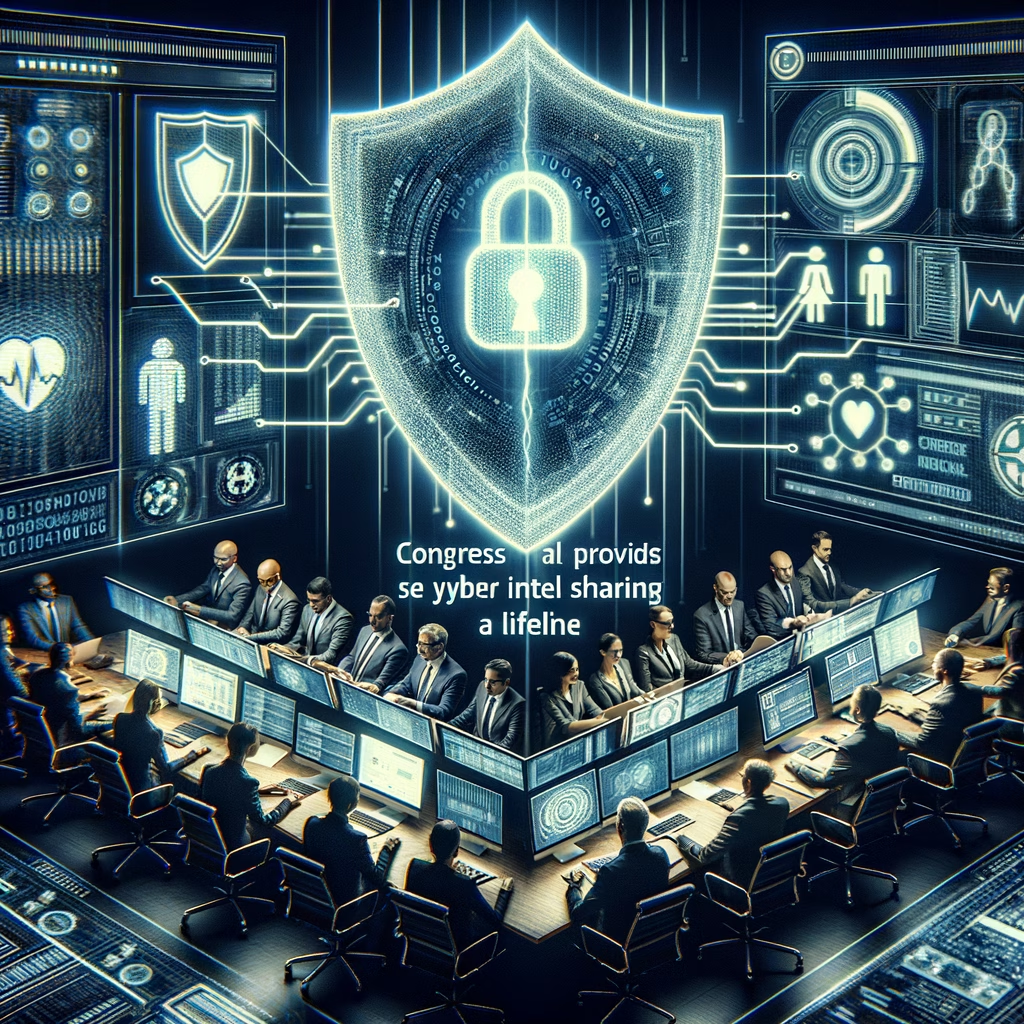
Congress Panel Gives Cyber Intel Sharing a Lifeline
Threat-intel sharing: Congress grants a lifeline
“If we let these authorities lapse, we would be shooting ourselves in the foot,” a former senior cyber official warned in recent hearings — capturing the urgency now facing Congress. Lawmakers must decide whether to reauthorize two expiring cyber statutes that have become central to U.S. defensive operations, including one that streamlines threat-intel sharing between private companies and the federal government. Both laws are set to expire at the end of the month, and their fate will shape how quickly information about malware, intrusion indicators and adversary tradecraft flows across networks and into federal analysis centers.
This is more than a routine sunset. The statutes at risk underpin automated pipelines that deliver technical indicators from cloud providers, managed security services and corporate defenders into national and sector-specific defenses. Supporters argue reauthorization preserves essential channels for rapid response and coordination; critics counter that the same authorities can dilute privacy protections, expand government reach, and create liability incentives that misalign corporate behavior.
A decade of evolving threats prompted Congress to create mechanisms designed to speed information exchange and clarify legal exposure for companies that report incidents. One widely used authority enables the transfer of technical indicators and defensive measures, allowing automated ingestion of threat indicators into both national and corporate defenses. The companion statute funds cross-government cyber efforts — sustaining analytic centers, public-private coordination programs and training pipelines that keep defenders synchronized.
Why the clock matters
Security leaders from across government and industry have urged action before the sunset, warning that expiration would interrupt operational practices during a period of heightened adversary activity. Negotiators on Capitol Hill appear inclined to reauthorize, but debate continues over whether to keep the statutes as written, add new privacy safeguards, or attach reporting and oversight requirements.
Threat-intel sharing is a force multiplier in practice. When a major cloud provider spots a novel exploit, rapidly sharing that indicator with federal cyber centers and downstream victims can blunt the spread of an attack. Coordinated sharing has closed exposure windows and enabled mitigation at scale, defenders say. The laws also include liability protections and legal clarifications designed to encourage companies to share data without fear of routine tort litigation or regulatory penalties.
Tradeoffs and concerns
That utility comes with tradeoffs. Civil liberties advocates warn that expansive sharing authorities can let non-technical or personally identifying information seep into government systems without adequate minimization or audit controls. Technologists note risks from automated ingestion: trusted but stale or malformed indicators can block legitimate traffic or obscure sophisticated adversary behavior. There’s also concern that broad liability shields may reduce incentives for companies to improve security hygiene if disclosure feels legally risk-free.
Stakeholders view the debate through different lenses:
– Policymakers: Many in Congress frame reauthorization as a national security imperative, but some see an opportunity to tighten oversight, add transparency provisions and require performance metrics.
– Technologists and operators: Defenders value the speed and scale of information sharing but press for higher data quality, standardization and safeguards against false positives. Trusted-broker models or escrowed indicator exchanges are proposed compromises.
– Privacy advocates and civil society: These groups demand stronger minimization, auditing and redress mechanisms to prevent mission creep and erosion of civil liberties.
– Adversaries: A robust sharing regime raises the operational cost for commodified malware, yet predictable sharing practices can be exploited for deception campaigns or poisoned indicators.
Operational realities and legal nuance
Most incident responders already exchange indicators through commercial brokers, sector ISACs and private partnerships. The statutes were designed to reduce friction and grant government partners timely context. Opponents argue legal authorization should not excuse bypassing transparency or weakening individual protections.
The secondary expiring statute matters for resources as much as law: it sustains funding for cyber centers and public-private initiatives that operationalize sharing. A lapse could threaten personnel continuity, training pipelines and long-running trust-building programs — intangible but critical assets for cooperation.
Possible outcomes
If Congress approves a short reauthorization with minimal changes, operational continuity would likely be preserved but necessary reforms might be postponed. A broader rewrite could introduce stronger privacy and audit guardrails but might slow implementation and raise compliance costs. Failure to reauthorize would force practitioners back to less formal, slower exchange mechanisms and create legal ambiguity that chills sharing at a moment defenders say they need it most.
A persistent shortcoming is measurement. There’s a dearth of rigorous, publicly available metrics tying these authorities to prevention outcomes. That evidentiary gap fuels political disagreement: lawmakers keen on oversight demand performance data, while operators contend many defensive benefits are classified, time-sensitive, or hard to quantify.
Emerging policy fixes
Pragmatic remedies are gaining traction: mandatory minimization policies, independent audits of sharing pipelines, sunset-and-review clauses that force periodic reassessment, and clearer norms about what data is suitable for automated exchange. These measures aim to reconcile operational urgency with civil liberties, striking a balance that has defined much of U.S. cyber policy.
Global implications
U.S. choices will influence allied norms, industry practices and how companies worldwide structure their sharing arrangements. A robust, transparent model could become a template for responsible cooperation; a hasty lapse or unfocused expansion could create openings for adversaries and erode trust.
Conclusion
Congress faces a classic policy tradeoff: preserve continuity and risk incremental expansion of authority, or demand reforms and risk operational friction. Neither path is risk-free. As lawmakers weigh legal certainty for defenders against safeguards for privacy and oversight, the question remains whether they can thread the needle — strengthening both security and civil liberties or settling for another temporary fix. The outcome will determine not only how the United States counters digital threats this year but also the long-term contours of public-private threat-intel sharing and cooperation.