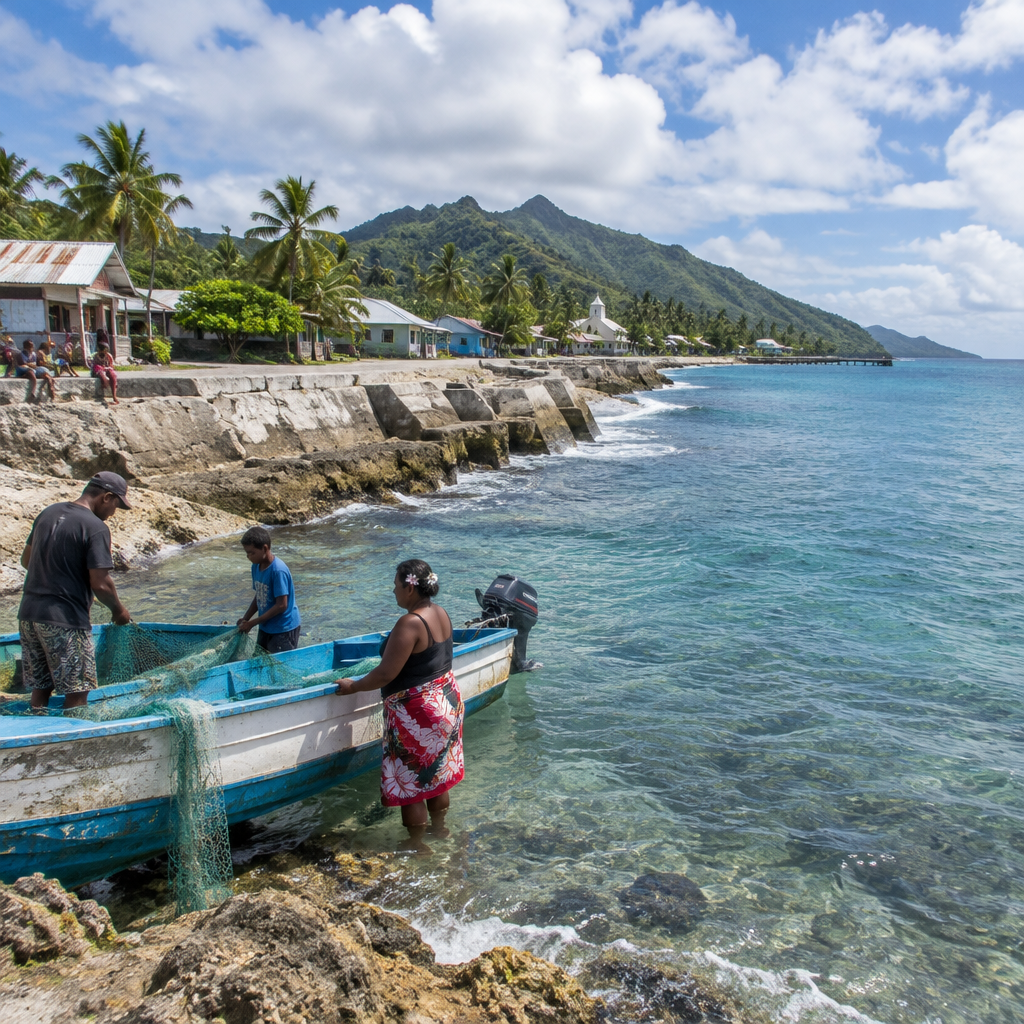
"climate change remains the single greatest threat to the security, livelihoods and wellbeing of their peoples," Pacific leaders said after meeting in Koror earlier this year.
Australia's leadership at COP31 and Pacific priorities
As Australia prepares to lead negotiations at the 31st UN climate conference, COP31, Canberra faces an immediate choice: center Pacific priorities or risk leaving island communities with commitments that do little to ease daily pressures such as coastal erosion and water shortages. Climate Change and Energy Minister Chris Bowen has called for a conference "focused on implementation and acceleration." When talks open in Antalya on 9 November, Pacific leaders will expect concrete steps that translate political language into finance, capacity and durable infrastructure.
Taku Pakasoa Declaration, finance and community resilience
Pacific leaders set a clear frame for what they need. At the Pacific Pre‑COP — a preparatory meeting in Fiji and Tuvalu last month — leaders adopted the Taku Pakasoa Declaration, which called for improved access to climate finance and stronger community resilience. The source material stresses that climate damage can interrupt essential services and increase pressure on public finances, making improved finance access and resilience measures central to regional security interests.

This site is the portfolio.
OSINTSights runs on Cloudflare Workers, D1, R2, and Vectorize, with an AI pipeline on Hetzner ARM. Nubivance designed, built, and operates it. We do the same for clients.
See what we buildTaiwan's reported domestic measures: inventories, plans and carbon fees
Although not a party to the UN Framework Convention on Climate Change, Taiwan publishes annual greenhouse‑gas inventories using Intergovernmental Panel on Climate Change guidelines and reporting methods aligned with the Paris Agreement’s transparency framework. Its latest inventory records net emissions in 2024 at 6.59 percent below the 2005 baseline. Taiwan has approved emissions reduction plans for each sector of the economy for 2026 to 2030 and completed its first round of carbon fee collection in 2026. The source describes implementing these policies and supporting communities through the transition as "demanding tasks."
Practical projects in Tuvalu, Palau and the Marshall Islands
Taiwan’s on‑the‑ground work in Pacific islands is presented as operational and measurable. In Tuvalu, agricultural cooperation established two water‑saving drip irrigation demonstration sites to respond to insufficient rainfall; under the wider project more than 112 tonnes of locally grown fruits and vegetables have been produced for schools and communities, alongside training and advisory support for local agricultural personnel. In Palau, cooperation on coastal fisheries management had, by June 2026, established fisheries monitoring and catch‑reporting sites, installed six vessel identification receiving stations and 162 vessel transponders, and brought a fisheries information platform into operation. Marshall Islands Foreign Minister Kalani Kaneko described small, flexible transitional funding from the International Cooperation and Development Fund "as a bridge to larger international climate funds."
Global Cooperation and Training Framework, the Australian Office in Taipei, and observer channels
The argument in the source links existing institutional channels to practical cooperation. Taiwan has attended COP meetings through the Industrial Technology Research Institute, a non‑governmental observer organisation, which the source says "supports professional exchanges, although participation in particular technical meetings remains subject to the relevant procedures and invitations." Separately, the Global Cooperation and Training Framework is presented as a venue through which Australia and Taiwan can support technical exchanges requested by Pacific partners. Examples cited: Australia collaborated on a climate adaptation workshop jointly organised by Taiwan and Tuvalu in 2024; in September 2026 the Australian Office in Taipei joined Taiwan’s Ministry of Environment and other framework partners in organising a workshop on energy resilience and supply chain security that featured more than 40 international experts from 28 countries; and in October the Australian Office chaired the framework’s joint committee meeting. Taiwan has also pledged US$3 million (A$4 million) over three years to the Pacific Resilience Facility.
What this means for Pacific governments, Australia, and Taiwanese specialists
- Pacific governments: Will continue to press for "improved access to climate finance and stronger community resilience" under the Taku Pakasoa Declaration and to judge whether projects meet local needs and can be sustained by local institutions.
- Australia (policymakers and diplomats): Can reaffirm support for Taiwan’s meaningful participation at COP31 while respecting the UNFCCC’s established procedures and expand practical cooperation under the Global Cooperation and Training Framework and bilateral workshops already convened in 2024 and 2026.
- Taiwanese specialists and project teams: Have channels for professional exchange — via the Industrial Technology Research Institute and the Global Cooperation and Training Framework — but participation in specific technical meetings will remain subject to procedure and invitation; maintaining equipment and ensuring local personnel can operate and sustain projects are ongoing priorities.
The record presented is practical and procedural rather than declaratory. It ties regional security language — the Koror reaffirmation that climate change is "the single greatest threat" — to specific tools: sectoral emissions plans for 2026–2030, carbon fee collection in 2026, drip irrigation and fisheries monitoring projects, small transitional funding, and a US$3 million pledge to the Pacific Resilience Facility. The immediate question for delegates in Antalya on 9 November is whether Australia will use its negotiating role to convert those tools into more predictable finance and wider technical access, and whether existing channels will be used to let qualified Taiwanese practitioners share hard‑won lessons with Pacific partners and peer experts.
https://www.aspistrategist.org.au/cop31-should-draw-on-taiwans-pacific-climate-experience/