Tag: navalaviation
8 articles

Modern LVC Tools Essential to Meet NAVPLAN
When flight hours are scarce and threats grow more complex, NAVPLAN makes clear that integrating Live‑Virtual‑Constructive (LVC) training into daily practice is essential. LVC lets carrier air wings rehearse multi‑domain fights affordably and continuously while generating the data needed to prove and accelerate readiness.

Modern LVC Training Meets NAVPLAN Requirements
NAVPLAN is driving a shift to federated Live‑Virtual‑Constructive training that blends real flights, high‑fidelity simulators and computer‑generated forces—letting carrier air wings rehearse complex, measurable high‑end fights at scale while cutting cost, risk and flight hours.

Adopt Modern LVC Tools to Comply With NAVPLAN
NAVPLAN demands readiness for distributed, high‑end conflict — and Live‑Virtual‑Constructive (LVC) systems are the answer. By linking live sorties, simulators and computer‑generated forces, LVC lets sailors and aviators rehearse contested, cyber‑electromagnetic scenarios at scale without burning endless flight hours.

Modern LVC Tools Essential for NAVPLAN Compliance
Training for tomorrow’s naval fights requires more than plane-and-range time — it needs LVC: live, virtual and constructive systems stitched together to deliver the reach, realism and repeatability NAVPLAN demands. Federating simulators, live assets and computer-generated forces lets the fleet rehearse complex, distributed missions at scale and keep readiness high without burning endless sorties.

MQ-25 Stingray Must-Have: Risky Delay Threatens
The Navy’s MQ-25 Stingray — the unmanned tanker meant to stretch carrier air wings’ reach — has slipped to a 2027 IOC, leaving planners juggling shorter-range operations and awkward logistics until it arrives. Giving engineers more time may sting now, but could mean a safer, more reliable system when the fleet finally gets the capability it’s been counting on.

LVC tools: Must-Have Best Practice for Readiness
What if pilots could rehearse tomorrow’s high‑end fights today—seamlessly combining live jets, high‑fidelity simulators and computer‑generated forces? LVC tools stitch those elements together to boost readiness, cut costs and enable distributed, repeatable training—if services invest in standards, secure networks and validated scenarios to keep it real and safe.
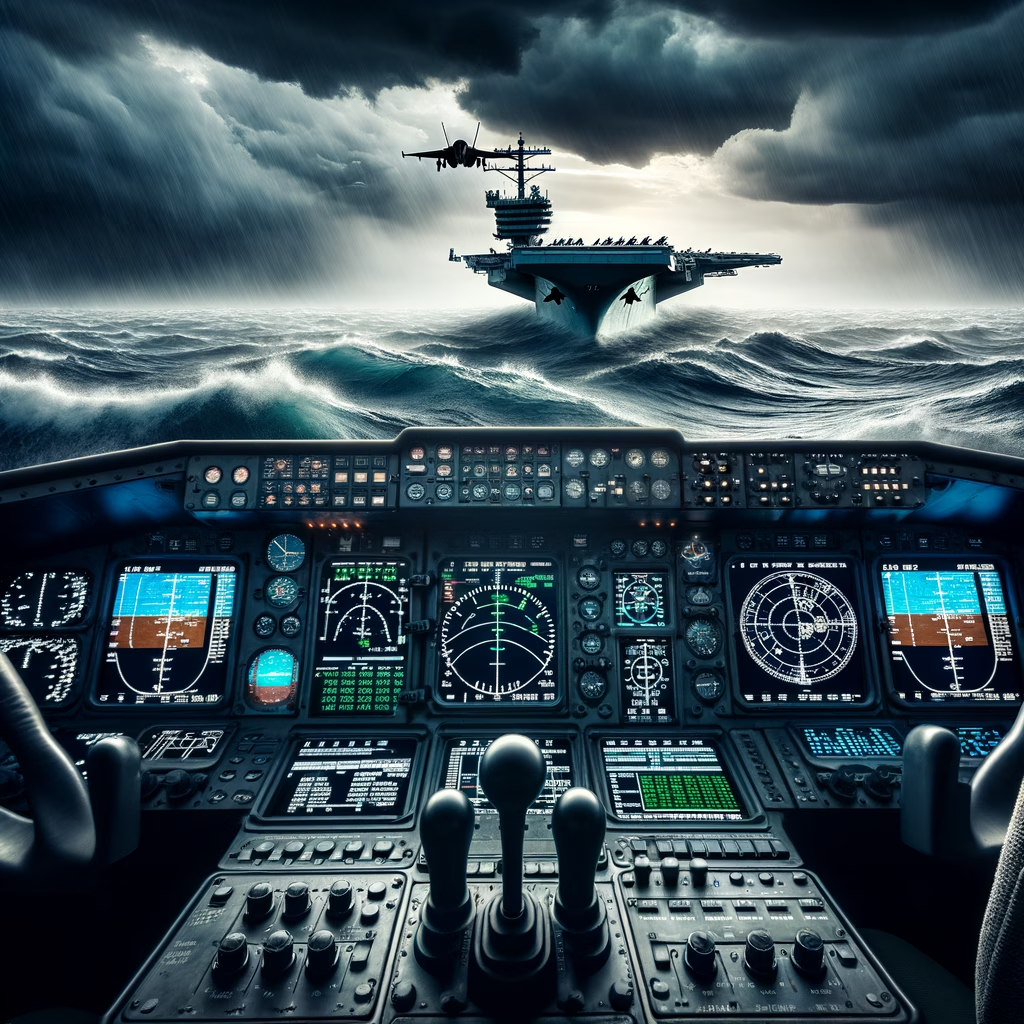
E-2D simulation: Stunning Must-Have Readiness Boost
Sims at Sea put realistic E-2D training right on carriers so crews can rehearse sensor-driven missions in the same shipboard rhythm they’ll face in combat. The result: faster qualifications, fewer logistics headaches, and steadier readiness while deployed.

E-2D simulation Must-Have: Best Readiness Win
When the E-2D became mission-essential but too scarce for routine training, the Navy raced a carrier-ready simulator aboard using modular hardware, containerized software and nonstop sailor feedback. The result: realistic at-sea rehearsals that save flight hours, sharpen tactics, and get crews ready faster.