Tag: civilliberties
23 articles

Hackers Exclusive Tactics: Best Defense vs ICE Surveillance
What happens when ICE surveillance tools outpace the rules meant to control them? This report digs into how commercial forensics like Paragon help investigators crack cases — and why secrecy, corporate transfers, and lingering dual‑use risks keep civil‑liberties groups sounding the alarm.

Inside Europe’s urgent push to build a drone wall
Europe is racing to build a drone wall — a layered, networked shield to detect and defeat swarms of cheap, self-flying drones that have rewritten the rules of war and now threaten cities. Born from hard lessons in Ukraine, the effort blends new tech, cross-border policy and legal limits to stop nimble, low-cost threats before they strike.

Trump Administration Expands Social Media Surveillance
Heads up: the Trump administration is using AI to scan public social media posts by noncitizens and feed algorithmic flags into visa‑revocation decisions. What began as quiet open‑source monitoring has become a high‑stakes tool that can cost people their legal status.

social media surveillance: Shocking Risk to Free Speech
Imagine a government tool meant to spot foreign threats quietly sweeping up Americans’ posts and using those snippets to deny visas, jobs, or the right to return — now three unions, backed by the EFF, are suing to stop a program they say chills speech, lacks transparency, and lets algorithms punish dissent without due process.

social media surveillance: Stunning, Risky Threat
Imagine losing a visa over a tweet: a new Brookings report reveals how AI-driven social-media surveillance for visa enforcement risks chilling speech, making costly errors, and turning public expression into grounds for punishment. It’s a wake-up call to ask who watches the watchers and demand clearer rules, transparency, and safeguards.

social media surveillance: Stunningly Risky Threat
Think twice before posting: U.S. agencies increasingly use AI to scan social media and can turn a sarcastic tweet or protest photo into grounds for visa revocation. This shift from manual monitoring to opaque algorithmic decision-making warns that free expression, due process, and basic safeguards for noncitizens are suddenly at risk.
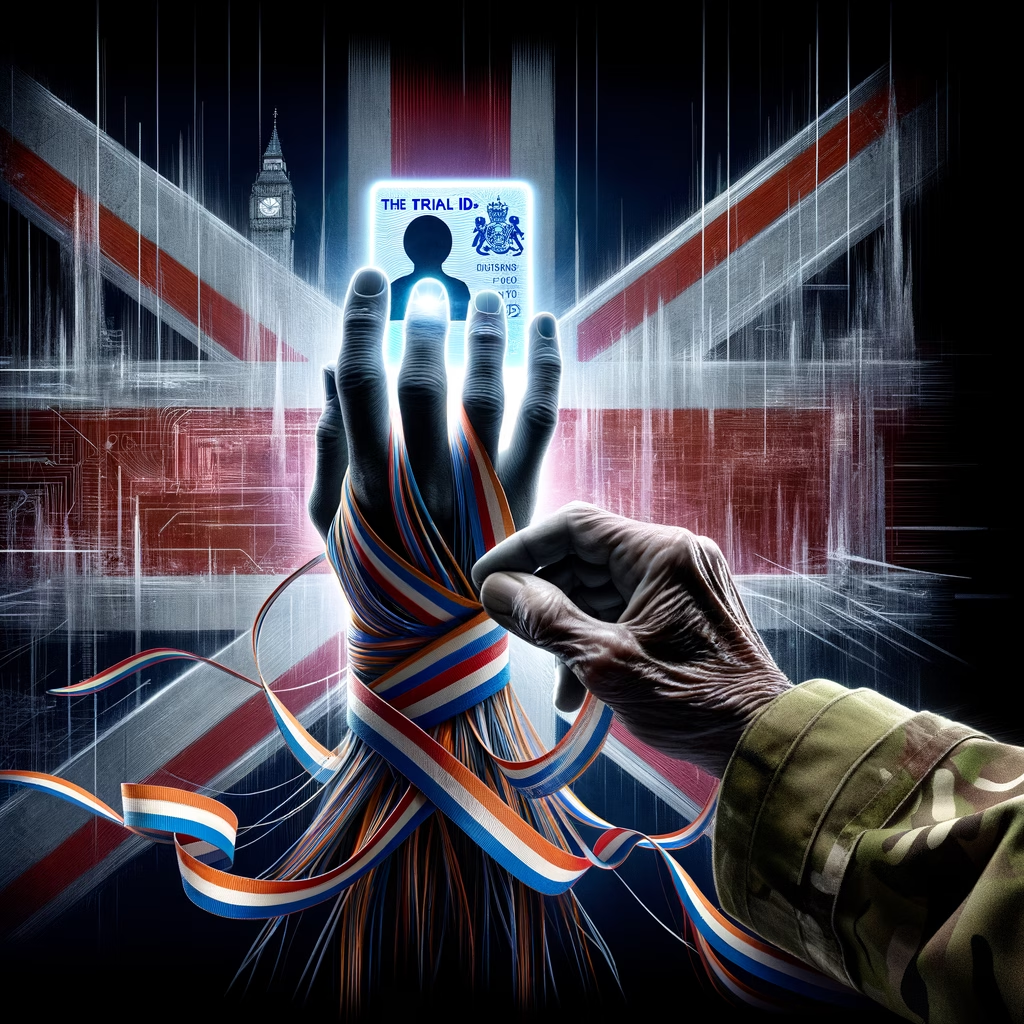
digital identity Must-Have UK Veterans Trial Boosts Trust
The UK is recruiting Armed Forces veterans to pilot a national digital ID — a practical and symbolic test of whether a secure, user-friendly system can win public trust or instead expose privacy and inclusion pitfalls.

social media surveillance: Exclusive Risk to Free Speech
Three U.S. labor unions, backed by the EFF, sued the Trump administration over a social‑media surveillance program they say lets officials flag and punish immigrants or visa applicants for political speech, risking a chilling effect on online dissent. The case asks courts to halt opaque, automated screening practices that critics say arbitrarily target viewpoints and deny due process.

automated license-plate readers: Stunning Privacy Risk
Retired Navy veteran Lee Schmidt and co-plaintiff Crystal Arrington say they were tracked hundreds of times by Flock’s automated license-plate readers, sparking a federal lawsuit that asks whether neighborhood safety tools have quietly become mass surveillance. As courts and communities wrestle with warrantless access, the case highlights how searchable location logs can map our every move — and why many call for stronger limits and transparency.

ICEBlock Exclusive: Risky Apple Takedown Stuns
Apple’s removal of ICEBlock — an app that mapped locations linked to ICE personnel — has reignited a debate over whether platform safety rules protect people or quietly curtail civic oversight. Apple says the app posed real risks to law‑enforcement safety, while transparency advocates warn that taking down such tools can weaken public accountability.
live facial recognition: Risky Must-Have for Safety
The government is encouraging police to try live facial recognition after the Met praised its Croydon deployment, but with courts and privacy watchdogs raising legal and bias concerns, ministers will publish guidance instead of forcing a nationwide roll‑out.

Cybersecurity Information Sharing Act: Critical or Risky?
What if the law that lets companies and the government swap cyber threat signals overnight simply vanished? With the 2015 CISA at risk amid a possible shutdown, automated feeds, legal protections, and the trusted channels that stop attacks fast could all be thrown into doubt.

Entry/Exit System: Risky Exclusive EU Biometric Rollout
Starting next month the EU replaces passport stamps with a biometric Entry/Exit System that will record faces and fingerprints of short‑stay visitors to 29 Schengen countries. Officials say it will speed up checks and curb overstays — but privacy advocates warn it could expand surveillance and put sensitive data at risk.

Home Office databases: Exclusive Must-Have Privacy Fix
The Home Office has told police in England and Wales to exhaust local image databases before tapping passport and visa photo stores — and to reserve “urgent” requests for truly time‑critical cases — a move aimed at curbing privacy worries and preventing the central archive from becoming a default surveillance shortcut.

national digital ID: Risky Must-Have That Fails
A national digital ID might streamline services and cut fraud, but it also risks turning everyday life into a constant identity check — concentrating power, widening surveillance and still doing little to stop small‑boat crossings. Without strong legal safeguards, decentralised design and real alternatives, a BritCard could trade convenience for serious privacy and security dangers.

end-to-end encryption: Stunning Risky Debate in Europe
Brussels is wrestling with whether to preserve strong end‑to‑end encryption or require engineered access that law enforcement says is needed to fight child abuse and serious crime. Security experts warn any backdoor would create systemic vulnerabilities that could harm journalists, victims and businesses, while proponents argue tougher tools are essential to protect the public.

Paragon spyware: Must-Have Tool or Risky Threat?
ICE quietly renewed a roughly $2 million contract with Graphite — the firm behind the controversial Paragon spyware — reigniting a tense debate over whether powerful investigative tools protect public safety or threaten privacy and oversight. As ownership changes and critics call for more transparency and safeguards, the move highlights the fraught trade-off between operational needs and civil liberties.

letters of marque: Risky Must-Have Cyber Tool
A new bill would revive the old idea of “letters of marque” for the digital age, letting the President commission vetted “white hat” hackers to pursue and seize foreign cyber threats. It promises faster, private‑sector firepower against attackers — but brings big legal, ethical and escalation risks that lawmakers will have to reckon with.

end-to-end encryption: Stunning Win, Risky Stakes
Encryption just scored a major diplomatic win as reports say the UK backed off a controversial demand that Apple build law-enforcement access into its devices — but the tug-of-war between public safety and personal privacy is far from over. This retreat protects our daily digital security while raising tough questions about how to investigate crime without weakening the tools that keep our data safe.

Apple backdoor: Stunning UK Reversal — Risky Plan Dies
In a surprising win for privacy, the U.K. appears to have backed away from forcing Apple to build a backdoor—raising fresh questions about how to balance law enforcement needs with global security risks. Driven by diplomatic pushback, expert warnings and public outcry, the decision gives encryption defenders a reprieve while pushing governments to find smarter, privacy-preserving alternatives.

facial recognition: Stunning Risks Expose Flaws
Lab-perfect facial recognition often stumbles in the real world—poor lighting, low-quality cameras, masks and demographic bias can turn high benchmark scores into risky guesses on the street. Before we let cameras decide who’s innocent or guilty, we need real-world testing, transparency, and rules that protect people.

live facial recognition Stunning but Risky Expansion
The UK’s decision to add 10 live facial‑recognition police vans has reignited a heated debate. Supporters say they’ll help catch suspects and protect public spaces, while campaigners warn they risk widening surveillance, entrenching bias and eroding public trust without stronger legal safeguards.

police facial recognition: Must-Have or Risky Deployment
Ten mobile facial‑recognition vans promise quicker suspect ID and faster missing‑person responses, but accuracy gaps, bias concerns and fuzzy legal safeguards mean we must insist on independent audits, clear transparency and enforceable limits before these systems become routine.