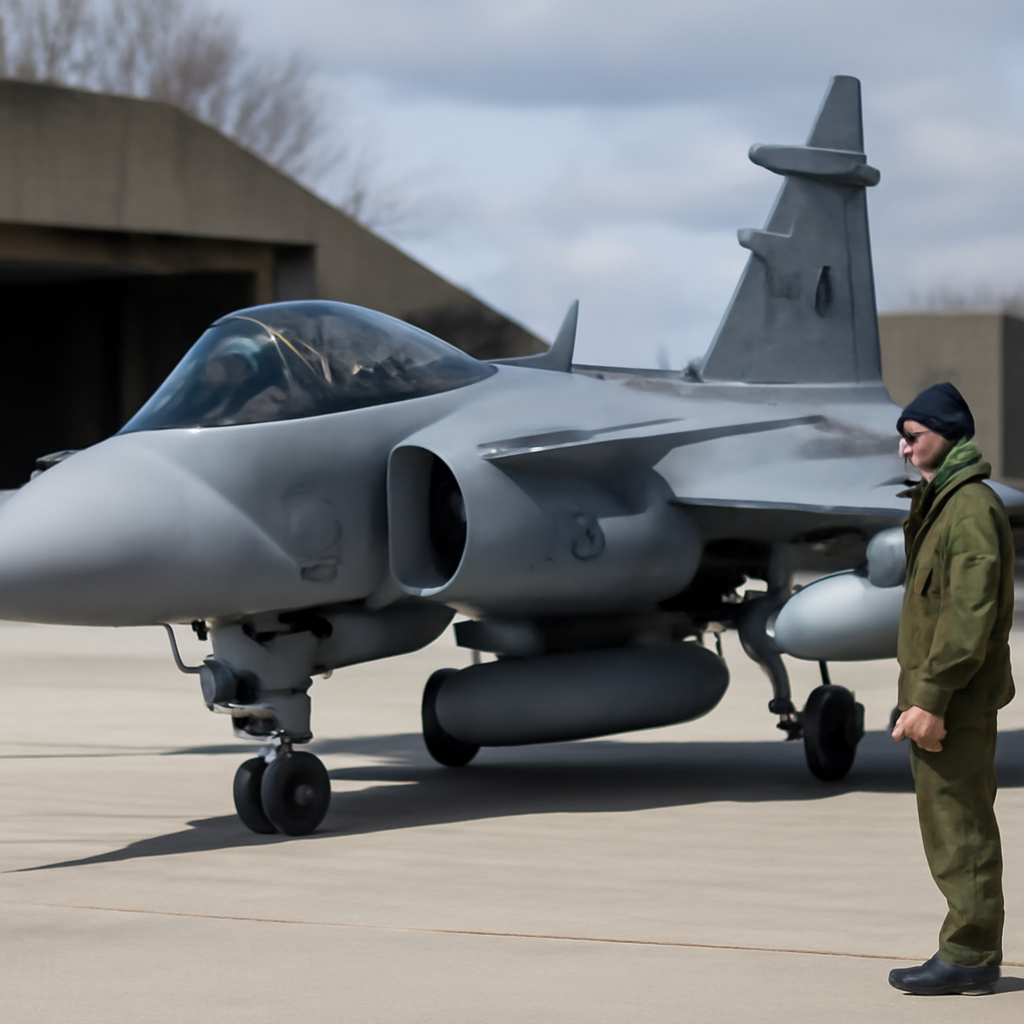
“I am deeply proud that Sweden and Saab can now enable the provision of Gripen E to Ukraine, bringing a world‑class fighter that will transform the Ukrainian Air Force’s capability,” said Micael Johansson, President and CEO of Saab, announcing the contract that formally commits 16 Gripen E fighters for transfer to Ukraine.
The contract: Saab, the FMV, and the price tag
Saab signed the order with the Swedish Defense Materiel Administration (FMV), the government procurement agency that operates under the Swedish Ministry of Defense. The package covers 16 Gripen E fighters plus spare parts and associated items and equipment. The order is valued at about SEK 24.6 billion (approximately $2.5 billion) and will be booked in the third quarter of this year. Saab is scheduled to deliver the jets to the FMV between 2029 and 2030; the aircraft will be transferred to Ukraine after that delivery window.
Gripen E’s technical profile and why it matters
The Gripen E differs materially from the older Gripen C/D. According to Saab, the E has a larger fuselage that accommodates roughly 30 percent more fuel, a more powerful General Electric F414 engine, and 10 hardpoints for weapons and stores. The cockpit replaces three displays with a single Wide Area Display (WAD). Saab also describes the Gripen E’s avionics architecture as software‑based and intended for rapid insertion of new hardware and software to meet evolving operational requirements.

Audit-ready is a season. It shouldn't be.
Evidence in spreadsheets, controls drifting between audits, frameworks multiplying on flat headcount. Nubivance runs continuous compliance on Rapid7 Cyber GRC - SOC 2, HIPAA, ISO 27001, PCI, CMMC.
End the scrambleWeapons, sensors, and survivability
The contract and reporting detail sensors and weapons that will change the Ukrainian Air Force’s technical baseline.
- The Gripen E integrates the Leonardo ES‑05 Raven active electronically scanned array (AESA) radar and the Leonardo Skyward G infrared search and track (IRST) sensor; the ES‑05 Raven is described as the first AESA fighter radar destined for Ukraine.
- The ES‑05 Raven is mounted on a rotating repositioner (a swashplate) that lets the array slew left and right to widen its field of view.
- The Gripen E can carry up to seven MBDA Meteor beyond‑visual‑range air‑to‑air missiles; the Meteor uses ramjet propulsion, is generally considered effective to around 130 miles, has an active radar seeker for terminal guidance, and a two‑way datalink for in‑flight updates.
- Gripen aircraft are also compatible with the AIM‑120 AMRAAM, a missile already in use on Ukraine’s F‑16s and some ground‑based systems.
- Sensors and self‑protection include a new Saab Electronic Warfare System with a 360‑degree spherical Missile Approach Warning System (MAWS).
Saab 340 AEW&C Erieye and a networked approach
Saab’s coverage emphasizes that the Gripen Es will be most effective when operated as part of a networked force that includes two Saab 340 airborne early warning and control (AEW&C) aircraft donated by Sweden and fitted with the Erieye radar. The Saab 340 AEW&C can detect and track Russian targets, prioritize threats, and direct friendly fighters to intercept. Using datalink connections, the AEW&C can provide mid‑course guidance updates to missiles after launch, allowing fighters to engage targets without necessarily activating their own radar. The Erieye is also noted as effective for tracking ground and maritime targets.
Timelines, interim measures, and training
Stockholm also agreed to donate up to 16 Gripen C/D fighters to Ukraine as an interim measure; handover of those C/Ds is slated for early 2027. Saab and Swedish officials say training of Ukrainian pilots and technicians on the Gripen C/D is already underway and will be expanded this fall. The Gripen Es are scheduled to begin deliveries to the FMV in 2029, with transfers to Ukraine to follow after that period.
What this means for the Ukrainian Air Force, the FMV, and regional opponents
- For the Ukrainian Air Force: The Gripen E is described as likely to be the most capable combat aircraft Ukraine will operate once in country. Combined with long‑range Meteor missiles and Erieye AEW&C support, the jets are said to significantly enhance Ukraine’s ability to challenge Russian airpower, defend airspace, and deliver precise attacks against surface targets.
- For the FMV and Swedish procurement: The order converts a policy decision into an acquisition of aircraft, spare parts, and systems that Saab will deliver to the FMV in 2029–2030, with the contract value booked in Q3. Training on the interim C/D fleet is already underway and scheduled to expand.
- For regional opponents and planners: The introduction of AESA radar, IRST, Meteors with two‑way datalinks, and AEW&C‑directed engagement will change the technical balance the aircraft must contend with — a shift the source frames as “significant” in capability terms.
Beyond the immediate order, Sweden and industry figures continue to frame the delivery as the opening move in a larger ambition: a long‑term target of 100–150 Gripen aircraft for Ukraine has been stated as an intention, and a separate letter of intent covers a plan for Kyiv to buy up to 100 Dassault Rafale F4 fighters from France over the next ten years. Whether both large procurements can be realized remains an open question in the reporting.
Next concrete milestones to track in the record provided here are the early‑2027 handover of the secondhand Gripen C/Ds, the expansion of training this fall, and Saab’s delivery window to the FMV between 2029 and 2030 for the new Gripen Es. Each step will convert a diplomatic and industrial commitment into operational capability for the Ukrainian Air Force.
Source: https://www.twz.com/air/gripen-e-fighters-officially-ordered-by-ukraine