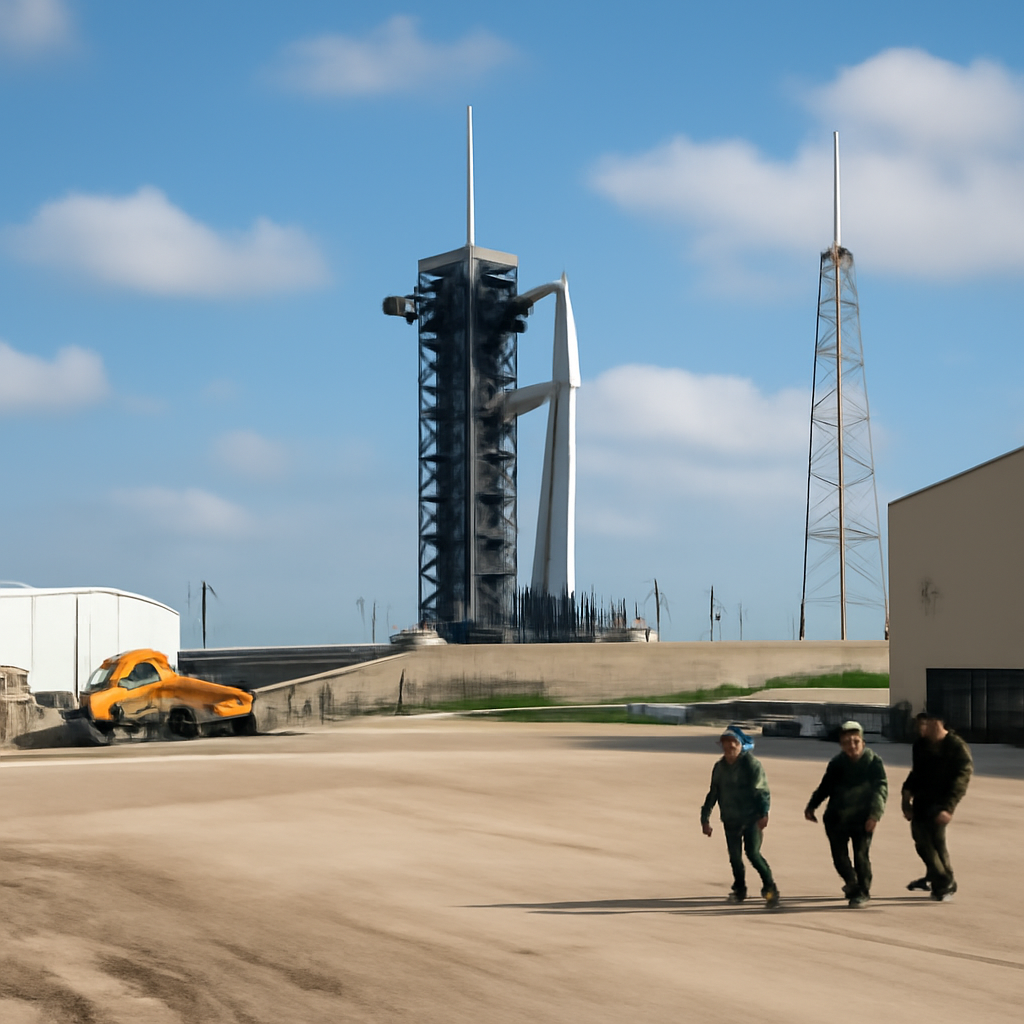
“We’ve just finished up a study, and that’s working its way through the process to come down to the Hill. At a high level, what it says is we probably need another site that’s capable of heavy and super heavy launch capability,” Air Force Secretary Troy Meink told the House Armed Services Committee.
Study conclusion and where it goes next
The Department of the Air Force (DAF) has completed a study that, according to Secretary Meink, concludes the nation “probably” needs an additional launch site able to support heavy and super heavy launch vehicles. Meink said the study is “working its way through the process to come down to the Hill,” signaling formal consideration by Congress is expected as part of the next steps.
Two ranges are at the center of the bottleneck: Vandenberg SFB and Cape Canaveral
Officials have identified the existing pressure point: the Space Force’s two primary ranges at Vandenberg Space Force Base in California and Cape Canaveral in Florida. The Space Force raised concerns last July that the rapid rise in launches—commercial and national security—threatened to overwhelm those two launch ranges.

Audit-ready is a season. It shouldn't be.
Evidence in spreadsheets, controls drifting between audits, frameworks multiplying on flat headcount. Nubivance runs continuous compliance on Rapid7 Cyber GRC - SOC 2, HIPAA, ISO 27001, PCI, CMMC.
End the scrambleDemand forecasts: 1,000 Space Force missions and as many as 7,000 commercial launches
The scale of demand is mounting. Lt. Gen. David Miller, the Space Force deputy for Strategy, Plans, Programs and Requirements, told a congressional briefing the service is planning for roughly 1,000 missions between fiscal years 2027 and 2031. Separately, a report discussed Tuesday in Payload cites an upcoming Commercial Space Foundation report that the broader space community could require as many as 7,000 launches annually— a level that, the summary said, would surpass capacity for some types of launch vehicles as soon as 2030.
Operational priorities: efficiency, capacity growth, and geographic resiliency
Chief of Space Operations Gen. Chance Saltzman framed the problem and the response in three parts. First, the Space Force must “make sure we’re using as efficiently as possible the resources we have.” Second, the service needs to grow the physical infrastructure to meet the demand signal from industry and national security launch customers. Third, Saltzman emphasized geographic resiliency: having separate launch locations rather than relying principally on the two existing ports. He said the Space Force is “looking heavily” and is “now analyzing alternatives to support other options.”
What this means for the Space Force, commercial providers, and Congress
- Space Force and DAF planners: They will use the study to inform decisions about expanding capacity and siting options, while continuing internal efforts to maximize current-range efficiency and to analyze alternatives that could supply geographic resiliency.
- Commercial launch providers: The industry’s growth projections—up to 7,000 launches annually in the cited report—create a demand signal that could push companies to seek additional range access, new coordination with military range operators, or investments tied to any new site capable of heavy and super heavy lifts.
- Congress and the Hill: With the study “coming down to the Hill,” lawmakers will be positioned to evaluate funding, oversight, and siting decisions tied to any proposed new launch facility and to balance investments against projected launch volumes and national security needs.
The DAF study and the officials’ testimony underscore a sharp policy inflection point: increasing launch tempo is colliding with finite range infrastructure. The next concrete actions are procedural—completion of the study’s review and its delivery to Congress—and analytical: Space Force-led alternatives analysis that will shape whether and where a heavy- or super-heavy-capable site is pursued. Given the cited timelines—planning for 1,000 Space Force missions through FY2027–2031 and the possibility that demand could exceed capacity for some vehicle types “as soon as 2030”—those actions will be closely watched by military planners, industry, and lawmakers alike.



