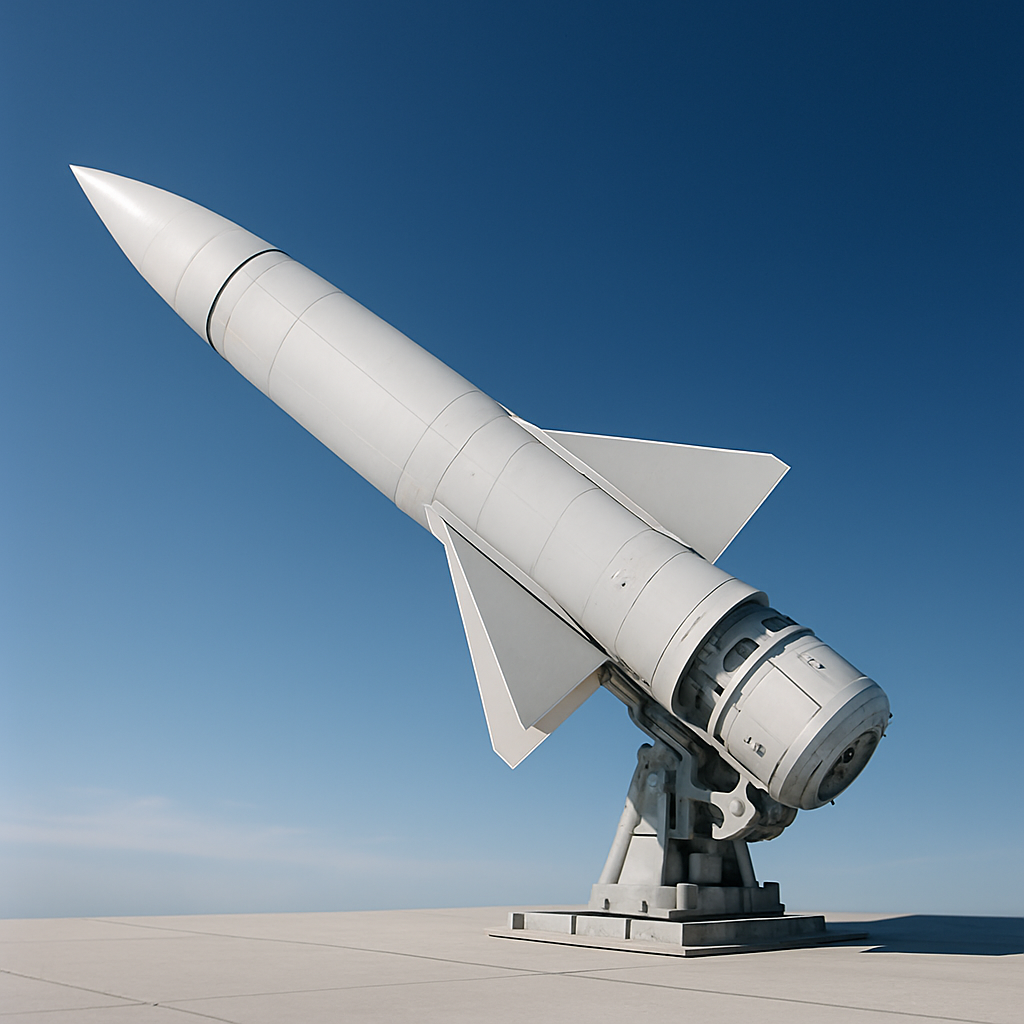
"Adversary capabilities are advancing rapidly, and our acquisition strategies must move even faster to counter the growing speed and maneuverability of modern missile threats," Col. Bryon McClain said, as the Space Force announced a dozen companies competing to build space-based interceptors for the Golden Dome missile-defense program.
Twelve contractors win Other Transaction Authority agreements
Late in 2025 and early 2026, the Space Force awarded 20 Other Transaction Authority (OTA) agreements to 12 firms to develop space-based interceptors, the service said in a news release. The awards are worth up to $3.2 billion and include a mix of large primes and smaller or non‑traditional defense players: Anduril; Booz Allen Hamilton; General Dynamics; GITAI USA Inc; Lockheed Martin; Northrop Grumman; Quindar Inc; Raytheon; Sci‑Tec Inc; SpaceX; True Anomaly Inc; and Turion Space Corp., according to a Space Force press release and a Space Systems Command spokesperson.
The Space Force described the OTA mechanism as flexible and not bound by certain federal procurement regulations, and Col. McClain said the agreements “attracted both traditional and non‑traditional vendors, while harnessing American innovation, and ensuring continuous competition.”
Technical aim: low Earth orbit interceptors for boost, midcourse, and glide phases
The program’s stated technical focus is to field low Earth orbit satellites capable of intercepting missiles during the “boost, midcourse, and glide” phases of their trajectories, the Space Force said. That scope implies a requirement for space platforms that can detect, track and engage a variety of missile types across multiple flight regimes, though the service has framed the current work as development and demonstration rather than final deployment of a full architecture.

Audit-ready is a season. It shouldn't be.
Evidence in spreadsheets, controls drifting between audits, frameworks multiplying on flat headcount. Nubivance runs continuous compliance on Rapid7 Cyber GRC - SOC 2, HIPAA, ISO 27001, PCI, CMMC.
End the scrambleBudget and funding: an aspirational $185 billion plan with near‑term uncertainty
Golden Dome is framed as a sprawling, long‑term program with a proposed total architecture price tag mentioned in the record as $185 billion. Almost none of the $17.5 billion requested for Golden Dome in the 2027 budget would come from the Defense Department’s baseline spending, the reporting notes; instead, the administration is relying on yet‑to‑be‑approved reconciliation funds. Rep. Mike Rogers, the chairman of the House Armed Services Committee, told Space Symposium attendees earlier this month that additional reconciliation spending “wasn’t a guarantee.”
The Office of Management and Budget projections supplied in the public record show Golden Dome funds being folded into the DoD baseline in later years, with a $14.7 billion estimate in 2028 that is projected to rise to $16 billion by 2031. Those figures underline a funding plan that moves from special funding streams toward baseline budgeting as the program matures—or as projections assume it will.
Timeline, scale and cost cautions: a 2028 demo, but early interceptors may be unaffordable
The Space Force has set an ambitious near‑term milestone: “With the commitment and collaboration of these industry partners, the Space Force will demonstrate an initial capability in 2028,” Col. McClain said. The program’s senior official — Gen. Michael Guetlein, described in public materials as the Golden Dome czar — warned Congress last week that development of space‑based interceptors intended to take down a missile in its initial launch phase could be too expensive for the program’s proposed $185 billion budget and “may not make the final architecture.”
Questions of scale compound the cost issue. The reporting cites MIT physicists and others who argue that truly comprehensive missile‑defense coverage would require not just thousands of satellites but tens or even hundreds of thousands, a range that illustrates the difference between a demonstrable prototype and a global, operational shield.
Officials at an event in Virginia — a gathering at Joint Expeditionary Base Little Creek‑Fort Story attended by Defense Department officials and military leaders and limited to a few media outlets — characterized the program as “ahead of schedule and on budget,” according to a Pentagon press release. The public record of what is being built and procured beyond the OTA awards remains focused on early development rather than full production.
How the Space Force, industry partners, and Congress are responding
- Space Force program leadership: Moving quickly to demonstrate capability. The service is using OTA agreements to draw competition and innovation and has set a demonstration milestone in 2028, while publicly acknowledging potential tradeoffs in mission scope to control costs.
- Industry partners (named contractors): Engaged across a broad spectrum of capability and scale. The 12 named firms now competing will be responsible for delivering prototype technologies under OTAs worth up to $3.2 billion and are participating in what the Space Force frames as a rapid, iterative acquisition approach.
- Congress and budget authorities: Faced with funding uncertainty. The near‑term $17.5 billion request for 2027 depends largely on reconciliation funds that are not guaranteed, a point stressed by Representative Mike Rogers; OMB projections fold the program into baseline budgets in later years, but the transition depends on future appropriations decisions.
The Space Force has opened a broad acquisition window: a dozen named contractors, a $3.2 billion set of OTA awards, and an ambitious 2028 demonstration goal. At the same time, public statements from the program’s leadership acknowledge both fiscal limits and the hard arithmetic of scale — from thousands of satellites versus tens or hundreds of thousands — that will shape whether a prototype can be turned into the comprehensive shield the program’s proponents describe. The next clear markers will be technical demonstrations tied to the 2028 objective and how Congress and budget planners choose to fund follow‑on phases.
Source: Defense One — Space Force picks firms to develop Golden Dome’s space‑based interceptors