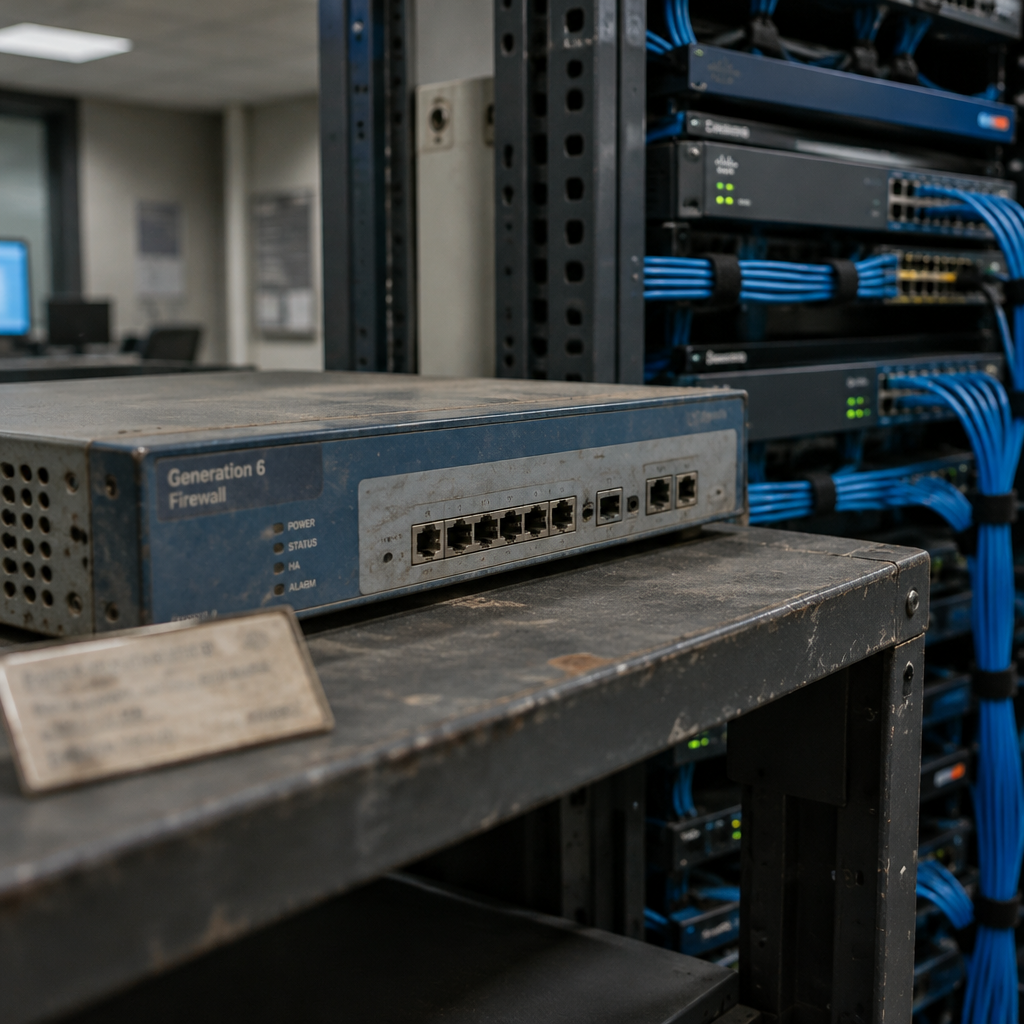
"Attackers now use automation and AI to find and exploit unsupported edge devices faster than ever," SonicWall said.
SonicWall's urgent directive to customers
SonicWall has told customers still running Generation 6 firewalls to "retire and replace them immediately" and to stop exposing those devices at the internet edge. The vendor explicitly warned that Gen 6 appliances will no longer receive security patches, "even for critical flaws," and said organizations should "treat any Gen 6 firewall still in service as a high-risk exposure, and migrate to a supported Gen 8 firewall running SonicOS 8."
Which Gen 6 products are listed as affected
The advisory lists a wide range of physical and virtual appliances running SonicOS 6.x. SonicWall named these products in full:
- TZ350, TZ350W, TZ500, TZ500W, SOHO 250, SOHO 250W
- NSA 4600, NSA 5600, NSA 6600
- NSa 4650, NSa 5650, NSa 6650
- TZ400, TZ400W, TZ600, TZ600P, NSA 3600
- NSa 3650
- NSa 2650
- SOHO, SOHO W, TZ300P, NSa 9250, NSa 9450, NSa 9650
- NSv 10 to NSv 1600 (Gen 6 virtual)
- SuperMassive 9200, 9400, 9600, 9800
- NSsp 12800, NSsp 12400
- TZ300, TZ300W
- NSA 2600
SonicWall urged inventorying every Gen 6 firewall in production and prioritizing retirement of units that are internet-exposed or provide remote access.

Your scanner finds 4,000 vulns. Which 12 matter?
Nubivance is a Rapid7 Registered Partner delivering vulnerability management as a service - scanning, risk-based prioritization, and remediation follow-through across IT and OT.
Fix the backlogWhy Gen 6 firewalls are now a priority target
SonicWall framed its warning in the context of rapidly accelerating exploitation dynamics. Citing Google Mandiant's M-Trends report from March 2026, the vendor highlighted a dramatic compression in the time between vulnerability disclosure and confirmed exploitation: the mean time to exploit "has turned negative, reaching an estimated -7 days," meaning, on average, exploitation begins before a patch is available — down from 63 days in 2018 and -1 day in 2024.
That acceleration, SonicWall said, is driven in part by threat actors using automation and AI "to scan the internet for unsupported devices, analyze patches and vulnerability disclosure announcements, and build working exploits faster." The vendor also referenced Cisco Talos' 2025 Year in Review finding that 23% of CVEs discovered in the year directly impact network devices such as VPN appliances, next‑generation firewalls, load balancers and routers — devices that sit at the enterprise perimeter and can provide "direct operational leverage once compromised."
Immediate mitigations SonicWall recommends until replacement
Recognizing that full hardware replacement is not instantaneous, SonicWall provided a short checklist of actions to reduce exposure on devices that remain online:
- Disable WAN management (HTTPS, SSH, and SNMP on WAN interfaces).
- Disable SSL VPN, or restrict it to known source addresses.
- Enforce multi‑factor authentication on every remaining remote‑access and admin account, and reset local passwords.
- Disable services and interfaces not in use.
- Monitor logs closely for unusual logins, configuration changes and traffic.
The vendor emphasized: "The risk to an unsupported firewall grows every day it stays online," and warned that "one breach reaches everything. A compromised perimeter firewall gives attackers a foothold for credential theft, lateral movement and ransomware deployment."
What this means for technologists and procurement leaders
Technologists and security teams will need to prioritize an immediate inventory and risk triage: identify internet‑facing Gen 6 units, apply the temporary mitigations above, and monitor for signs of compromise. SonicWall recommends contacting an authorized SonicWall partner to plan migrations to Gen 8 appliances running SonicOS 8.
Procurement and infrastructure leaders face an operational and budgeting problem made urgent by the advisory: retire and replace affected units quickly, with prioritization for devices providing remote access or exposed at the WAN edge. The advisory makes clear that patching is no longer an option for Gen 6 — migration is the recommended course of action.
The vendor's message is blunt and time‑sensitive. With automation and AI compressing the window between disclosure and exploitation, and with a substantial share of discovered CVEs affecting network devices, SonicWall's guidance is to assume internet‑facing Gen 6 firewalls are actively targeted and to move without delay.