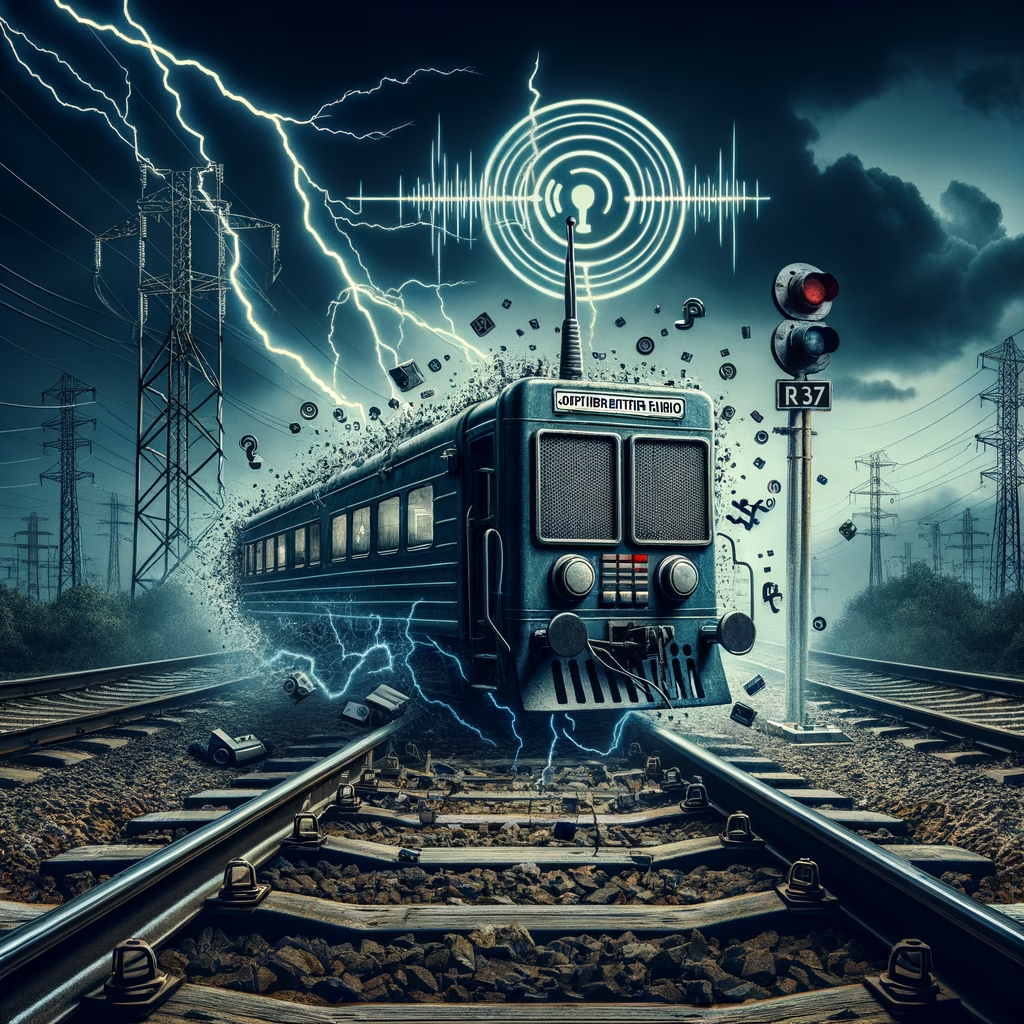
“If we ignore the vulnerabilities in our railway communication systems, we may well be inviting disaster,” warned Neil Smith, an independent security researcher who first flagged a critical flaw over a decade ago. His cautionary voice, persistent yet largely unheard until recently, now echoes against a backdrop of heightened concern from the Cybersecurity and Infrastructure Security Agency (CISA), urging swift action to prevent a potential crisis that could lead to catastrophic train derailments.
In 2012, Smith uncovered a vulnerability in the software-defined radio (SDR) protocols that form the backbone of communications across U.S. rail networks. These protocols, essential for coordinating train movements and signaling, were found to be susceptible to malicious interference, posing risks far beyond mere technical glitches. Yet, despite his early warnings, progress to address this flaw was painstakingly slow, hampered by bureaucratic inertia and fragmented industry response. It wasn’t until 2025 that CISA issued a formal advisory, catalyzing a broader dialogue about the security of the nation’s rail infrastructure.

Software-defined radios differ fundamentally from traditional radios by relying on software to manage signal processing rather than fixed hardware. This flexibility allows for dynamic frequency adjustment and better spectrum efficiency, but it also introduces complex vulnerabilities exploitable by bad actors. In the context of railway operations, such weaknesses could be leveraged to inject false commands or disrupt communication between trains and control centers.
The immediate concern is that an attacker could manipulate train control systems remotely, causing derailments or collisions by overriding signal data or issuing fraudulent movement authorities. Given the high volume of freight and passenger trains traversing the country daily, such a breach could precipitate loss of life, environmental disasters, and significant economic upheaval.
From a technological standpoint, experts like Dr. Laura Chen, a cybersecurity specialist at the Transportation Security Institute, emphasize that “the integration of SDRs without comprehensive security protocols creates a cyber-physical risk that is both invisible and potent.” Chen argues that the railway industry’s traditional focus on mechanical safety has left digital defenses under-prioritized, a gap adversaries could exploit.
Policymakers face a delicate balancing act. On one hand, upgrading critical communication infrastructure demands substantial investment and operational adjustments, potentially disrupting services in the short term. On the other, delaying mitigation efforts increases exposure to cyber threats that grow more sophisticated by the day. The bipartisan Infrastructure Investment and Jobs Act of 2021 allocated funds for rail modernization, yet cybersecurity-specific provisions have lagged behind, as noted in a 2024 Government Accountability Office report.
For railroad operators and users, the stakes are immediate and tangible. John Martinez, spokesperson for the Association of American Railroads, acknowledges the challenges: “We recognize the importance of addressing these vulnerabilities and are actively collaborating with federal agencies to enhance security. However, implementing changes in a system as vast and complex as the national rail network requires careful coordination to maintain safety and reliability.”
From the perspective of potential adversaries—whether state-sponsored actors or criminal groups—the exploitability of SDR systems presents an attractive target. The National Security Agency has previously highlighted transportation infrastructure as a critical vulnerability in the nation’s cyber defense strategy, with railways identified as a high-value target due to their economic and strategic significance.
The road ahead demands concerted effort: a melding of technological innovation, regulatory oversight, and industry cooperation. CISA’s recent advisory acts as a clarion call, but it also underscores the sluggish pace of vulnerability management in critical infrastructure. The question remains whether lessons learned from past cyber incidents—ranging from energy grid intrusions to aviation communication hacks—will inform a more proactive and resilient approach.
As we reflect on this long-overdue reckoning with software-defined radio vulnerabilities, one is left pondering: in an era where digital and physical worlds are increasingly intertwined, can we afford the luxury of complacency when the safety of millions rides on lines of code? The warning signs have been flashing for years—now is the time to act before the tracks lead to tragedy.



