HEAT 758: a tandem warhead tested against a T-80
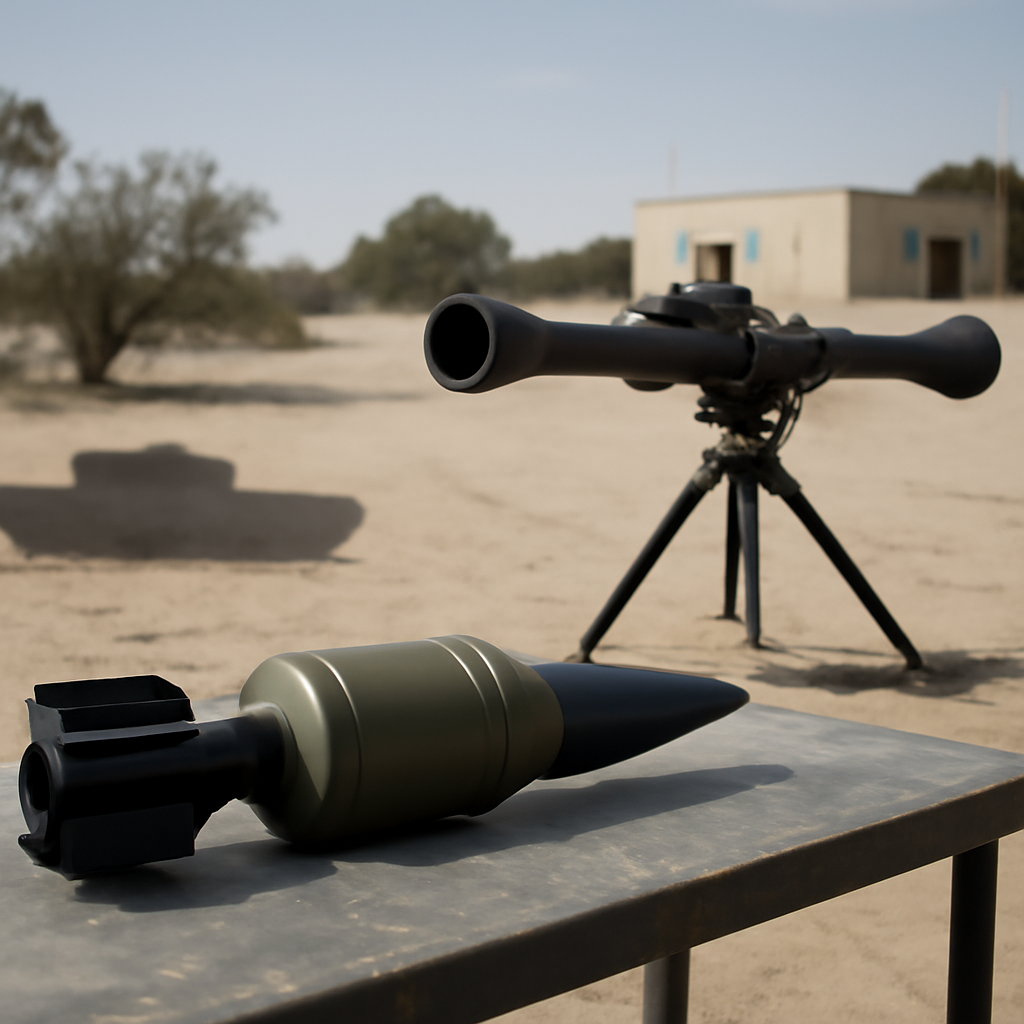
Saab formally unveiled the HEAT 758 round for its Carl‑Gustaf M4 recoilless rifle after a demonstration in Karlskoga where Breaking Defense observed multiple munitions fired at different targets and ranges. In one filmed shot, the HEAT 758 was fired from roughly 500 meters and struck the flank of a Russian T‑80 main battle tank, penetrating the hull beneath the turret near the turret ring.
Saab is explicit about the round's specifications: a 600‑meter effective range and a claimed ability to penetrate 700 millimeters (27.6 inches) of armor, including specially designed explosive reactive armor (ERA). The company credited that performance to a tandem warhead design—an initial precursor charge neutralizes ERA tiles so the main shaped‑charge can strike underlying armor. An undisclosed customer has placed an order for the HEAT 758, and Saab said production is underway.
Grayling, Michigan: a U.S. hub for Carl‑Gustaf and munitions
To support demand and supply‑chain resilience, Saab is expanding manufacturing into the United States with a new facility in Grayling, Michigan. The site covers more than 400 acres, with about 65 acres developed so far and room for future growth. Saab’s marketing and sales manager for Saab Land Systems, Darrell Osteen, called Grayling “a national asset to the US government,” and described the site as a place not only to build Saab products but also to partner with other companies to relieve capacity constraints.
Saab’s Head of business unit Ground Combat, Michael Höglund, said Grayling “is one location that will build the Carl‑Gustaf,” and that the site is expected to enter full‑scale production and deliveries in 2028. Saab said the American factory will rely heavily on automation and robotics in “no‑touch” production and is currently focused on the tandem AT4 warhead and the ground‑launched small diameter bomb (GLSDB), the latter produced in partnership with Boeing.

This site is the portfolio.
OSINTSights runs on Cloudflare Workers, D1, R2, and Vectorize, with an AI pipeline on Hetzner ARM. Nubivance designed, built, and operates it. We do the same for clients.
See what we buildNew Delhi factory and India production
Saab is also establishing a Carl‑Gustaf M4 factory near New Delhi. The company noted that licensed production of older Carl‑Gustaf systems and ammunition in India has been ongoing since the 1970s, and highlighted that India is now the largest Carl‑Gustaf user in the world. Saab presented the dual production bases in India and the U.S. as a measure to boost capacity, shorten delivery times, and better integrate Saab into the defence industrial ecosystems of its primary markets.
Separately, Saab has committed roughly €500 million to investments in Saab Dynamics, mainly in Sweden, intended to expand ammunition, weapons and missile‑related capacity by at least four times compared to February 2022. Saab did not disclose investment figures for the U.S. and India facilities.
Bolide 2: an upgraded missile for RBS 70 NG
Alongside ground weapons, Saab launched the Bolide 2 missile for the RBS 70 NG short‑range air‑defense system. Saab said Bolide 2 offers a larger warhead and improved terminal flight performance against a wide range of aerial threats, including drones, and adopts a more modular design to facilitate future upgrades.
Saab emphasized continuity with prior systems: Bolide 2 retains the laser beam‑riding guidance described by the company as “unjammable.” The company’s product manager for missile systems, Paul Wooldridge, said development of Bolide 2 began four to four‑and‑a‑half years ago and that while lessons from Ukraine “have reinforced some of the core principles,” they did not directly influence this version — though they will shape the next one. Range and maximum altitude match the original Bolide—9 kilometers and 5 kilometers respectively—and Saab said Bolide 2 can be fired from earlier RBS 70 generations. Deliveries are set for next year, and Saab said it has “multiple customers” but did not name them.
How the U.S. government, India’s defence purchasers, and battlefield units will respond
- The U.S. government: Saab markets Grayling as a national asset and has set a 2028 timeline for full‑scale production and deliveries, signaling an intent to offer in‑country capacity for Carl‑Gustaf and related munitions—information procurement offices and defence planners will watch as the site scales up.
- India’s defence purchasers and partners: Saab’s New Delhi factory builds on licensed production that dates to the 1970s and positions India as a central manufacturing base for Carl‑Gustaf M4, promising shorter delivery times for a user the company calls its largest.
- Battlefield users and unit commanders: The HEAT 758’s tandem design and claimed 700 mm penetration, plus Bolide 2’s larger warhead and drone performance improvements, are the types of capability changes front‑line units incorporate into tactical planning and doctrine.
Saab has framed its moves as a synchronized push: a new anti‑armor round entering production now, a U.S. plant ramping toward 2028 deliveries, a new factory near New Delhi, and a next‑generation short‑range missile slated for delivery next year. Key details remain—most notably the identities of the customers Saab said have ordered HEAT 758 and Bolide 2—but the company has set firm timelines and production locations that will shape procurement and operational planning in the months and years ahead.