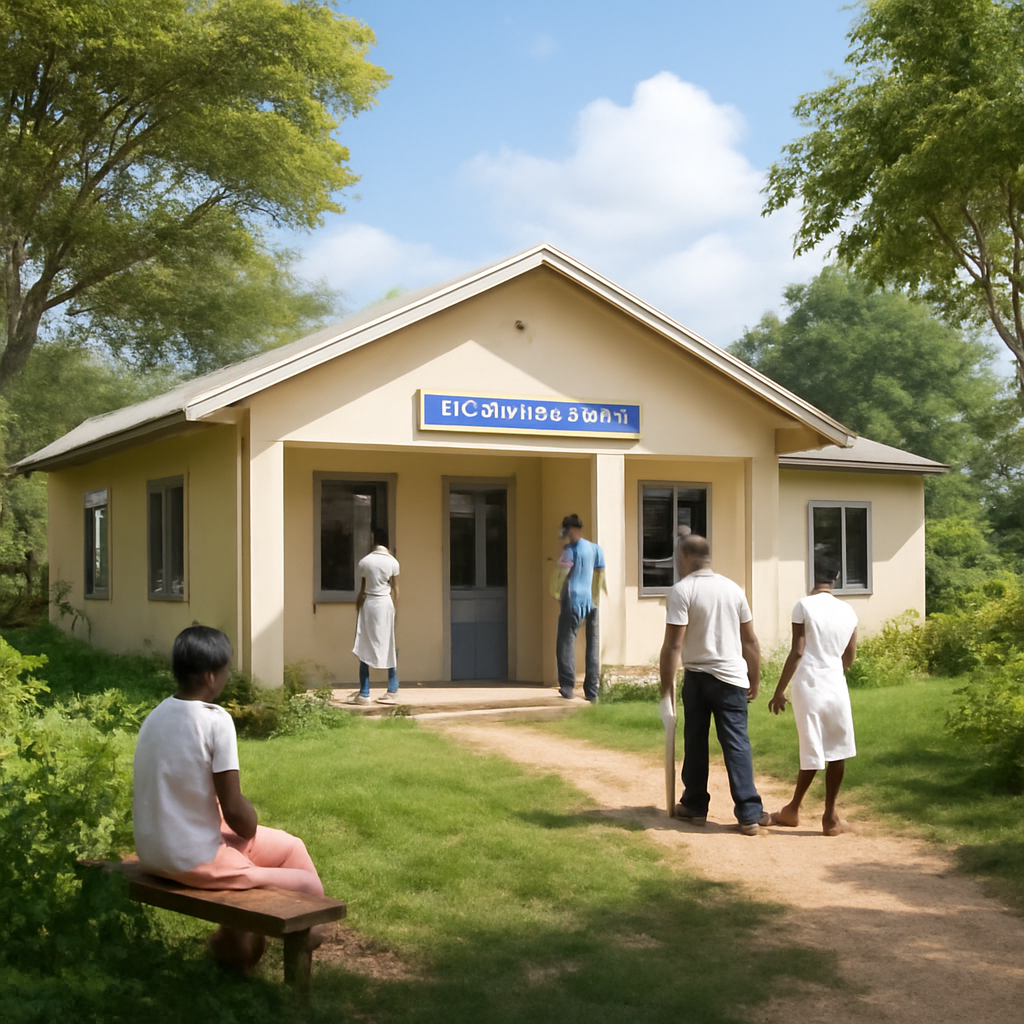
“This investment allows Hawaiʻi to finally close the distance between rural communities and the care they deserve,” Governor Josh Green said after his state was awarded roughly $189 million through the Centers for Medicare and Medicaid Services’ Rural Health Transformation Program.
CMS launches the Rural Health Transformation Program
Under the Working Families Tax Cuts Act passed in 2025, the Centers for Medicare and Medicaid (CMS) allocated $50 billion over 10 years to support investments in rural health transformation. In September 2025 CMS formally launched the Rural Health Transformation (RHT) Program with the stated aim to “empower states to strengthen rural communities across America by improving healthcare access, quality, and outcomes…through innovative system-wide change.” States received an initial allocation in December 2025 and will receive funds each year for the next decade.
Permitted uses of RHT funds
CMS has published a specific list of allowable uses for the RHT dollars. States may use funds for:
- Promoting evidence-based, measurable interventions to improve prevention and chronic disease management.
- Promoting consumer-facing technology-driven solutions for the prevention and management of chronic diseases.
- Providing training and technical assistance for development and adoption of technology-enabled solutions in rural hospitals, including remote monitoring, robotics, artificial intelligence, and other advanced technologies.
- Providing technical assistance, software, and hardware for significant information technology advances designed to improve efficiency, enhance cybersecurity capability development, and improve patient health outcomes.
- Developing projects that support innovative models of care that include value-based care arrangements and alternative payment models, as appropriate.

This site is the portfolio.
OSINTSights runs on Cloudflare Workers, D1, R2, and Vectorize, with an AI pipeline on Hetzner ARM. Nubivance designed, built, and operates it. We do the same for clients.
See what we buildHawaiʻi’s plan for roughly $189 million
Governor Josh Green described Hawaiʻi’s award — “one of the largest value awards in the nation on a per capita basis” — as a response to “both the unique healthcare challenges facing its rural and neighbor island communities and the strength of the state’s rural health transformation strategy and application.” With healthcare services concentrated on Oʻahu, Green said rural residents must travel at great cost to receive quality care.
The state announced specific projects it intends to fund:
- Rural Health Information Network (RHIN) — a statewide digital backbone linking rural hospitals, clinics and health centers through interoperable electronic health records, wireless networks and shared data hubs.
- Pili Ola Telehealth Network — a statewide telehealth system connecting rural communities to providers while expanding virtual care and telehealth training.
- Rural Infrastructure for Care Access (RICA) — expansion of emergency medical services, mobile healthcare, community paramedicine and behavioral health capacity in rural areas.
- HOME RUN (Hawai‘i Outreach for Medical Education in Rural Under-resourced Neighborhoods) — a workforce pipeline providing training, residencies, scholarships and mentoring to recruit and retain rural healthcare professionals.
- Rural Respite Network — expansion of the medical respite model to rural communities to reduce avoidable hospitalizations among unhoused and post-acute patients.
- Rural Value-Based Innovation and AHEAD Readiness Fund — a competitive fund to help rural providers adopt innovative, value-based care models and prepare for CMS’ AHEAD payment system.
Kansas: an RHT windfall amid Medicaid funding losses
The announcement of new federal transformation dollars arrives alongside a contrasting federal move: the elimination of $137 billion in funding from rural hospitals because of changes to Medicaid. That tension is acute in Kansas, where Cindy Samuelson, Senior Vice President at the Kansas Hospital Association (KHA), told WBUR’s On Point that Kansas is one of the states with the “most at risk hospitals for closure.”
Samuelson said community support is the reason many rural hospitals in Kansas remain open, and that “in Kansas, our hospitals rely on more than $78 million in additional county, city or district taxes to remain open.” The state has a working plan created in partnership with KHA and, with over $200 million in hand, Samuelson said she is confident the RHT Program funding “will make a big impact for Kansans.” Kansas’ priorities include transforming delivery systems, attracting and retaining a skilled workforce, and fostering innovative technologies to increase access to rural care.
How the Kansas Hospital Association, state governments, and rural hospitals will respond
- Kansas Hospital Association (KHA): KHA has partnered with the State of Kansas on a plan with measurable outcomes and identifies transformation of delivery systems, workforce development, and technology adoption as top priorities.
- State governments (exemplified by Hawaiʻi): States with large per-capita awards plan to deploy funds across digital infrastructure, telehealth, mobile services, workforce pipelines, and value-based readiness funds to close geographic gaps in care.
- Rural hospitals: Many rural hospitals — especially in Kansas — currently rely on local tax revenue (more than $78 million cited for Kansas) and face the prospect of closure unless community support, local funding, and new federal transformation dollars can offset other federal funding losses.
The Rural Health Transformation Program is structured to fund technical, clinical and payment innovations over a decade, and states are already translating those categories into concrete projects from interoperable health-record networks to telehealth and workforce pipelines. But the program’s start also landed amid the larger shift in federal Medicaid funding — a contrast that state officials and hospital leaders, including Cindy Samuelson and Governor Josh Green, have publicly framed as both an opportunity and a challenge. Whether $50 billion over 10 years can be directed in ways that materially offset the effects of the $137 billion Medicaid funding change remains the central test for the program.