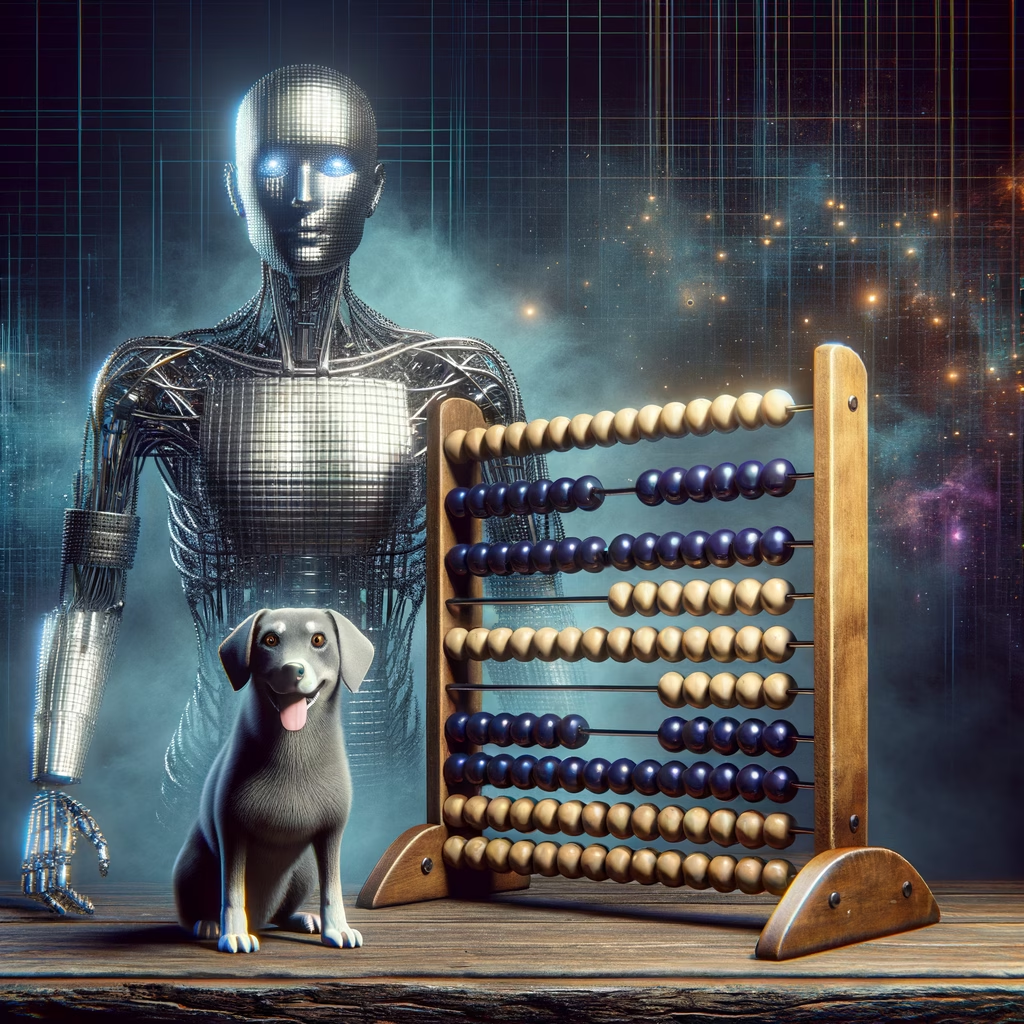
In a world where digital security is paramount, the notion that our current cryptographic frameworks could become obsolete overnight is both fascinating and frightening. As Peter Gutmann, a prominent computer scientist, aptly puts it, the ongoing discourse about post-quantum cryptography has become riddled with misconceptions—what he describes as ‘bollocks.’ But why do 8-bits, an abacus, and even a dog matter in the context of quantum code breaking?
The stakes have never been higher. The landscape of cyber warfare is evolving, and the potential for quantum computing to dismantle existing encryption methods has spurred a race among technologists and policymakers. The US National Institute for Standards and Technology (NIST) has been spearheading the development of post-quantum cryptographic algorithms since 2016, a move viewed as essential by some and utterly misguided by others.
Historically, cryptography has relied on the computational difficulty of specific mathematical problems. However, the impending arrival of quantum computers—machines that can process information at speeds far exceeding our current capabilities—threatens to render these established algorithms ineffective. To put this in perspective, while conventional computers may take thousands of years to factor large numbers, a quantum computer could do so in mere seconds. This potential reality raises pressing concerns for governments, businesses, and individuals alike.
Yet, not everyone agrees with the urgency surrounding quantum encryption. Gutmann argues that the fears driving NIST’s initiative stem from a misunderstanding of quantum computing’s capabilities and its practical application. He believes that the current discourse is inflated, reducing a complex problem to a simplistic narrative. Instead of reacting to an ominous threat, he advocates for a more measured approach, one that accounts for the limitations of quantum technology as it stands today.
This divergence of views brings us to a critical juncture. For technologists, the challenge is both a technological hurdle and an ethical dilemma. How can we ensure that the new cryptographic frameworks we develop today won’t be compromised by advancements tomorrow? Policymakers, on the other hand, face the daunting task of crafting regulations that balance innovation and security without stifling technological growth.
Then there are the users—individuals whose digital lives are intricately woven into the fabric of modern society. They are caught in a web of uncertainty, where the very systems they rely upon may soon be vulnerable. How do we educate the general public about these risks without invoking fear? Furthermore, adversaries—both state and non-state actors—are likely watching these developments with keen interest, eager to exploit any vulnerabilities that emerge in a post-quantum world.
To add an unexpected layer to this discourse, we must consider the seemingly trivial elements: 8-bits, an abacus, and a dog. Each symbolizes fundamental aspects of our technological evolution. The 8-bit architecture serves as a reminder of our roots in computing, while the abacus represents the genesis of calculation itself—a tool that has withstood the test of time. As for the dog, it serves as a metaphor for loyalty and trust, qualities we seek in the tools we employ to protect our digital identities.
As the field of quantum code breaking continues to evolve, the questions become more pressing: Are we truly prepared for the quantum leap in computing? Or are we merely responding to a specter of our own making? The balance of power in the digital realm hangs in the balance, and our responses today will define the landscape of security tomorrow. With various perspectives converging, one thing is clear: the dialogue surrounding quantum cryptography is far from settled.
To navigate this complex terrain, we must foster open discussions that embrace diverse viewpoints, grounded in factual evidence and foresight. After all, the future of our digital security might very well hinge on understanding the interplay between technology, policy, and the human element inherent in all of this.




