Six U.S. military commissaries experienced freezer failures in August that spoiled food, and Pentagon investigators are now treating the outages as a possible cyberattack, according to a U.S. official familiar with the matter who spoke on the condition of anonymity.
Fort Huachuca’s defrosting freezer and the wider pattern
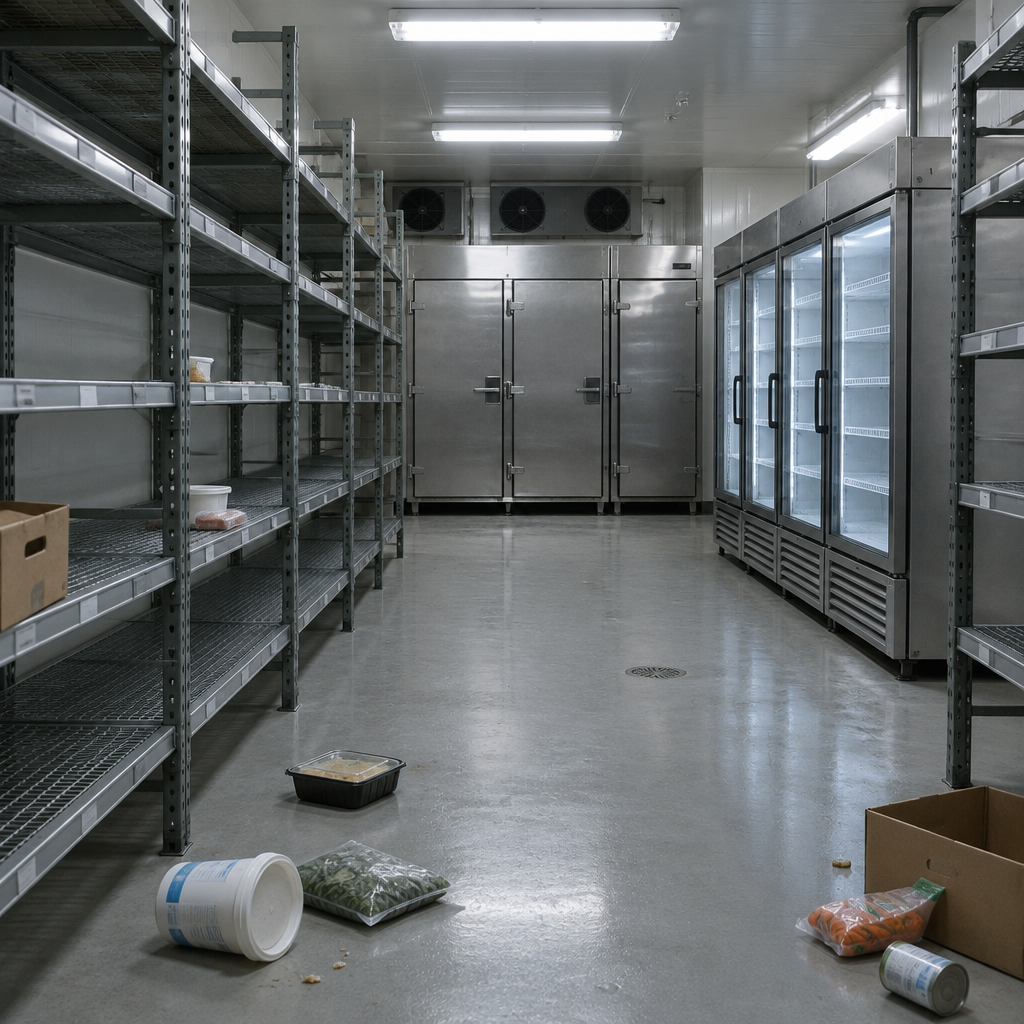
The outages affected about six commissaries — the on-base grocery stores serving military personnel — the official said. At Fort Huachuca in Arizona, a freezer reportedly went into defrost mode and heated its contents, leaving food spoiled. Investigators have not publicly concluded what caused the failures and the official said it remains unclear who might be responsible.
U.S. investigations: Cyber Command and Defense Department law enforcement
Cyber Command and various Defense Department law‑enforcement units are probing the incidents, according to reporting tied to the investigation. The timeline in public reporting places the outages in August; investigators and military officials have since been engaged in determining whether the failures were accidental equipment malfunctions or the result of deliberate interference.

The cyber insurance questionnaire just landed. Now what?
SOC 2, HIPAA, insurance renewals - someone has to own security strategy. Nubivance provides fractional CISO leadership without the full-time salary.
Get a security leadCross‑national link: French incidents and cooperation
French authorities are working with U.S. officials examining the matter. Earlier in October, hackers in France overrode temperature controls on commercial refrigeration equipment at more than 350 establishments, forcing supermarkets to discard spoiled food. That incident has been cited by investigators as a potentially related event given the similarity of the symptom — refrigeration systems being driven out of normal temperature control — and has prompted direct contact between U.S. and French officials, according to news reports.
Industrial controls, food storage, and the cybersecurity context
The investigation has drawn attention to the computers that control everyday equipment used to store and handle food. A 2021 Department of Homeland Security assessment specifically identified refrigeration failures and shipping delays as cybersecurity risks that could lead to spoilage and shortages. The Food and Agriculture Information Sharing and Analysis Center has warned that attackers are targeting internet‑accessible industrial controls that may lack robust cyber defenses, and it has observed that the agri‑food sector’s sensitivity to downtime can give ransomware groups leverage to demand payment.
What this means for technologists, lawmakers, and commissary managers
- Technologists and security teams: Incidents like the Fort Huachuca outage emphasize the operational dependence on control systems for refrigeration and the need to inventory and defend internet‑accessible industrial controls, a vulnerability highlighted by the Food and Agriculture ISAC and the DHS assessment.
- Lawmakers and regulators: Lawmakers have already sought to bolster federal protections for food systems; a bipartisan group reintroduced the Farm and Food Cybersecurity Act in 2025 after an earlier proposal in 2024, signaling continued legislative attention to cyber risks in agriculture and food supply chains.
- Commissary managers and military logisticians: The spoilage that occurred at multiple on‑base grocery stores underscores the practical consequences of refrigeration failures for service members’ food access and the importance of incident response coordination with military cyber and law‑enforcement units.
Reporting on the U.S. outages was initially flagged in August by the Signal and Silence blog; Stars and Stripes later reported the involvement of military investigators, and The Telegraph reported officials’ contact with French authorities. Reuters first reported that investigators were treating the incidents as a possible hack.
The central facts remain straightforward: freezer systems at approximately six commissaries failed in August and spoiled food; U.S. military cyber and law‑enforcement entities are investigating; French authorities are cooperating after large‑scale refrigeration intrusions were observed in France; and federal assessments and industry groups have previously warned that refrigeration and other industrial controls are attractive targets. Who, if anyone, carried out an intentional intrusion — and whether the U.S. and French incidents are linked causally — are questions investigators are still working to answer.
Read the original report: Pentagon investigates suspected cyberattack behind military freezer failures