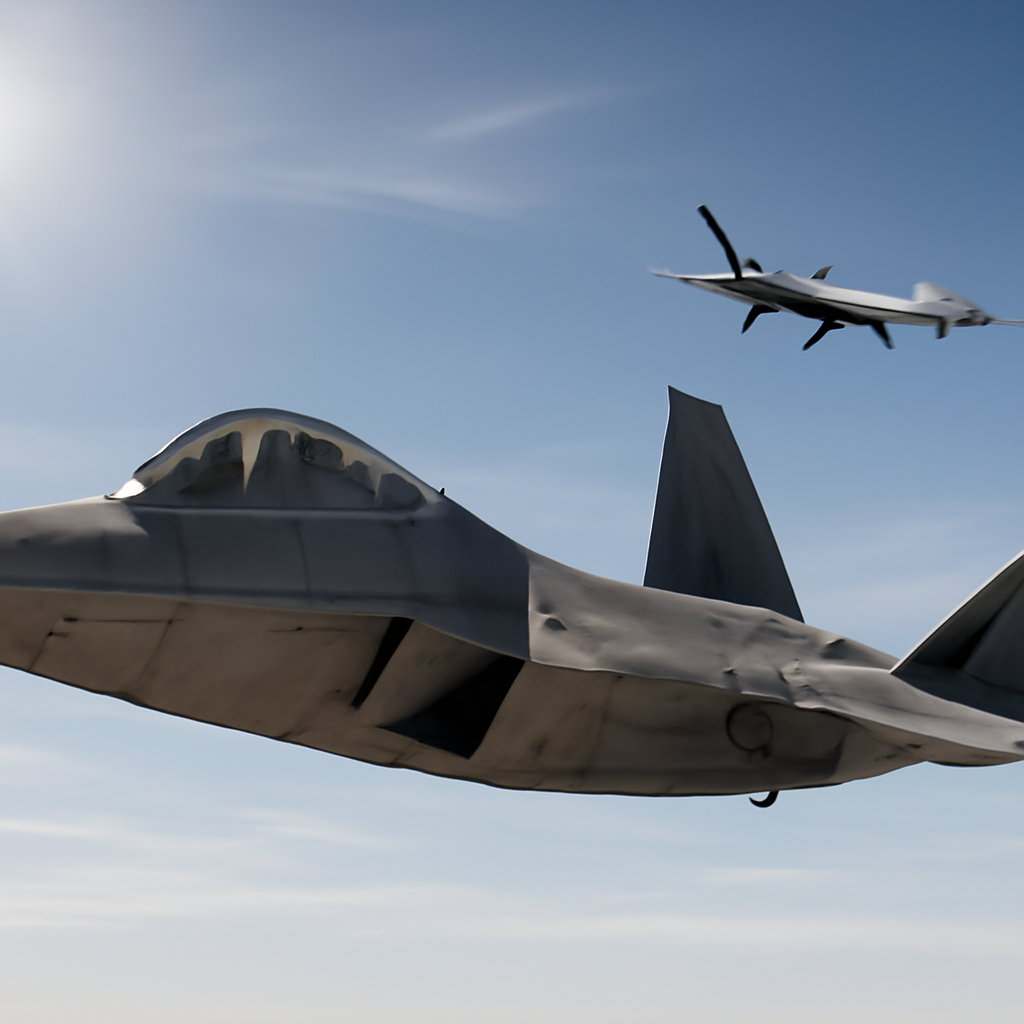
Escalating Skies: Pakistan Unveils JF-17 Missile Advancements Amid Mounting Regional Tensions
In a dramatic display of military capability, Pakistan has released its first official images of the JF-17C fighter jet outfitted with Chinese-made PL-10 and PL-15 air-to-air missiles. This development comes at a sensitive juncture, just as regional security dynamics are intensifying following a high-profile terrorist attack in Kashmir. The imagery, widely circulated and analyzed by defence experts and policy makers alike, signals a renewed emphasis on advanced aerial combat capabilities in what is arguably one of the world’s most closely watched military rivalries.
The release of these images by Pakistan is noteworthy not only for the technological prowess they project but also for the geopolitical environment in which they appear. As tensions between Pakistan and India escalate—amid mutual accusations and strategic posturing over Kashmir—the unveiling of a modernized JF-17C fighter pack serves as both a statement of intent and a warning. Observers note that such demonstrations are deeply rooted in a long history of military and strategic competition that has defined South Asia for decades.
The JF-17 Thunder, a product of joint Pakistani-Chinese development and produced by the Pakistan Aeronautical Complex, has for years been an integral component of Pakistan’s air strategy. Originally introduced as a cost-effective and versatile counterbalance to older fighter fleets in the region, the upgraded JF-17C variant now boasts compatibility with state-of-the-art air-to-air missiles. The PL-10 and PL-15, known for their precision and extended range, augment the jet’s ability to counter advanced aerial platforms—capabilities that are particularly significant given the current tension with India.
Historical context is critical to understanding the implications of this development. The JF-17’s origins trace back to the early 2000s, when Pakistan sought to modernize its aerial fleet in the face of both budgetary constraints and evolving strategic challenges. With Chinese assistance, the programme matured into a symbol of regional partnership and technological competence. Over time, continuous upgrades have transformed the fighter into a platform capable of carrying modern munitions, thus embodying a significant leap in Pakistan’s emphasis on defense modernization.
In recent weeks, following a deadly terrorist attack in Kashmir that has deeply resonated on both sides of the border, Indian security officials reasserted their warning of robust military retaliation should any further aggression occur. In that environment, Pakistan’s decision to showcase its enhanced arsenal appears as part of a broader strategy to reinforce deterrence. The timing of the public release of these images certainly invites close scrutiny from defence analysts, international journalists, and governments around the world.
According to verified reports from Defence Blog, the images of the JF-17C coupled with its sophisticated weaponry are not merely for domestic consumption. They serve multiple strategic purposes. One is to fortify domestic support by demonstrating to Pakistani citizens that their military is evolving to meet contemporary challenges. Another is to signal to adversaries, notably India, that Pakistan is prepared to escalate defensive and, if necessary, offensive operations should the situation deteriorate further. This measure of strategic signaling is a familiar maneuver in international military affairs, where transparency about capability often serves as a deterrent mechanism as potent as any treaty or verbal declaration.
Expert military analysts have noted that the involvement of Chinese technology in equipping the JF-17 underscores a broader geopolitical alignment between Pakistan and China. Both nations have long pursued a shared vision of counterbalancing what they perceive as American and, by extension, Indian strategic encirclement in Asia. The incorporation of the PL-10 and PL-15 air-to-air missiles into Pakistan’s fighter jets can thus be seen as part of a sustained technological transfer strategy, which not only modernizes Pakistan’s capabilities but also reinforces China’s standing as a major defence supplier to countries facing regional challenges.
From a technical standpoint, the PL-10 missile is celebrated for its agility and high maneuverability, attributes crucial in close-range dogfights. Meanwhile, the PL-15 offers extended range and enhanced seeker capabilities, which are expected to provide Pakistan’s pilots with a significant edge in beyond-visual-range engagements. In this context, the combination of these two missile systems on a single platform like the JF-17C introduces a layered defence and offence capability that can effectively deter adversaries. This technological advancement may well redefine aerial combat scenarios for both Pakistan and India, whose air forces have historically been locked in a cautious game of one-upmanship.
For the regional security community, Pakistan’s announcement is a double-edged sword. On one hand, it reinforces the principle of deterrence—by visibly advancing its military capabilities, Pakistan hopes to push potential adversaries into a position of calculated restraint. On the other, it raises the spectre of an arms race that could further destabilize an already volatile region. As noted by retired military officers and experts at think tanks such as the Institute for Strategic Studies, such public displays of military might, while often intended as deterrence, can sometimes have an unintended escalation effect, particularly in regions where mistrust runs deep.
Stakeholders from multiple perspectives are now carefully monitoring these developments. Defence analysts underline that an enhancement in missile technology is more than just a numerical upgrade; it represents a strategic recalibration that affects the broader dynamics of nuclear and conventional deterrence in South Asia. For instance, while the immediate audience to these moves is India, the prolonged impact extends to global powers with vested interests in regional stability, including the United States and Russia. These nations, along with international bodies like the United Nations, have historically expressed concerns over any military build-up between nuclear-armed states that could inadvertently spark conflict.
In analyzing the situation, it is instructive to consider a few critical factors:
- Technological Interdependence: The integration of Chinese-made missile systems in Pakistan’s JF-17C highlights the deep interdependence between these nations’ defence strategies—a dynamic that has significant implications for regional alliances and deterrence doctrines.
- Strategic Messaging: The public deployment of advanced weaponry serves as a multifaceted signal—internally, reinforcing national resolve, and externally, marking unchanged commitment to counter emerging threats.
- Regional Stability: With both Pakistan and India possessing nuclear capabilities, any overt military escalation carries the inherent risk of miscalculation, rendering diplomatic engagement as crucial as ever for maintaining peace.
In the realm of strategic innovation, experts caution that while the upgraded JF-17C certainly broadens Pakistan’s tactical options, it must be matched by adept command, control, and communication measures to prevent inadvertent escalation. Defense analyst and former Pakistani Air Force official, Air Vice Marshal (Retd.) Asif Qadir, has occasionally emphasized in various interviews available in public defence forums that technological upgrades must be accompanied by rigorous integration into broader military doctrine—a sentiment echoed by many in the strategic community around the globe.
The broader implications of these enhanced capabilities for India’s military posture also warrant careful analysis. Given India’s own substantial investment in modern fighter aircraft and air-to-air missile systems, the unveiling by Pakistan might compel New Delhi to reassess its immediate and long-term defence strategies. While India continues to modernize its own platforms, the evolving air warfare dynamics in South Asia mean that both nations are likely to engage in a continuous process of deterrence and counter-deterrence. In such a delicate balance, communication channels and confidence-building measures can be as important as any tactical innovation.
Looking ahead, it appears that the next chapters in the Pakistan-India rivalry will be written as much in diplomatic corridors as in the skies above the subcontinent. The period following the recent terrorist attack in Kashmir is critical, with both sides—under significant domestic pressure—likely to adopt hardline stances. However, global and regional stakeholders are urging restraint, emphasizing that sustained dialogue and measured responses are the only viable ways to prevent miscalculations that could lead to military escalation.
Observers at the Hudson Institute and other international policy research organizations have repeatedly warned that modern warfare, underpinned by advanced missile technology, carries inherent risks. Technology is an enabler—it amplifies the range and lethality of military responses, while also narrowing the margin for error. Therefore, as both Pakistan and India navigate these treacherous strategic waters, transparent communication and multilateral engagement remain indispensable.
Ultimately, the unveiling of the JF-17C equipped with PL-10 and PL-15 missiles is a significant milestone that encapsulates broader themes in contemporary international relations: the interplay of technological innovation, strategic signaling, and the perpetual quest for stability amid uncertainty. For the people of both Pakistan and India, as well as for the international community, this development underscores a critical reality—defence technologies and military capabilities, while necessary for national security, also carry the weighty responsibility of ensuring that advancements do not inadvertently fuel further conflict.
As the situation continues to evolve, the international community will be watching closely, mindful of both the technological advancements on display and the broader implications for regional security. In an era where the boundaries between conventional and nuclear deterrence blur, each public demonstration of military prowess carries with it the dual potential of reassurance and alarm. The challenge, therefore, remains not solely in the development of advanced weapons systems, but in the diplomacy that must gird such advancements—ensuring that when the skies are drawn with missiles and jets, the human cost does not become the ultimate casualty.
In the final analysis, one must ask: in a region where historical rivalries are as potent as technological leaps, can strategic restraint and diplomatic engagement temper the inherent risks of modern warfare, or will each demonstration of capability merely set the stage for the next dangerous missile test in the theater of geopolitical brinksmanship?