"a large-scale air and ground offensive" that will continue indefinitely,
— the Inter-Services Public Relations (ISPR) description of Operation Shaban captures both scale and horizon for Pakistan’s renewed counterinsurgency and counter-terrorism (COIN/CT) surge in Balochistan. The campaign has placed the Pakistan Army Aviation Corps (PAA) back into sustained, large-scale employment for the first time in a decade and has reopened familiar procurement and posture questions about the Army’s long-term force structure.
Operation Shaban: two theatres, two insurgencies
ISPR and reporting identify Operation Shaban operating across two distinct theatres in Balochistan. In the south, action centers on Lasbela and Khuzdar against the Baloch Liberation Army (BLA). In the north, operations around Ziarat target Tehreek-e-Taliban Pakistan (TTP). The campaign is described as open-ended, returning the PAA to a level of sustained combat employment not seen since the series of operations in the late 2000s.
Why rotary attack and transport helicopters matter
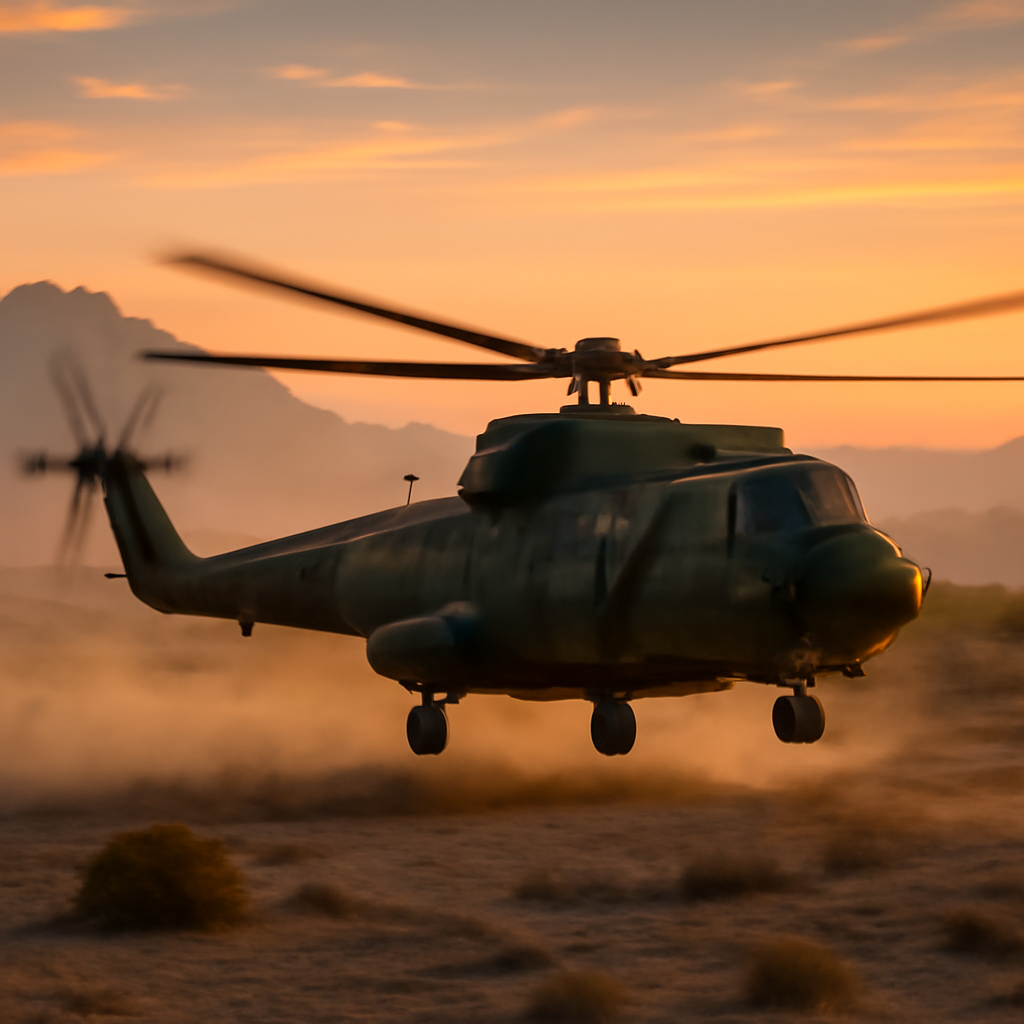
Quwa’s Market Intelligence brief on the PAA underlines a consistent pattern: "historically, General Headquarters (GHQ) only invested in new rotary attack and transport platforms when faced with an enduring COIN/CT challenge." The reasoning is operationally straightforward in the current context. The BLA and TTP, Quwa notes, "do not yet have the means to threaten attack helicopters," making helicopter-delivered close air support (CAS) a pivotal force multiplier for infantry conducting COIN/CT in remote and rugged terrain.
Beyond firepower, rotary transport capability is highlighted as critical for mobility: helicopters allow Pakistan to "mobilize trained infantry, compressing response times to stop emerging or looming insurgent threats, especially in more remote areas." Quwa also points out that transport and attack helicopters carry dual utility: valuable for COIN/CT yet also "refolded back into conventional operations" should state-to-state needs arise — an adaptability that contrasts with role-specific platforms like MRAPs.

This site is the portfolio.
OSINTSights runs on Cloudflare Workers, D1, R2, and Vectorize, with an AI pipeline on Hetzner ARM. Nubivance designed, built, and operates it. We do the same for clients.
See what we buildDomestic defence industry: where SOEs fit and where they do not
Several downstream COIN/CT needs — MRAPs, light armoured vehicles (LAV), and infantry equipment — are already within Pakistan’s domestic industrial remit and are being handled by state-owned enterprises (SOEs). Heavy Industries Taxila (HIT), Pakistan Ordnance Factories (POF), and Wah Industries Limited (WIL) have been tasked with those programs, positioning the domestic pathway for many land systems as the long-term approach.
But the brief is explicit about limits: "the domestic pathway does not exist for helicopters," which GHQ views as a higher-impact, dual COIN/CT-and-conventional asset. That gap sets up a bifurcated procurement logic — land systems maturing through SOEs, while rotary aviation implies external sourcing.
Surge imports versus gradual SOE production
Quwa anticipates a two-track acquisition cycle. For immediate or near-term surge requirements, the Army will "lean on imports." For the gradual, long-term build of a standing COIN/CT posture, the Army will channel work through HIT, POF, and WIL. This split reflects both urgency and industrial reality: SOEs can absorb longer timelines to develop and produce MRAPs, LAVs and infantry gear, while helicopter capability requires external procurement to meet near-term operational demands and the perceived centrality of rotary aviation to enduring COIN/CT missions.
What this means for GHQ, HIT/POF/WIL, and China and investors
- GHQ and the Pakistan Army: Maintaining an open-ended COIN/CT campaign in Balochistan provides strong incentives for GHQ to hold standing capabilities along the western frontiers. Whether GHQ deems this campaign comparable in priority to late-2000s operations remains unclear, but the economic stakes in Balochistan — increased use of the Gwadar port, mineral resources, and a potential gas pipeline from Iran — create pressure to secure the province and protect investment.
- HIT, POF and WIL (Pakistan’s SOEs): These firms are the designated long-term avenue for land-system acquisitions tied to COIN/CT, including MRAPs and LAVs. Expect continued tasking for infantry-focused programs and gradual production profiles aligned with domestic industrial timelines.
- China and investors: The brief explicitly links external pressure from "foreign partners like China" and the implicit need to ensure security to encourage investment. That dynamic increases political and operational incentives for Pakistan to sustain COIN/CT capabilities — and to prioritize rapid air mobility and CAS for security stabilization in resource- and port-rich regions.
Operation Shaban has brought the PAA back into sustained operational prominence and crystallized procurement choices: land systems will likely remain a domestic SOE-led, long-term play, while helicopters — judged higher-impact and without a domestic industrial base — point to import-driven acquisitions. The question the reporting leaves on the table is whether GHQ will conceive this campaign as the same enduring priority that previously triggered large-scale rotary investments; the answer will determine whether the PAA receives incremental sustainment or a renewed, long-term build akin to armour and artillery.