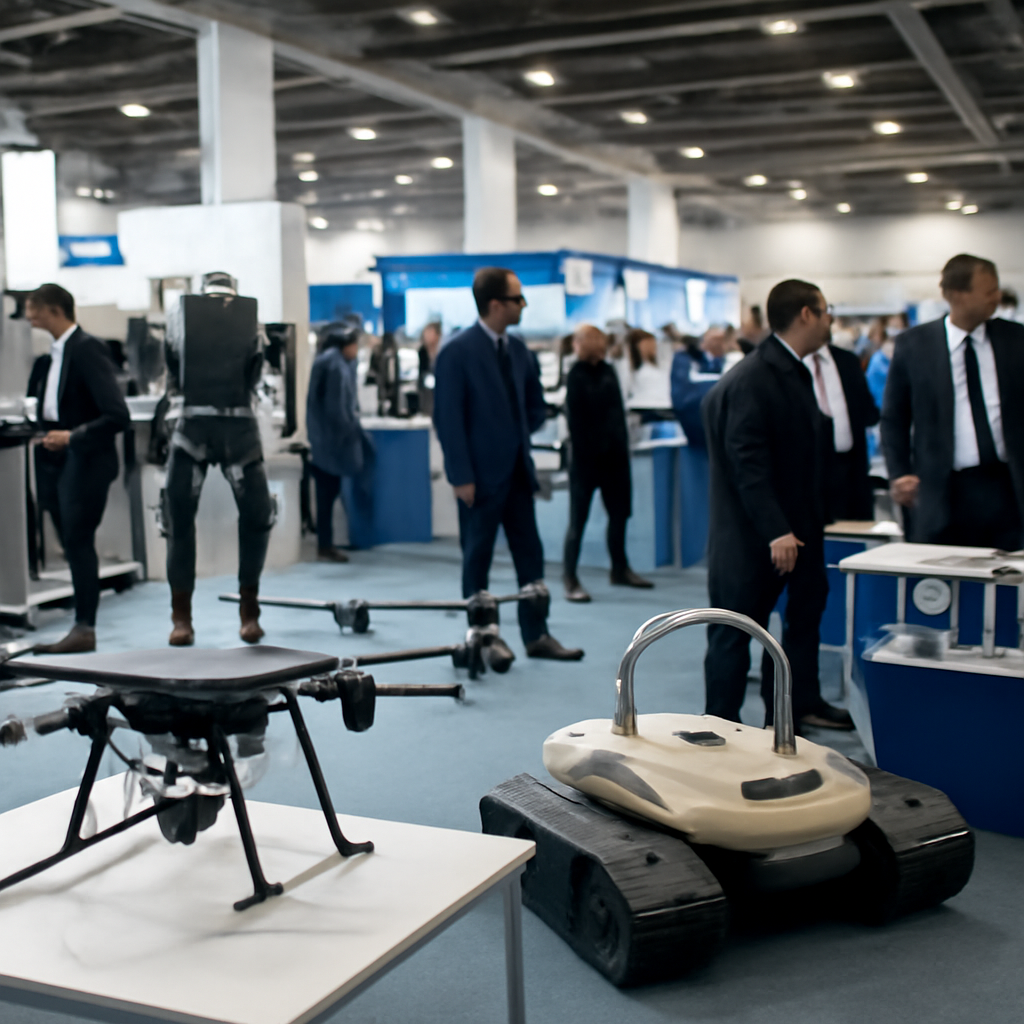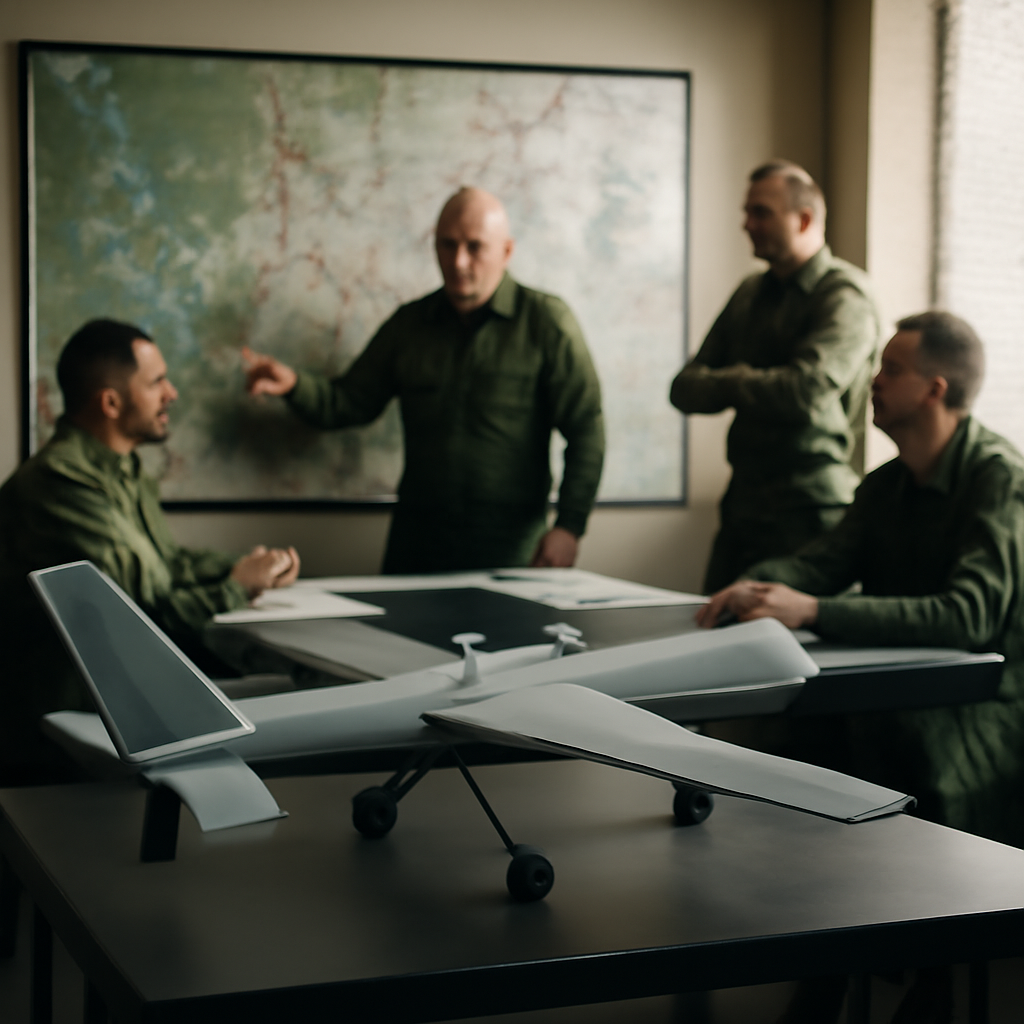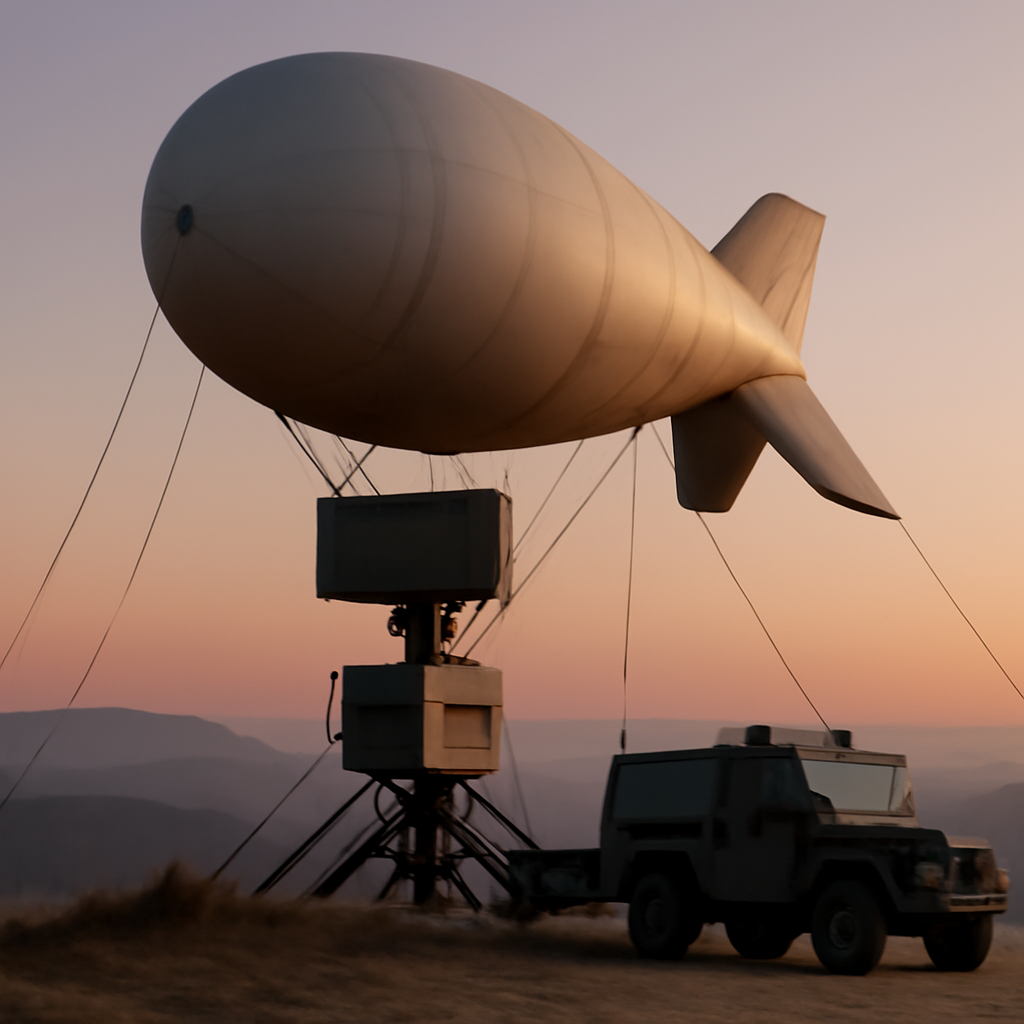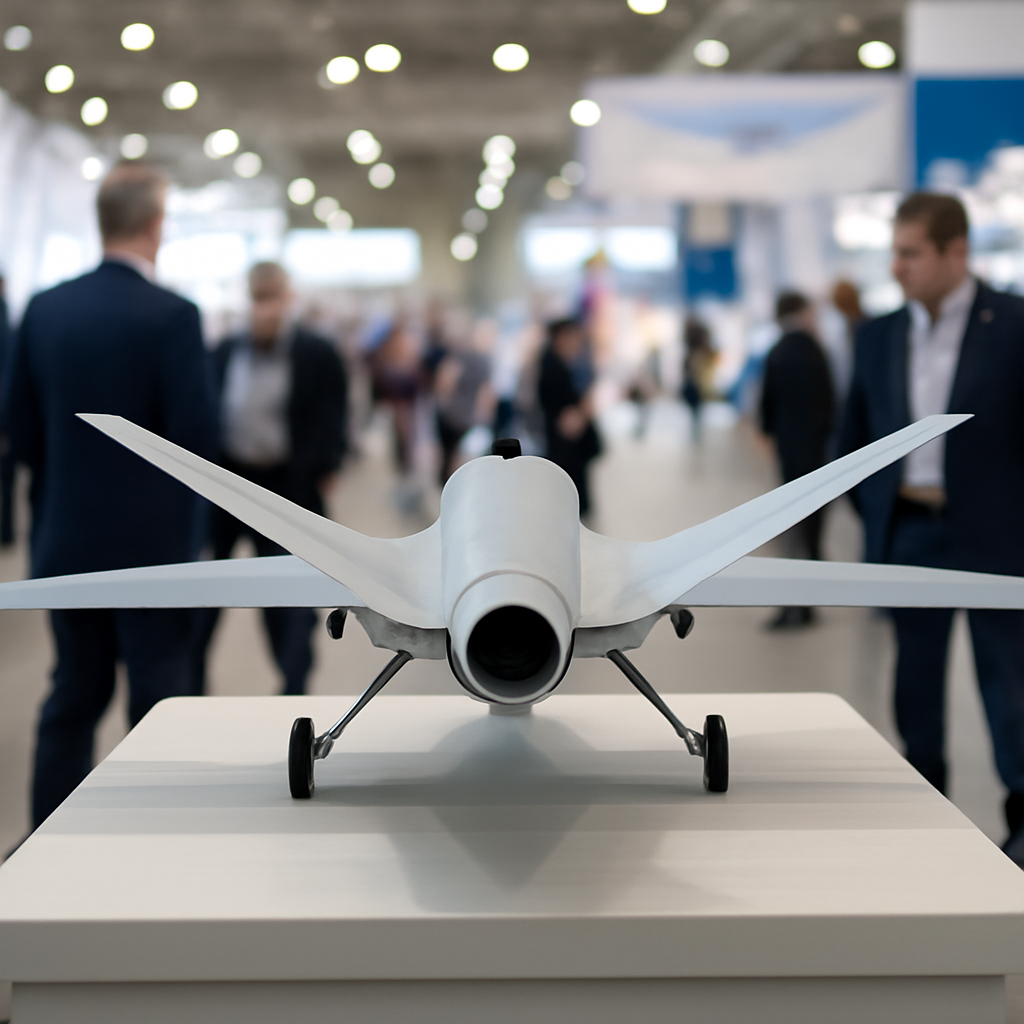
On 23 July 2026, Pakistan’s Heavy Industries Taxila (HIT) revealed the P-905, a counter‑unmanned aerial system that pairs an OR-503 radar with an I-402 interceptor drone.
The HIT P-905: OR-503 radar paired with an I-402 interceptor
The P-905 is presented as a two-part system: the OR-503 radar and the I-402 interceptor drone. Quwa describes the package as part of a broader push inside Pakistan to field interceptor‑drone C‑UAS options. The P-905 sits alongside other HIT UAS projects such as the S-369 loitering munition, the R-040 VTOL dual‑intelligence and strike drone, and the R-020 VTOL drone.
HIT's R&D engine: ARDIC and the limits of an armoured‑vehicle maker
HIT is primarily known for armoured vehicles such as the Haider main battle tank (MBT) and the Hisar MRAP. Its Advanced Research, Development and Information Center (ARDIC) functions as an in‑house R&D bureau with a mandate to indigenize defence solutions through reverse engineering and original design. Quwa notes ARDIC helped indigenize 39% of the Haider MBT. That R&D capacity is one reason HIT is branching into airborne systems even though armoured vehicles remain its headline products.
Quwa outlines three possible pathways for HIT’s new drone work: ARDIC could license designs to other firms (preferably private-sector manufacturers), HIT could retain production in‑house and shoulder long‑term facility costs, or HIT could orient toward exports — though the article judges an export‑only push unlikely given high domestic demand for UAS in both offensive and defensive roles.

Audit-ready is a season. It shouldn't be.
Evidence in spreadsheets, controls drifting between audits, frameworks multiplying on flat headcount. Nubivance runs continuous compliance on Rapid7 Cyber GRC - SOC 2, HIPAA, ISO 27001, PCI, CMMC.
End the scramblePrivate competitors: Gradient Aero’s Atlas, Swift, Shark, and another firm
Quwa reports at least three interceptor‑drone programs competing for Pakistan Army contracts, including two private sector entrants. Gradient Aero is named as developing two kinetic interceptors — Swift (a lightweight platform) and Shark (a heavyweight, manually‑operated interceptor) — to be paired with the “Atlas,” which Gradient markets as a “multi‑sensor fusion” stack integrated with both secure data‑links and autonomous capabilities (with a human‑in‑the‑loop capability). Quwa says Swift is being developed to become mostly autonomous, while Shark is positioned for contingency or high‑value asset protection. Quwa also notes one other private company working on similar data‑link capabilities that enable interceptor drones to coordinate with surface radars for autonomous launch and pursuit.
Automation and integrated C‑UAS concepts: dual‑radar, EO, and Sky Map analogies
The P-905’s combination of dual‑radar and electro‑optical (EO) systems suggests a focus on automated target cueing and direction: radars detect threats, an underlying command, control, and communication (C3) layer issues intercept orders, and interceptors are dispatched automatically, with human operators available at the end of the chain to confirm a successful engagement. Quwa also observes these systems could be fitted with seekers or real‑time data links and become more analogous to a surface‑to‑air missile (SAM) in their degree of automation.
Quwa draws a direct comparison to Ukraine’s Sky Map concept — an integrated command‑and‑control layer that fuses distributed sensors (including acoustic systems for low‑flying drones) to alert interceptor units — and reports Pakistan is working on similar integrated solutions. Gradient’s Atlas is presented as one local attempt to replicate a Sky Map‑like stack with secure data links and autonomous functions.
Scale challenge: the 2,000‑per‑day figure and industrial implications
Quwa frames a stark production benchmark: to sustain Ukraine‑level intercept rates, Pakistan would need on the order of 2,000 interceptor units per day — roughly 50,000 or more per month — requiring both a large initial stockpile and rapid replenishment capacity. That scale helps explain why state‑owned enterprises (SOEs) such as HIT remain involved even as private firms are brought into the market: the task may exceed what SOEs or single private companies can supply alone.
Quwa adds that a sustainable defence mix will likely layer soft‑kill electronic warfare measures with hard‑kill options ranging from anti‑air guns and SAMs to interceptor drones linked into a distributed sensor network spanning radars, EO/IR, passive and acoustic sensors.
What this means for the Pakistan Army, the Ministry of Defence Production, and civilian sites
- The Pakistan Army: Quwa reports the Army is actively prioritizing interceptor drones—driven in part by lessons drawn from Ukraine—and will be the primary customer shaping which systems are accepted and fielded.
- The Ministry of Defence Production (MoDP): The MoDP has called on the private sector to support Pakistan’s drone requirements; the article frames private engagement as complementary to SOE ramp‑ups because overall demand appears to be “scale‑heavy.”
- Civilian and industrial site operators: Quwa suggests a distributed, data‑linked network of interceptors combined with EW and layered sensors could be scaled to protect bases, industrial sites, and civilian areas if production and integration challenges are met.
Quwa’s account leaves the immediate next steps clear in outline: field trials, procurement decisions, and industrial scaling. The P-905 adds another entrant to a crowded, fast‑moving domestic C‑UAS market, and the article’s central tension is operational: Pakistan can design interceptor concepts, but meeting the production, integration and stockpile requirements at scale will determine whether these systems can do more than a single demonstration — or provide continuous, automated protection at the tempo Quwa says would be required.