"The Sultanate of Oman based on its responsibilities toward the Strait of Hormuz, and its importance to the global economy, and in accordance to its continued commitment to the international law and the law of the sea to ensure freedom of navigation in the strait without imposing any tolls, in line with the outcomes and efforts reached by the United States and Islamic Republic of Iran…has worked in coordination with the International Maritime Organization (IMO) to provide vessels with the option of a temporary maritime corridor defined by the coordinates announced by IMO and Omani authorities. Ships willing to transit must coordinate with IMO," Oman’s Maritime Security Center stated Wednesday on X.
Oman and the IMO establish a temporary corridor
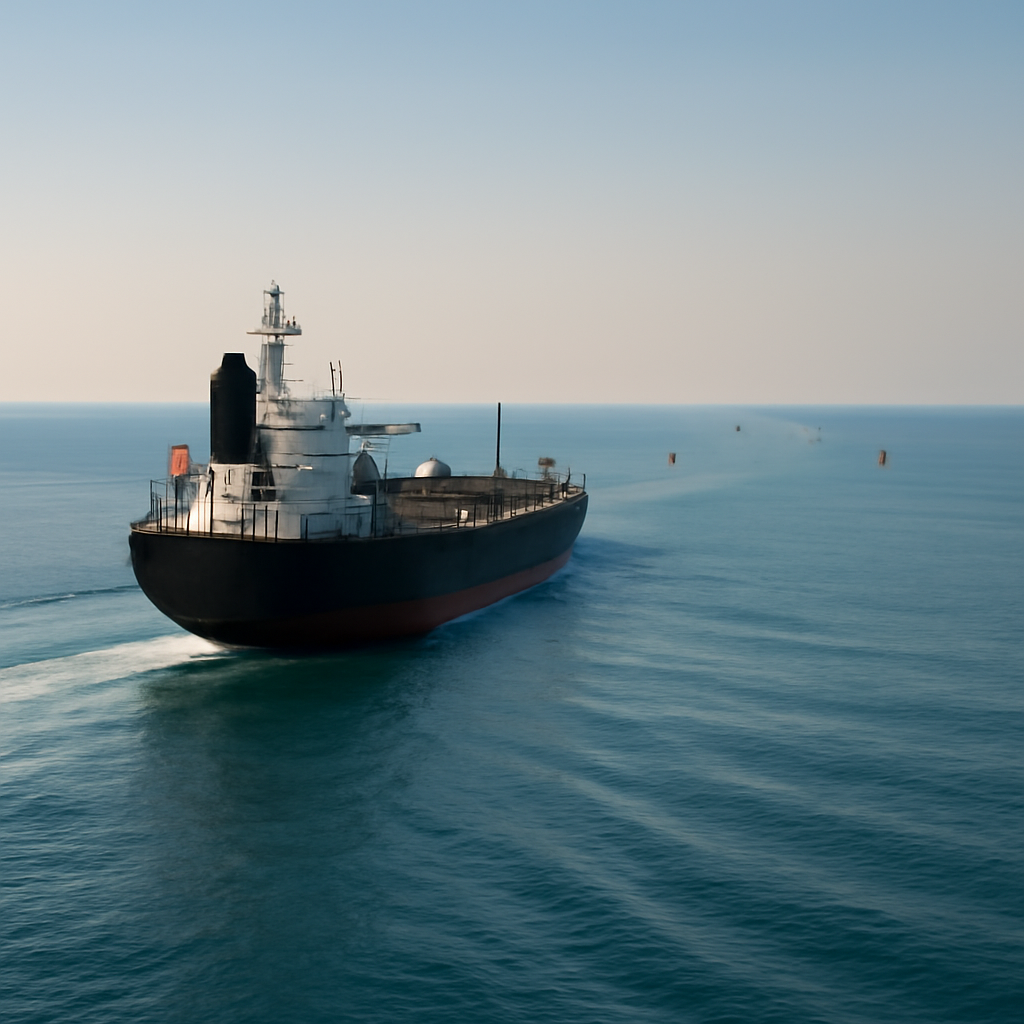
Oman and the U.N. International Maritime Organization (IMO) have sharpened a plan to evacuate hundreds of commercial vessels still held in the Persian Gulf after the Strait of Hormuz was closed following attacks on Feb. 28. The Sultanate, coordinated with IMO, is offering a temporary maritime corridor defined by coordinates announced by the IMO and Omani authorities; one publicly referenced waiting-area coordinate is 26.2695, 55.7753. The IMO said the operation will be carried out “in close cooperation with Iran, Oman, all other coastal States in the region, the United States and the maritime industry.”
IMO evacuation plan: two routes and a coordinated sequencing mechanism
The IMO’s guidance frames the effort as an “evacuation” and sets strict sequencing rules. There are two routes through the Strait: a northern route close to the Iranian shoreline, which the IMO says is controlled by the Islamic Republic of Iran, and a southern route along the Oman coastline coordinated with U.S. authorities. The Joint Maritime Information Center has identified the southern route as clear of mines and the preferred corridor.
Until vessels are contacted, the IMO cautions ships to “remain in their current position and await further instructions” to allow safe sequencing, avoid congestion, and mitigate risks related to mines and degraded navigation conditions. Movements, the IMO added, “will only begin once vessels are contacted through the coordinated mechanism involving IMO, UKMTO, and MICA Center, followed by coastal State coordination.” The U.S. Office of Foreign Assets Control’s temporary general license—valid until 21 August—has also been cited as easing immediate compliance uncertainty for approved Hormuz transits.

This site is the portfolio.
OSINTSights runs on Cloudflare Workers, D1, R2, and Vectorize, with an AI pipeline on Hetzner ARM. Nubivance designed, built, and operates it. We do the same for clients.
See what we buildMine-clearance work and naval assets deployed
Mine clearance is a central operational challenge and one the U.S. Central Command (CENTCOM) declined to detail. “I won’t go into specifics for operational security reasons,” Navy Capt. Tim Hawkins, CENTCOM’s spokesman, told TWZ, adding: “We’ve been at this for a number of weeks and we’re making progress, as demonstrated by the safe passage currently available to commercial vessels and enabling traffic flow to pick up.”
The Royal Navy’s RFA Lyme Bay has been reconfigured as an Afloat Forward Support Base for mine countermeasures and transited the Suez Canal on 19 June. Lyme Bay carries uncrewed surface vessels (USVs) with towed sonar arrays and AI automatic target recognition intended to speed classification and neutralization of mines, plus Video Ray Defender‑Viper portable mine disposal submersibles and mine warfare, diving and explosive ordnance disposal specialists. Two German ships, FGS Mosel and minehunter FGS Fulda, accompanied Lyme Bay but “detached from the task group on 23 June to head for Djibouti for resupply and further preparation.”
Maersk, Hapag‑Lloyd, and commercial shippers
Major carriers remain cautious. Maersk told TWZ last week that the U.S.-Iran Memorandum of Understanding is “a welcome and positive development, but publicly available details are still limited, and it is too early to assess how it will impact logistics and maritime operations in the Middle East.” On Wednesday a company spokesman said Maersk still has five ships stuck in the Persian Gulf. Hapag‑Lloyd said its vessels are “ready for a transit, but we will only sail through the Strait of Hormuz when it is safe to do so,” declining to state how many ships it still has in the Gulf.
Traffic, oil flows and diplomatic friction
Commercial traffic through the Strait is rising but remains well below pre-war levels. MarineTraffic and Kpler data cited by MarineTraffic show confirmed crossings increased from 32 vessels between 12–14 June to 93 vessels between 19–21 June—a jump driven in part by a weekend surge when crossings rose from 3 to 42. On 23 June MarineTraffic recorded 31 verified crossings across commercial and energy-linked vessels.
Data from Kpler indicates at least 20 tankers carrying 35 million barrels have exited the Persian Gulf through the Strait since the U.S. and Iran agreed to open the sea lane. Oil prices have moved sharply: Brent Crude traded at just under $74 a barrel on Wednesday morning, down from highs above $114 per barrel during earlier U.S.-Iran tensions. The U.S. Energy Information Administration data cited in the reporting show U.S. crude inventories fell by 6.1 million barrels last week to 412.1 million barrels—7% below the five‑year average.
Diplomatic uncertainty remains. The article records competing claims over the Strait’s status and over nuclear‑inspection commitments: President Trump and the International Atomic Energy Agency (IAEA) say Iran agreed to inspections while Iranian authorities deny that. President Trump also posted on Truth Social that Iran informed the U.S. there are “NO TOLLS, NO INSURANCE COSTS, & NO OTHER CHARGES OF ANY KIND BEING SOUGHT OR RECEIVED BY IRAN ON SHIPS TRAVELING THE STRAIT OF HORMUZ.” TWZ noted it could not independently confirm those statements.
The plan to evacuate hundreds of ships is now defined in principle—temporary coordinates, a two‑route framework, and a sequencing mechanism—but execution hinges on mine clearance, coastal‑state coordination, and the pace of diplomatic progress. For hundreds of vessels and the economies that depend on them, the question is not whether a corridor exists on paper but when safe, sustained two‑way transits will return.