“Golden Dome is a missile defense costume on a data architecture challenge of enormous scale.” – Jason Langone, Global Senior Director of AI & Neocloud Sales at Nutanix.
Golden Dome's data challenge
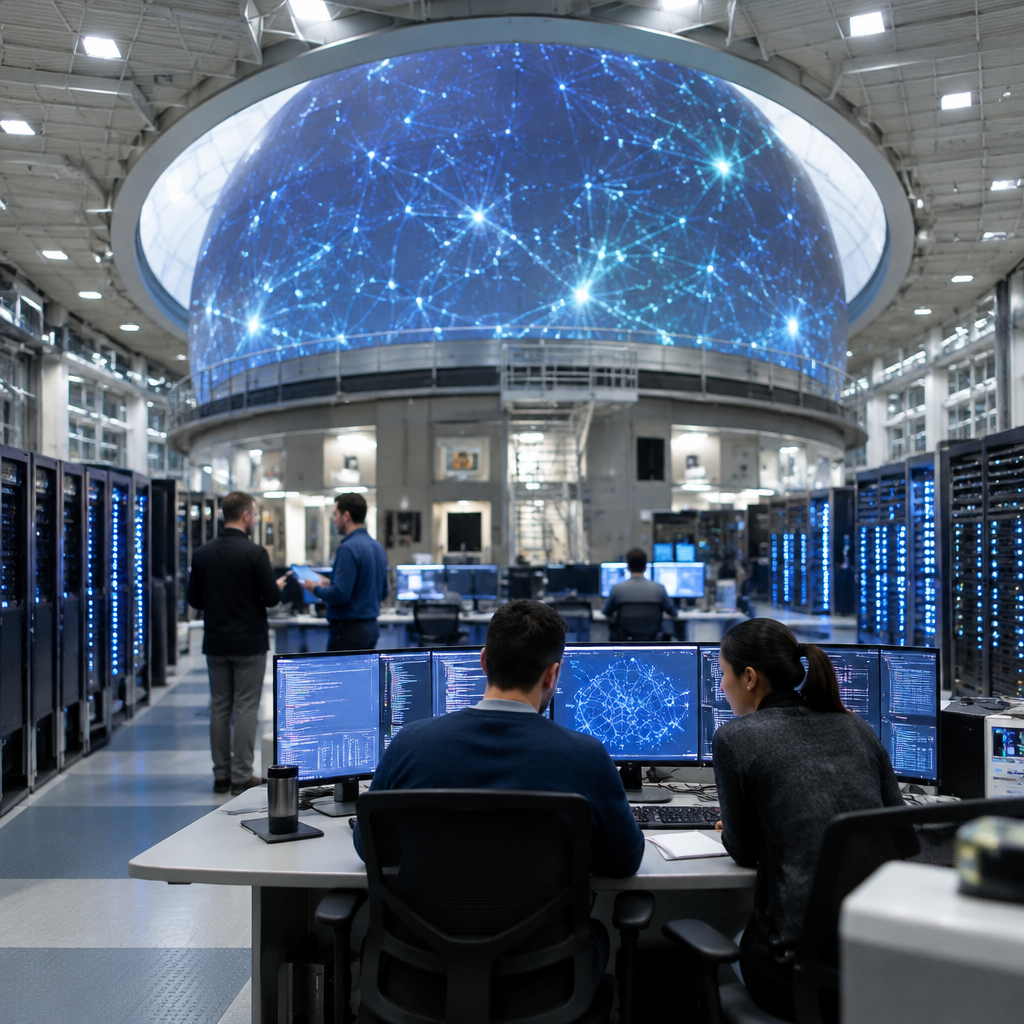
The program known as Golden Dome is framed in the Government Technology Insider podcast as more than a missile defense effort: it is a data problem of vast scope. Host Lucas Hunsicker spoke with Dan Fallon, Director Special Programs and Federal System Integrator at Nutanix, and Jason Langone about the volume and variety of inputs the effort must absorb. The initiative gathers "massive amounts of sensor data" from many formats, classification levels, agencies, and systems operating in space, air, ground and other domains, creating the central engineering task of turning distributed inputs into a unified operating picture.
Secure, sovereign, scalable, and resilient infrastructure
Fallon and Langone framed the infrastructure requirement bluntly: supporting AI workloads for Golden Dome requires architectures that are secure, sovereign, scalable, and resilient across environments as processing moves closer to the edge. Those four attributes—security, sovereignty, scalability, resilience—are presented as simultaneous constraints, not optional features, because data originates in varied locations and classifications and must be managed across differing operational contexts.

Audit-ready is a season. It shouldn't be.
Evidence in spreadsheets, controls drifting between audits, frameworks multiplying on flat headcount. Nubivance runs continuous compliance on Rapid7 Cyber GRC - SOC 2, HIPAA, ISO 27001, PCI, CMMC.
End the scrambleBalancing local processing and centralized computing and data management
The conversation emphasized the tension between processing at the edge where data is generated and retaining centralized computing and data management. According to the podcast, resilient architectures must strike a balance: local processing can support decisions at the edge, while centralized systems preserve broader data management and a unified operating picture. That balance is presented as a design problem rather than a single technical preference—architectures must support decision-making at multiple points in the topology.
Limitations of running AI at the edge, and AI’s role in cross-domain correlation
The guests discussed limits to running AI at the edge and the continuing importance of centralized capabilities. While edge processing can enable timely local decisions, the podcast flagged practical limits on what can be executed at the edge and where centralized AI and data management remain necessary. Equally, Langone and Fallon highlighted AI’s importance in correlating data across domains—space, air, ground and others—to produce the unified operating picture Golden Dome requires.
What this means for technologists, policymakers, and federal system integrators
- Technologists and security teams will have to design architectures that enforce security and sovereignty while enabling both local inference and centralized analytics; they will watch for trade-offs between latency, model capability, and data governance as workloads move toward the edge.
- Policymakers and procurement leaders must account for multi-environment requirements—security, sovereignty, scalability, resilience—when specifying acquisitions and oversight for programs that combine classified and unclassified data from multiple agencies.
- Federal system integrators and agencies will need to plan for integration across many formats, classification levels, and domain-specific systems, balancing on-site decision support with centralized data management to realize a unified operating picture.
The episode frames Golden Dome as an architectural problem as much as a defensive one: the success of the program, the guests argue, will depend on whether engineers can build infrastructure that secures and governs vast, heterogeneous data while enabling timely decisions where they are needed. Listeners were invited to follow part two of the discussion for continuing detail on those design choices.