“Importantly, this agreement accelerates production for our customers, enhances the program’s long term economics and creates the potential for a larger program of record,” CEO Kathy Warden said on a financial earnings call today.
Northrop Grumman’s $2.5 billion pledge and timing
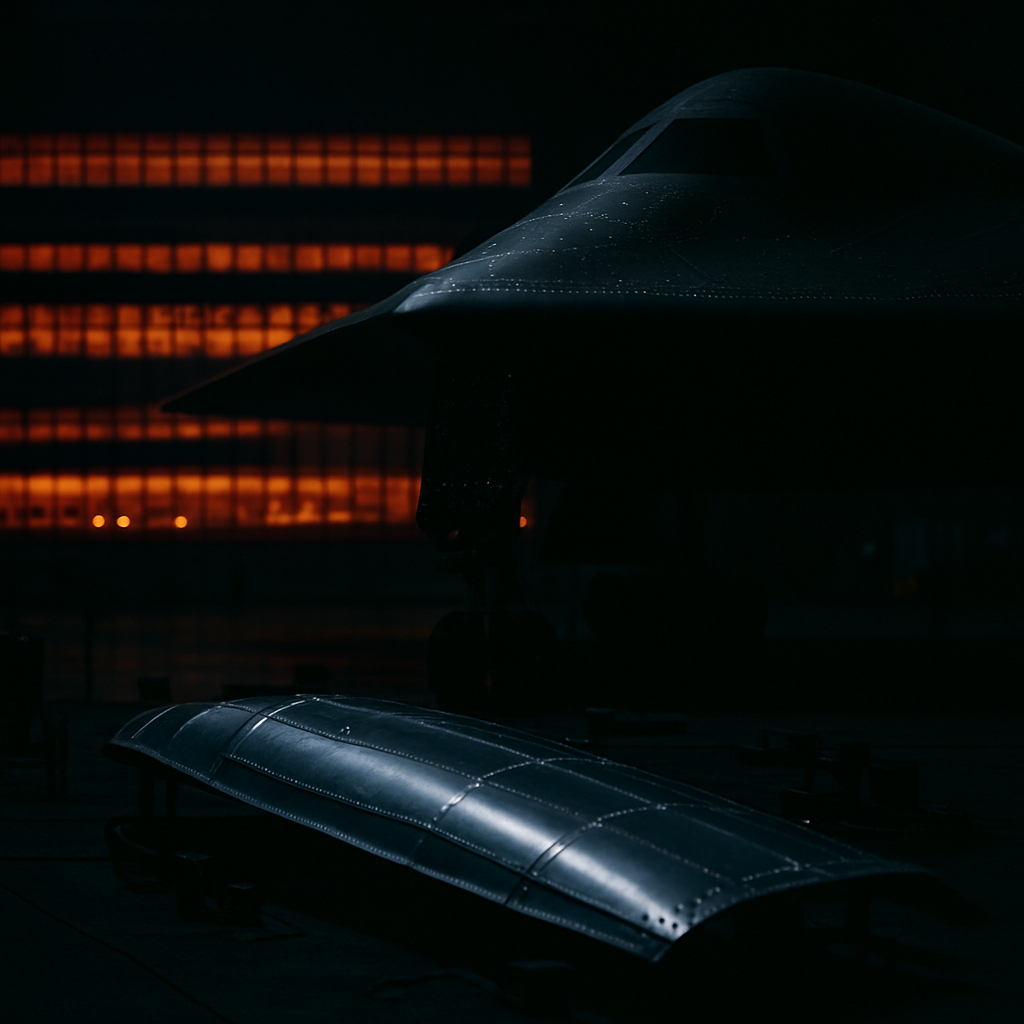
Northrop Grumman announced it will invest $2.5 billion of its own cash to accelerate production of the B-21 stealth bomber. The company said $200 million of that investment is slated to be executed this year, while the bulk of the funding will be spent during the 2027–2029 timeframe. Northrop characterized most of the investment as going toward facilities.
The production-rate agreement with the Air Force
In February, the Air Force and Northrop finalized an agreement to increase the B-21 production rate by 25 percent. Northrop’s CEO framed the company’s $2.5 billion commitment as the first detailed disclosure of what it plans to spend in order to meet that accelerated production goal. The company said the agreement not only speeds deliveries but also “enhances the program’s long term economics.”

Audit-ready is a season. It shouldn't be.
Evidence in spreadsheets, controls drifting between audits, frameworks multiplying on flat headcount. Nubivance runs continuous compliance on Rapid7 Cyber GRC - SOC 2, HIPAA, ISO 27001, PCI, CMMC.
End the scrambleCapital expenditures and near-term financial impact
As a direct consequence of the B-21 deal, Northrop now expects to spend $1.85 billion this year on capital expenditures, the CEO said. The $200 million planned for this year is an immediate portion of the larger $2.5 billion package; most additional spending is pushed into the 2027–2029 window to support facilities and related production capacity.
Program scale, financing, and unit cost questions
The Air Force previously indicated it would use $4.5 billion in reconciliation funding to help finance the production acceleration. The service currently plans to buy 100 B-21s over the life of the program, but is considering increasing that number to around 145 bombers. The current per-aircraft price “hovers around $700 million per copy,” according to the reporting. Neither the Air Force nor Northrop has laid out whether the new deal will drive down the cost per B-21, though Warden said the agreement “improves the economics for the program for the government and Northrop Grumman.”
What this means for the Air Force, Northrop Grumman, and procurement leaders
- The Air Force: The service has secured an agreement intended to accelerate deliveries and has identified $4.5 billion in reconciliation funding to help pay for that acceleration. The service still faces a decision on whether to expand its planned buy from 100 to roughly 145 aircraft.
- Northrop Grumman: The company is committing substantial internal capital—$2.5 billion—to boost production capacity, with most facility spending concentrated in 2027–2029 and a material capital-expense increase this year to $1.85 billion.
- Procurement leaders: The deal raises questions about lifecycle procurement costs and program economics; while Northrop asserts improved economics for both sides, neither party has published a new per-unit cost projection reflecting the expanded production rate.
Northrop remains on track, the company said, to deliver the first B-21 to Ellsworth Air Force Base in South Dakota in 2027. The announced corporate investment, the Air Force’s reconciliation funding and the production-rate increase combine to reshape the program’s near-term financing and capacity plans—but they leave open two central questions: will the service expand its buy toward the 145-aircraft threshold, and will the deal produce measurable reductions in the roughly $700 million-per-copy price now cited?