Revolution on the Horizon: Unveiling the Next-Generation Combat Drone
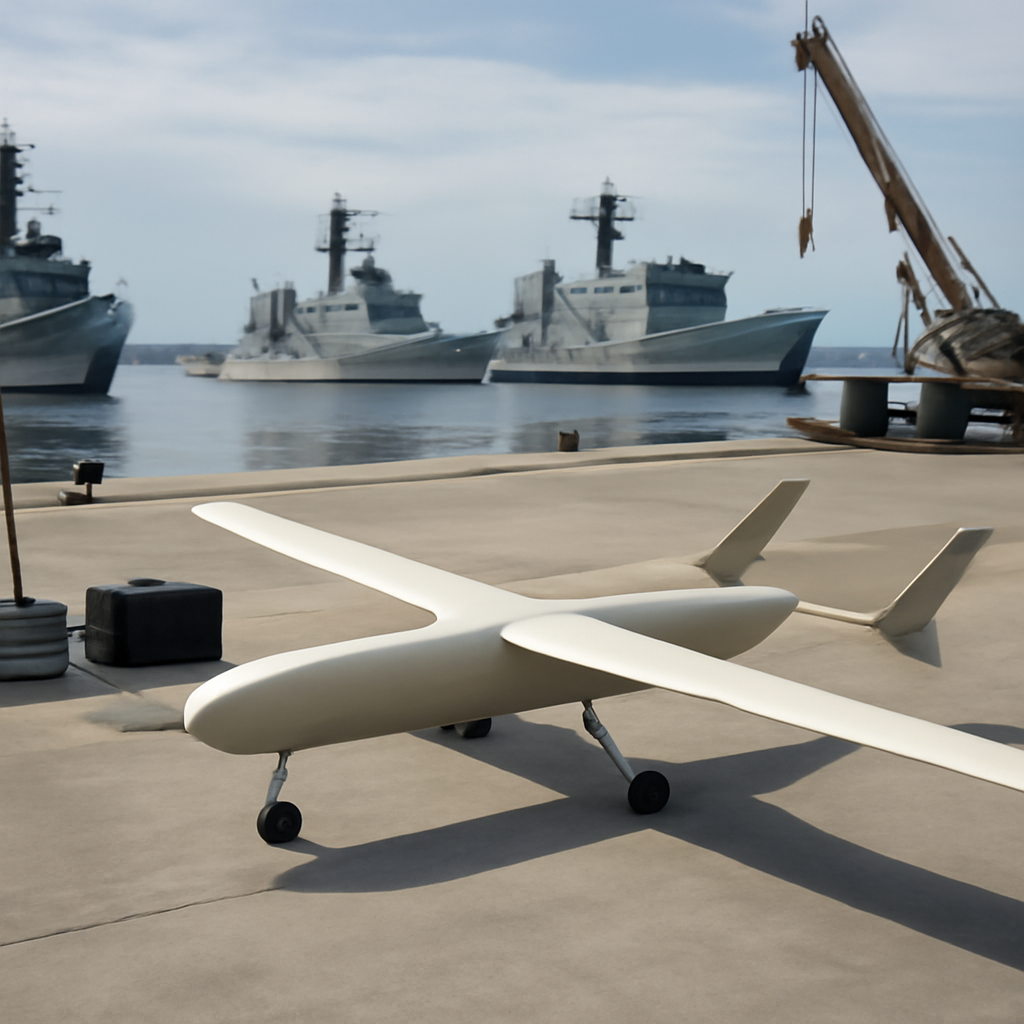
At the storied Beale Air Force Base, beneath a bright blue sky and amid a throng of military personnel and defense industry stakeholders, a new era in aerial warfare was quietly but emphatically announced. General Atomics, in partnership with the U.S. Air Force, publicly revealed a full-scale model of its YFQ-42A collaborative combat aircraft—an embodiment of the future of manned-unmanned teaming in combat operations. Onlookers at the air show witnessed what many see as the beginning of a transformative chapter in the strategy and technology of modern warfare.
For decades, airpower has evolved from battling in clear skies with single-role aircraft to executing complex, integrated missions involving multiple platforms. At Beale Air Force Base, the unveiling of the YFQ-42A is positioned as a critical juncture in this evolutionary trajectory. The innovative design is not merely an advancement in drone technology—it represents a strategic rebalancing of manned and unmanned systems, with implications for future conflicts where digital connectivity and collaborative operations decide outcomes.
The full-scale model of the YFQ-42A was presented during a meticulously choreographed display, resonating with both technological prowess and military strategy. As the aircraft’s design was slowly brought into full view, the crowd was reminded of the inherent risks and stakes in modern military innovation, particularly in a time when the nature of warfare is rapidly shifting under the pressures of technological acceleration and global geopolitical rivalries.
Historically, defense innovation has often been a response to emerging threats and the need for decisive operational advantages. The U.S. Air Force has invested in experimental platforms and advanced technology integration over the past decades, spurred by experiences that range from Cold War dynamics to modern counterinsurgency operations. With the YFQ-42A, this tradition of embracing forward-looking design and technology is being renewed under a banner of enhanced operational synergy—one that melds advanced artificial intelligence, high-speed data connectivity, and adaptive combat systems. General Atomics’ long-standing record of developing sophisticated unmanned aerial systems (UAS) positions it as a trusted partner in redefining combat air support structures.
Officials note that the YFQ-42A is intended to operate seamlessly alongside fifth-generation fighter jets, thereby reinforcing the tactical advantages already provided by the integration of manned and unmanned platforms. This concept of collaborative combat aircraft (CCA) envisions a role for the drone that extends beyond mere reconnaissance or surveillance. Instead, it is designed to act as an active participant in multipronged combat scenarios, sharing situational awareness, and even undertaking high-risk, precision-targeting operations that were previously the exclusive domain of manned aircraft.
Concrete details shared during the demonstration underscored several technical and strategic features of the YFQ-42A:
- Integrated Systems: The aircraft is engineered to operate in tandem with manned fighters through advanced cooperative control systems that facilitate real-time data sharing and joint mission planning.
- Autonomous Capabilities: Features include machine-learning components designed to autonomously manage complex tasks, enhancing both responsiveness and operational flexibility.
- Enhanced Survivability: Its design incorporates stealth features and electronic warfare countermeasures aimed at reducing vulnerabilities against advanced anti-access/area-denial (A2/AD) systems.
- Network-Centric Warfare: The YFQ-42A stands as a node within a broader, interconnected battle network—a crucial element as warfare increasingly relies on digital integration of multiple platforms.
From a strategic standpoint, the integration of unmanned platforms that work closely with their manned counterparts represents a significant shift in operational doctrine. The U.S. Air Force has long emphasized the potential of unmanned systems to extend operational reach while minimizing human soldier casualties. In recent years, several public statements by U.S. Department of Defense officials have underscored the importance of leveraging technology to improve the safety of aircrews while preserving—or even enhancing—mission efficacy. The YFQ-42A epitomizes this balance, blending military pragmatism with cutting-edge advancements to provide a multi-dimensional capability in the sky.
Defense strategist and retired Air Force General Charles “Chuck” Robertson remarked in a recent interview with a major defense publication, “The ability to seamlessly interweave human judgment with artificial intelligence in live operational environments is the next logical step for our force. This drone is not just about reducing risk—it’s about enhancing the decision-making loop in our defense apparatus.” Such perspectives are echoed by other military observers, who point to the dramatic changes in global warfare and the increasing need for robust, adaptable systems that can respond to both state and non-state adversaries.
Watching the YFQ-42A glide along the tarmac during the demonstration, one might recall the early days of jet aviation—when technological breakthroughs began to redefine what was possible. The collaborative combat aircraft’s introduction draws a parallel to that transformative era. Yet, unlike past revolutions centered on raw speed or payload capacity, this innovation pivots on connectivity and cooperation. The complexity of future battlefields will demand platforms capable of bridging the gap between digital command and physical engagement, a challenge that the YFQ-42A aims to meet head-on.
The implications of this unveiling stretch across several domains, each resonating with different stakeholders. For military planners and defense strategists, the YFQ-42A provides a tangible representation of how the future fighter force may be structured. The aircraft’s ability to work collaboratively with manned fighters promises enhanced situational awareness and flexibility, enabling military forces to outmaneuver adversaries in environments where speed, precision, and adaptability are paramount.
For policymakers and budgetary overseers, the project underscores a broader need for investment in research and development at a time when technological advances are rapidly outpacing traditional combat platforms. The choices made today regarding the implementation of systems like the YFQ-42A will likely hold far-reaching consequences for national security strategies and defense spending in the coming decades.
Even within the defense industry, where technological capabilities are often lauded for their own sake, the human element remains a focal point. The introduction of manned-unmanned teaming promises not only to save lives but also to maintain the critical relationship between operator and machine—a connection that is vital for effective command and control. This balance of automation and human supervision is at the heart of contemporary debates about the role of artificial intelligence in defense, a debate that brings technical efficiency into direct contact with ethical and operational considerations.
As the YFQ-42A makes its public debut, it is clear that the path ahead involves not only technical challenges but also pivotal questions of doctrine, policy, and ethical governance. In a world where adversaries are rapidly enhancing their own military capabilities, the need for systems that integrate real-time data, provide robust situational awareness, and execute coordinated operations cannot be overstated. The deployment of such systems will necessitate careful coordination between military leadership, technologists, and legislators—a complex dialogue that is already underway in various defense policy circles.
In his analysis for the Brookings Institution, defense policy expert Dr. Michael O’Hanlon has argued that “the emergence of collaborative platforms like the YFQ-42A represents both an opportunity and a challenge. While the promise of enhanced operational performance is significant, it also requires a transformation in how military engagements are conceptualized and executed.” These insights highlight the dual-edged nature of technological innovation in warfare—each advancement brings with it a host of new variables that must be carefully managed to avoid unintended consequences.
Looking ahead, the next few years are expected to witness a series of incremental yet crucial developments in the integration of manned and unmanned systems within the U.S. Air Force. Analysts predict that exercises and operational tests conducted in the near future will provide clearer indications of the YFQ-42A’s role in a broader military framework. Furthermore, collaborative engagements with allied forces could accelerate the broader adoption of similar integrated combat solutions. As international military competition intensifies, technological parity and superiority remain as critical objectives for nations around the globe.
Observers from prominent defense think tanks and research institutions will no doubt be closely monitoring the initial field performance of the YFQ-42A. The outcomes of upcoming exercises, ranging from live-fire tests to digital interoperability trials, will feed directly into future procurement decisions and tactical doctrines. For policy makers and strategists alike, the continued evolution of these platforms will offer a window into the future contours of warfare—one where digital and physical domains increasingly intertwine.
Ultimately, the unveiling of the YFQ-42A at Beale Air Force Base serves as both a milestone and a harbinger. It encapsulates decades of innovation and strategic recalibration while gesturing toward the operational realities that may define the next generation of military engagements. The balance between manned presence and unmanned efficiency will likely be one of the defining debates of modern defense strategy—a debate that, much like the intricacies of the YFQ-42A itself, involves layers of technology, tactical doctrine, and human judgment.
As the defense community absorbs this latest development, one cannot help but wonder: In an era defined by instantaneous connection and rapid technological change, how might the human dimension adapt to a world increasingly shared with its mechanical counterparts? Ultimately, the unveiling of the YFQ-42A is not merely a story of advanced engineering—it is a narrative on the future of conflict, where every new innovation brings both promise and complexity in equal measure.