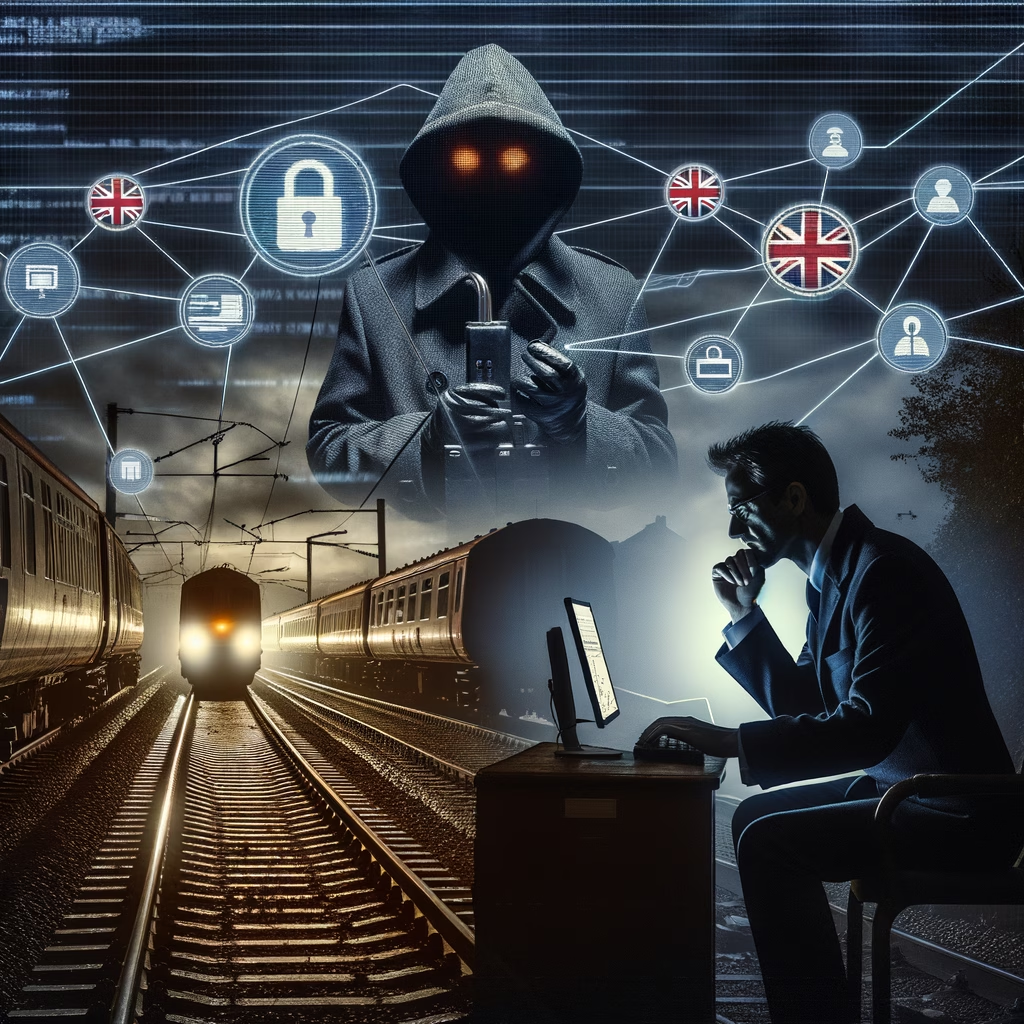
What happens when a public service meant to connect us instead becomes a channel for harm? This question surfaced starkly following the sentencing of a British man linked to a cyberattack on Network Rail’s public Wi-Fi system—an incident that left users exposed to offensive messaging and raised pressing concerns about digital security on critical infrastructure.
Network Rail, the organization responsible for maintaining the United Kingdom’s rail infrastructure, provides free Wi-Fi at stations across the country, serving thousands of commuters daily. However, this convenience came at a cost when a hacker exploited vulnerabilities within the public Wi-Fi network, broadcasting offensive messages directly to unsuspecting passengers. The man responsible was recently handed a suspended prison sentence for his role in the hack, a decision that has sparked debate on the adequacy of legal and technological responses to cyber threats.

The breach occurred when the attacker manipulated the network’s messaging capabilities, turning a public utility into a vector for offensive content. While the messages were not physically harmful, the incident underscored the fragility of public digital services and the potential for misuse. “This case highlights the urgent need for more robust cybersecurity measures on public Wi-Fi networks,” said Dr. Susan Clarke, a cybersecurity expert at the University of London. “As we integrate more digital tools into daily life, vulnerabilities can quickly translate into widespread disruption or distress.”
The suspended sentence handed down suggests the court recognized mitigating factors such as the man’s cooperation or lack of prior offenses, yet it also signals the judiciary’s growing awareness of cybercrime’s nuances. From a legal perspective, it balances punishment with rehabilitation, but questions remain about deterrence. “Sentencing in cybercrime cases must reflect the evolving threats we face,” argued Tom Reynolds, a policy analyst at the Centre for Digital Rights. “A suspended sentence might not send a strong enough message to potential offenders, especially when the attack targets a critical public service.”
From the user standpoint, the incident raised immediate privacy and safety concerns. Commuters rely on public Wi-Fi not only for convenience but increasingly for essential communications. An attack that compromises these channels can erode trust, pushing users to avoid public networks or seek costly alternatives. “Public Wi-Fi should be safe and reliable,” said Network Rail’s spokesperson. “We have since enhanced our security protocols to prevent any repeat of this unfortunate event.”
Meanwhile, technologists see the breach as a symptom of broader systemic challenges. Public Wi-Fi networks, by design, must balance accessibility with security, a tension that often leaves gaps exploitable by adversaries. “Network Rail’s incident is not isolated,” noted Raj Patel, chief engineer at SecureNet Solutions. “We need industry-wide standards that can anticipate and thwart such attacks proactively.”
Policymakers are now grappling with how best to regulate and protect public digital services without stifling innovation or accessibility. The incident underscores the need for coordinated efforts between service providers, government agencies, and cybersecurity experts. It also raises questions about user education—how much should be expected from the average commuter to recognize and report suspicious activity?
In a world increasingly reliant on interconnected networks, the attack on Network Rail’s Wi-Fi is a cautionary tale. It forces us to confront uncomfortable truths about our digital dependencies and the vulnerabilities that accompany convenience. As one cybersecurity official remarked, “Security isn’t a one-time fix; it’s an ongoing commitment.”
So, as public Wi-Fi becomes ever more integral to daily life, are we prepared to safeguard these invisible lifelines, or will we continue to expose ourselves to unseen threats, trading convenience for vulnerability? The answer to this question will shape not only the future of public services but the very fabric of trust in our digital society.