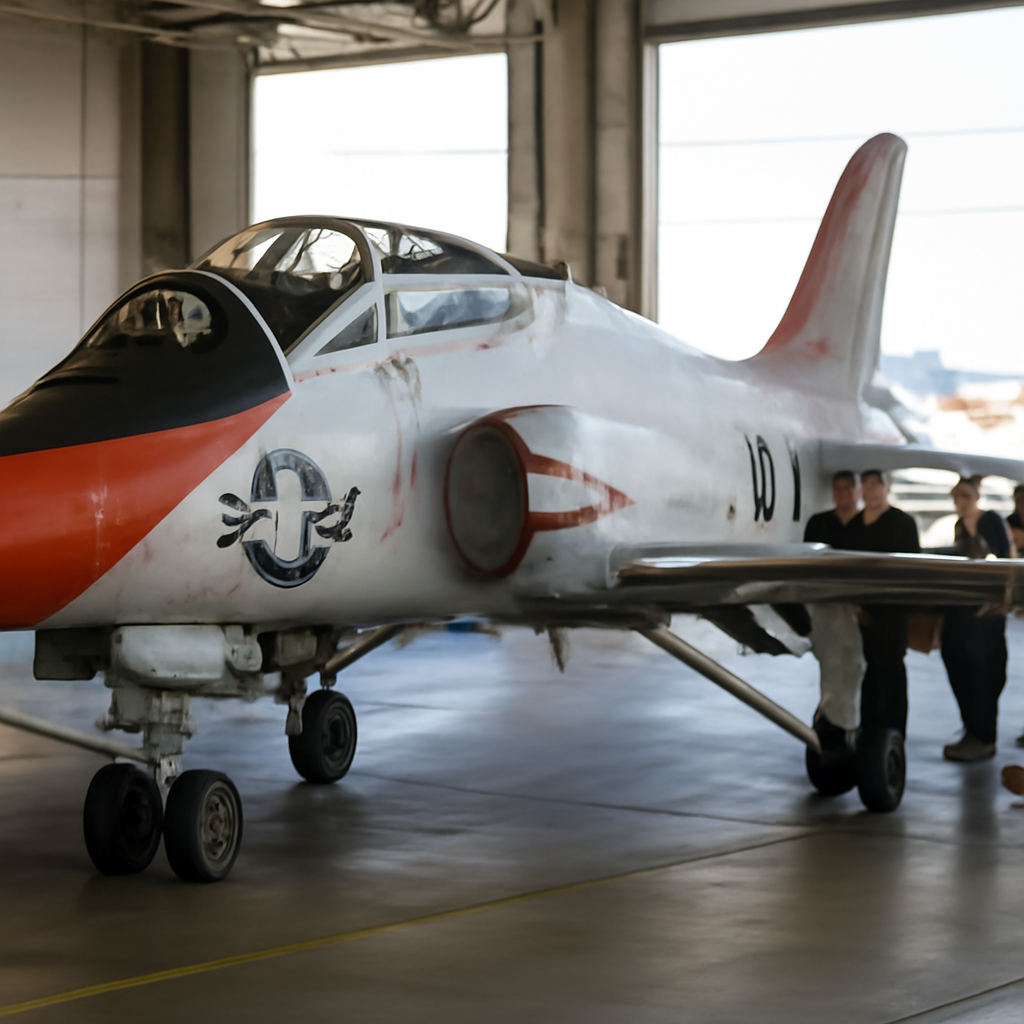
The Navy is running out of time to fix its carrier-jet training shortfall: every month spent prolonging the Undergraduate Jet Training System (UJTS) competition risks pushing pilot production further behind while an aging T-45 fleet grows more fragile.
Boeing and Lockheed Martin exit the UJTS race
This month Boeing withdrew its T-7A Red Hawk from the Navy’s UJTS competition, becoming the second major competitor to exit after Lockheed Martin pulled its TF-50N concept. Boeing told the Navy that the T-7A, already behind schedule for the Air Force, would have required additional engine qualification and other modifications to meet Navy requirements on the Navy’s timeline. Lockheed’s decision has been tied to U.S. content requirements and the economic difficulty of teaming with Korea Aerospace Industries under a tight development cap. Their departures leave two teams in the running: Textron/Leonardo and Sierra Nevada Corporation (SNC).
T-45 Goshawk: an aging backbone with recurring safety and availability problems
The T-45 Goshawk has been the backbone of Navy and Marine Corps carrier jet training since the early 1990s, but it has also been the source of repeated disruptions for more than a decade. Beginning with well-publicized physiological episodes tied to the aircraft’s oxygen system and continuing through engine and component failures, T-45 availability has forced full or partial standdowns. In 2017, T-45 pilots effectively refused to fly until the service addressed cockpit oxygen problems; a Navy review warned that finding a durable solution had “proved elusive.” More recently, in April 2024 an in-flight engine malfunction prompted Naval Air Forces to pause all T-45C operations while it reassessed the fleet’s airworthiness.
The Navy has launched a Service Life Extension Program (SLEP) for about 145 T-45s to keep the fleet viable into the 2040s, but the service’s own budget documents describe the jet as facing “significant aircraft, engine, and component obsolescence issues” that are “projected to dramatically increase operating costs and affect aircraft availability by 2030.” The SLEP buys time; it does not eliminate the underlying risk.

The cyber insurance questionnaire just landed. Now what?
SOC 2, HIPAA, insurance renewals - someone has to own security strategy. Nubivance provides fractional CISO leadership without the full-time salary.
Get a security leadTraining pipeline strain: longer pipelines, pilot shortfalls, and pressure on operational squadrons
The cascading effects of trainer shortfalls are concrete. In 2020 the head of naval air training acknowledged oxygen-system issues, engine problems, and other readiness shortfalls had stretched strike fighter pilot training from roughly three years to closer to four, contributing to a fleet fighter pilot shortfall approaching 100 billets. In 2021 Rear Adm. Gregory Harris, then the Navy’s director for air warfare, said the strike fighter training pipeline had become “too darn long.”
CNATRA has reported progress toward a “105‑percent production” goal designed to burn down the queue and has adopted measures—syllabus restructuring, greater use of simulation, and the “Flight School 2.0” model—to mitigate capacity limits. Still, every T-45 standdown and every year of recapitalization delay forces the command to cancel or compress training events and push recovery work into Fleet Replacement Squadrons. Those gaps are ultimately absorbed by F/A-18 and F-35C squadrons, with real costs: Pentagon oversight bodies have documented F-35 mission-capable rates falling well below program goals, with full mission-capable rates in the mid-20 percent range and sustainment costs projected to exceed affordability targets in the 2030s. Every hour an F-35C or Super Hornet spends compensating for what a trainer should provide is an hour unavailable for high‑end mission training and an hour of expensive airframe life consumed.
Textron/Leonardo’s M-346N and SNC’s Freedom Trainer: two different recovery paths
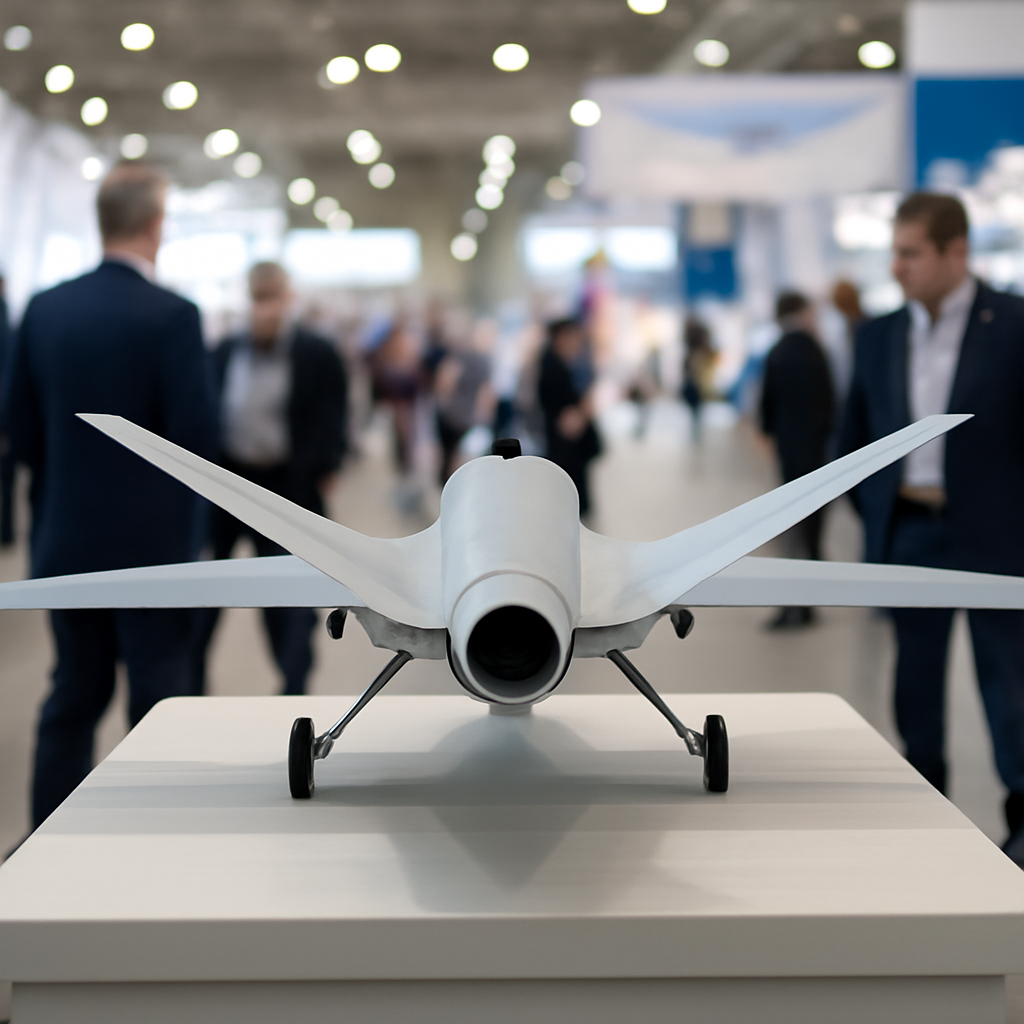
With Boeing and Lockheed gone, the Navy’s decision narrows to two distinct approaches. Textron/Leonardo’s M-346N offers a mature, in‑service integrated training system with an established production capability and a record of training pilots for fifth‑generation aircraft in allied air forces. Sierra Nevada’s “Freedom Trainer” is a clean‑sheet design—similar in appearance to Textron’s Scorpion Jet—unproven and undeveloped but presented as optimized for the Navy’s training needs.
The most important practical fact: both approaches, according to the analysis in this column, are more likely to close the Navy’s training gap in a timely fashion than a notional restart that attempts to bring Boeing or Lockheed back into contention.
What this means for CNATRA, F/A-18 and F-35C squadrons, and procurement leaders
- CNATRA: Must continue pushing toward the “105‑percent production” target and lean on simulation and syllabus fixes to shorten the pipeline, while operating atop a fragile aircraft fleet and a limited production cushion.
- F/A-18 and F-35C squadrons: Will continue to absorb intermediate and advanced training shortfalls—at the cost of high‑end training hours and airframe life—if UJTS procurement is delayed and T-45 availability falters.
- Procurement leaders in the Navy and Pentagon: Face a trade-off between seeking a broader competition and accepting fewer bidders to accelerate delivery; the column’s analysis warns that delay trades near‑term procurement flexibility for years of higher operating costs and degraded combat readiness.
Deliberating for a “better” competition is a familiar acquisition reflex, but in UJTS delay is itself a strategic choice with measurable costs. The T-45’s chronic failures, the pipeline’s extended timelines, and the Navy’s own budget warnings about obsolescence make clear that time is not neutral. As the author puts it: “On this program, every moment of delay spent searching for a ‘better’ competition is an increased risk of training and readiness the fleet will not soon recover.”