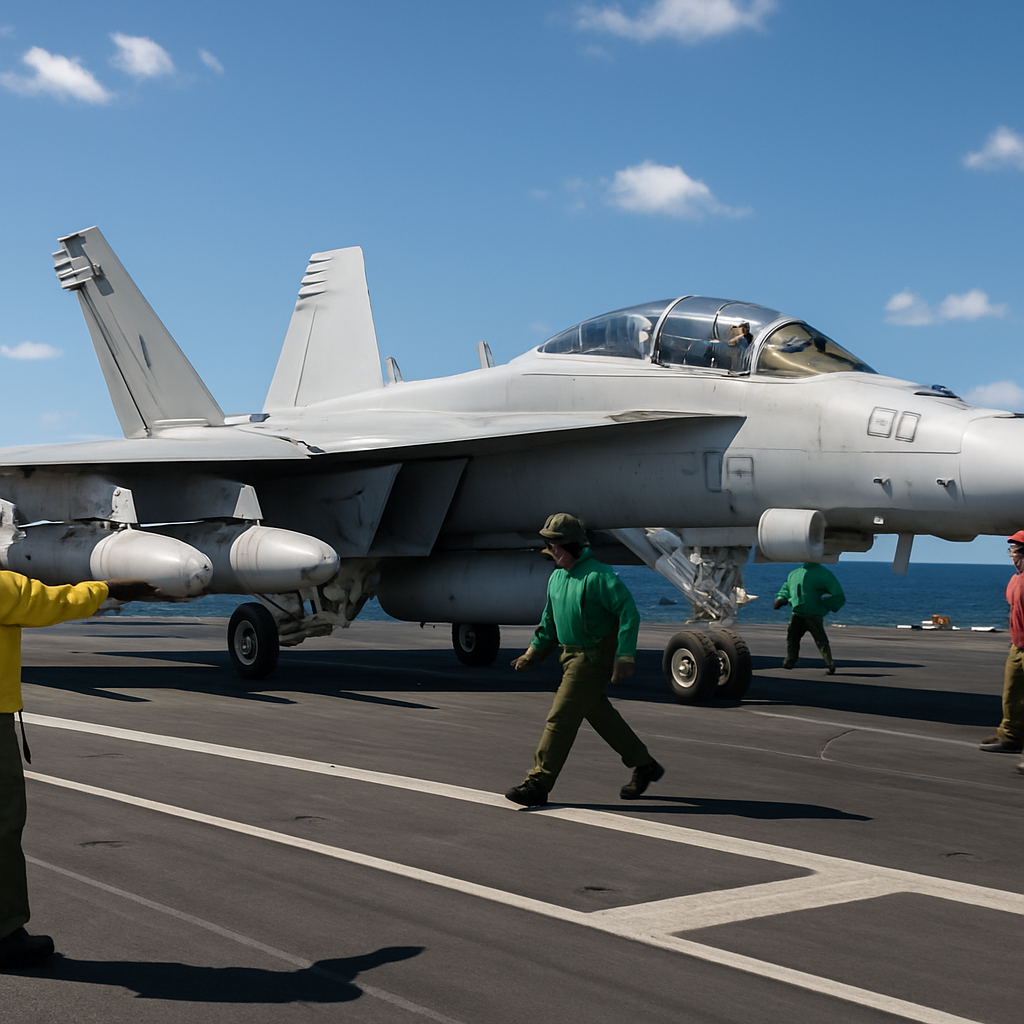
The Navy has already spent more than $5 billion to develop the ALQ-249 Next-Generation Jammer (NGJ), a figure that frames the service’s expanding reliance on the EA-18G Growler and the investment still to come: the fiscal 2027 budget request seeks $428.6 million more for the program.
Growlers in action over Iran and Venezuela
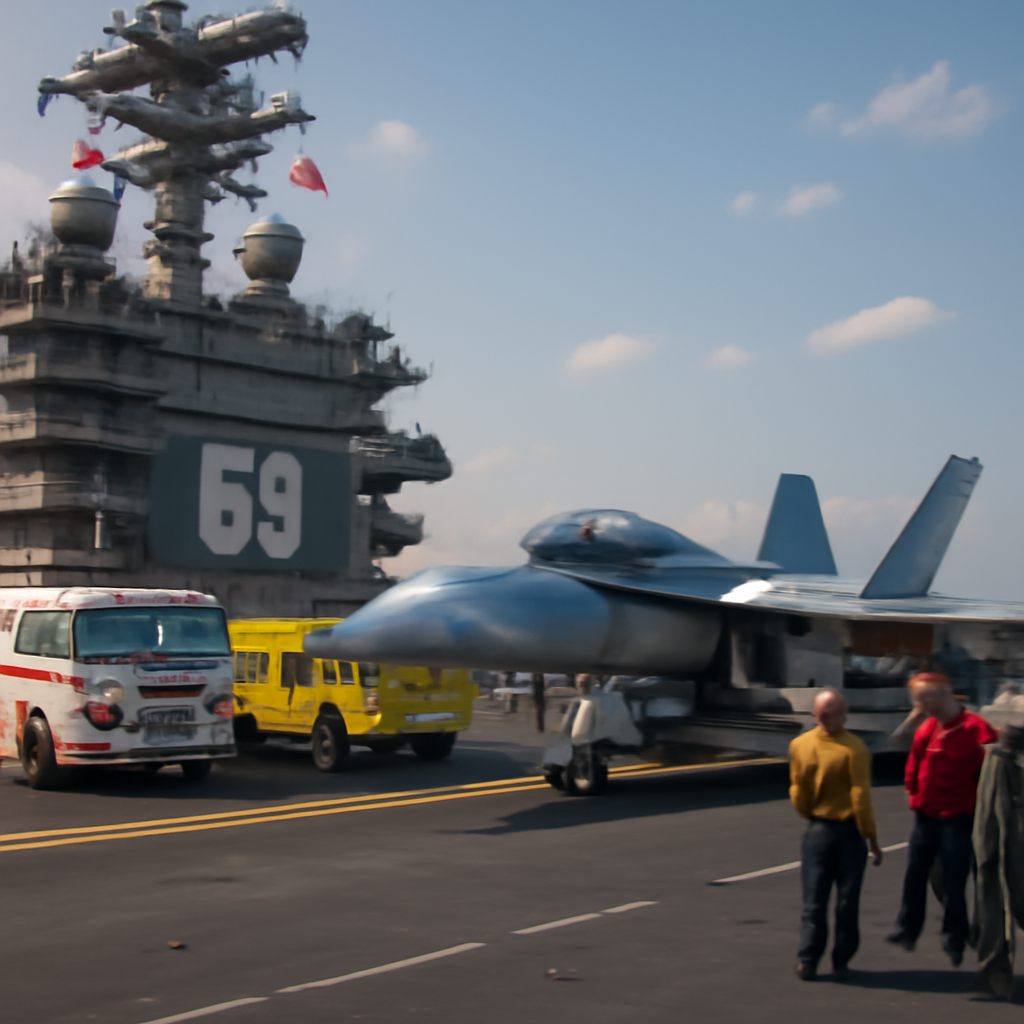
In recent months the Navy’s EA-18G Growlers have flown from the carriers Abraham Lincoln and USS Gerald R. Ford to employ jammers and missiles against Iranian communications, radars, and surface-to-air missile batteries, according to the reporting. The aircraft also played a central role in January’s seizure of Venezuelan President Nicolas Maduro, suppressing and destroying Russian- and Chinese-derived air defenses and other infrastructure so “the abduction team” could reach its Caracas target with virtually no resistance. As the account notes, Venezuelan air defense operators learned of the attack only when their radar screens went dark.
Lineage and the NGJ program structure
Development of the Growler began from an electronic-warfare variant of the F/A-18F after Boeing received a system development and demonstration contract in late 2003; the first Growler was delivered in 2006 and the last in 2018. The Navy’s planned buy rose repeatedly — from an original 90 to 114, then 135, and finally 160 aircraft.
At the center of current upgrades is the ALQ-249 Next-Generation Jammer, planned in three increments: Increment 1 (Mid-Band), Increment 2 (Low-Band), and Increment 3 (High-Band). Mid-Band work has moved into production buys; Low-Band and High-Band work remain in development paths.

This site is the portfolio.
OSINTSights runs on Cloudflare Workers, D1, R2, and Vectorize, with an AI pipeline on Hetzner ARM. Nubivance designed, built, and operates it. We do the same for clients.
See what we buildContracts, industrial partners, and procurement details
Key contracts and suppliers are named in the record. In 2023 Raytheon won a $650.4 million contract to produce Lot III NGJ-Mid-Band (NGJ-MB) pods, including a low-rate initial production order for 15 pairs of pods — with four pairs to equip the Royal Australian Air Force’s Growlers. “Two years later,” Raytheon received a three-year, $580 million contract to continue production, spare parts, and support equipment for the two operators.
Low-Band development has been led by L3Harris. In 2020 L3Harris won a $495.5 million contract to deliver NGJ-LB pod simulators, eight operational prototype pods, jettison mass model pods, captive mass models, and support systems; in 2024 the company received a further $587.3 million for Low-Band development. The report says L3Harris hired Honeywell “last year” to provide undisclosed help on the Low-Band variant.
Two months ago the Navy awarded Boeing a four-year, $489.3 million order for jamming upgrades that specified four ALQ-264(V) Beowulf A-Kits, four Gunbay Pallet A-Kits, 12 Beowulf B-Kits, 15 sensor control unit B-Kits, nine power control unit B-Kits, and various support equipment.
Australia’s Project AIR 5349 Phase 6 – Advanced Growler contracted CEA Technologies in February 2023 for $277 million to improve some fixed and portable emitters on that country’s Growlers, which operate a dozen EA-18Gs under its fleet plans.
Hardware and signal craft: AI, GaN AESAs, and tailored noise
The Growler’s recent upgrades combine new hardware and automated signal processing. The aircraft’s active electronically scanned arrays, powered by gallium nitride transmitters, support “precise, high-powered beams of electronic noise” and the ability to attack multiple targets simultaneously. The reporting also highlights increasing use of AI and machine-learning algorithms to accelerate hostile-signal analysis and to produce tailored noise designed to degrade enemy air defenses.
What this means for the Royal Australian Air Force, the Navy, and defense contractors
- Royal Australian Air Force: Australia is both a recipient and an investor — four pairs of Lot III NGJ-MB pods were included in U.S. production buys and Canberra awarded CEA Technologies $277 million in 2023 to upgrade emitters on its Growlers.
- The Navy: The service has invested heavily to move NGJ from development to deployed capability, backed by continuing procurement orders and a fiscal 2027 request of $428.6 million that will shape near-term fielding of Mid-Band and sustainment work.
- Defense contractors: Raytheon, L3Harris, Boeing, Honeywell, and CEA Technologies are all named in recent contracts; work ranges from low-rate production and prototype pods to platform-integration kits and emitter upgrades, signaling sustained industrial activity across multiple suppliers.
Andrew Dardine is identified in the reporting as lead analyst for Forecast International’s Defense Electronic Systems group, a named source for analysis of the electronic-systems landscape.
The facts in the record point to an unmistakable trajectory: the Growler is moving from niche electronic support toward broader, higher-volume electronic attack roles, backed by multibillion-dollar investment and ongoing contracts for both pods and platform upgrades. The Navy’s $428.6 million request for fiscal 2027 is the next concrete budget step; what remains to be seen is how rapidly the Low-Band and High-Band increments will complete development and enter operational service, and how adversary air-defence systems will respond to an increasingly automated, spectrum-focused threat.
Source: Defense One — "Navy F/A-18Gs over Iran, Venezuela show rise in aerial electronic attack"