“This initiative ensures that NSWC Indian Head Division remains at the forefront of energetics innovation, scale-up, and production,” Capt. Stephen Duba, the warfare center’s commanding officer, said in a statement as the Navy broke ground on a new energetics facility in southern Maryland.
A collaboration between NSWC Indian Head and ACMI
The Navy and the American Center for Manufacturing & Innovation (ACMI) have begun construction on the Maryland Energetics Innovation Hub (MEIH), a lab and pilot-scale campus sited “an hour or so from the Pentagon” adjacent to the Naval Surface Warfare Center (NSWC) Indian Head Division in Indian Head, Md. The MEIH is being framed as a place where government and industry can work side-by-side to accelerate development, testing and early production work for energetic materials—explosives, propellants and related munitions components.
The hub’s eight technical priorities
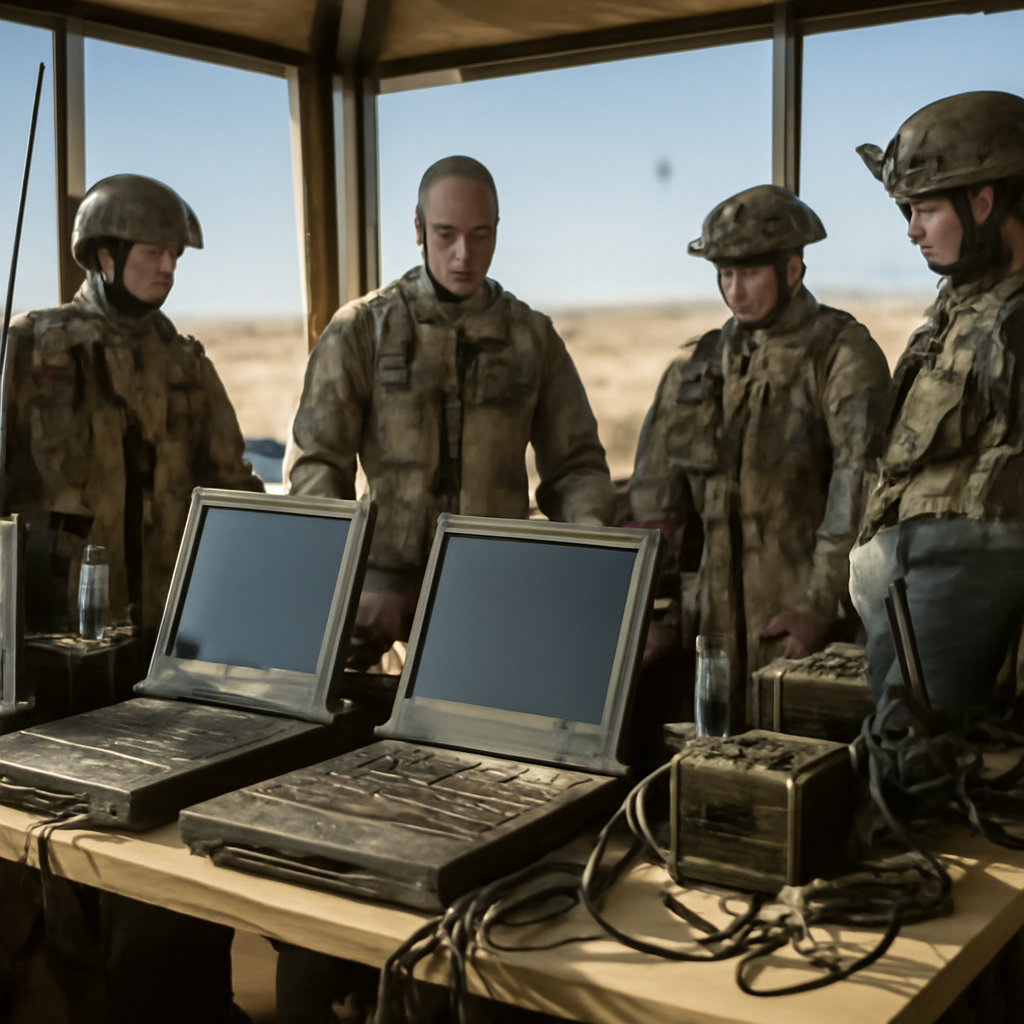
The MEIH will concentrate on eight specific technical areas named by project organizers: developing new energetics materials; high-performance computing to support simulation work; non‑destructive test and evaluation; integration with drones or unmanned systems; automating energetic processing and assembly; creating new manufacturing processes for propulsion systems and warheads; analyzing energetics obsolescence; and producing high-precision, high-throughput non‑energetic components. The site will furnish lab space and tools—explicitly including high-performance computers—for companies to test and refine technologies.

Audit-ready is a season. It shouldn't be.
Evidence in spreadsheets, controls drifting between audits, frameworks multiplying on flat headcount. Nubivance runs continuous compliance on Rapid7 Cyber GRC - SOC 2, HIPAA, ISO 27001, PCI, CMMC.
End the scrambleFunding, timeline, and physical footprint
The Navy has awarded ACMI $50 million to underwrite the MEIH; ACMI aims to raise an additional $150 million for the project. John Burer, ACMI’s founder, told Defense One that the plan is to complete the first two buildings of the larger facility within nine months. The Maryland campus will be a fraction of the size of a related munitions campus in Indiana—where the National Security Industrial Hub near NSWC Crane sits on roughly 1,100 acres—but it is designed to serve as a pilot-scale, collaborative environment rather than a full-scale production field.
How ACMI, Indian Head, and the Energetics Technology Center are positioned
ACMI intends to use private capital for the MEIH’s industrial facility build-outs, mirroring the funding approach for the Indiana hub. Burer emphasized the partnership model: private tenants will be able to make use of specialist capabilities “behind the fence” at Indian Head—capabilities such as mixing energetic materials and other processes that require the government-owned, government-operated arsenal’s unique infrastructure. William Durant, CEO and president of the not-for-profit Energetics Technology Center, which will have space at the MEIH, said his organization will help connect companies to the Navy and support their success in the hub’s eight capability areas.
What this means for the Pentagon, NSWC Indian Head, and munitions companies
- The Pentagon and the White House have already prioritized munitions production; earlier this year the Pentagon stood up the Congressionally-mandated Joint Energetics Transition Office to develop strategies for investment in new and legacy materials. The MEIH is positioned as a complementary, industry-facing node to those policy efforts.
- NSWC Indian Head gains a nearby, collaborative facility intended to accelerate process development and technology maturation at pilot scale, and to “qualify new second sources of supply” that can be scaled elsewhere, Burer said.
- Munitions and energetics companies will gain laboratory space, simulation capability and access to Indian Head’s specialist capabilities; organizers expect roughly ten companies to participate in the hub, either transiently (six months) or as multi‑year residents, depending on program needs, Durant said.
Context: sister hubs and scale ambitions
The MEIH is the second Navy–ACMI hub; the first is the National Security Industrial Hub near NSWC Crane in Indiana focused on munitions and energetics, where the Pentagon is spending $75 million to help erect the campus and which broke ground earlier this year. Defense tech hubs already exist elsewhere—the article names Austin, Texas; Rhode Island’s Unity Park and Quonset Point; the Louisiana coastline; and a 22,000-square-foot MxD hub in Chicago—illustrating a broader Pentagon effort to seed concentrated manufacturing and development centers.
Organizers say the Maryland site’s value is deliberately different from large-scale production: “To build a solid rocket motor campus…you need many, many hundreds of acres…That's what scaled production needs. But refining the processes at a pilot scale. It's smart to do that in a smaller footprint campus, in a collaborative way,” Burer said. Over the next year, MEIH partners plan to assemble a set of companies and a roadmap; Durant set a 16–18 month horizon to identify performers and map specific products that support “warfighter” needs.
The MEIH’s near-term milestones are concrete: $50 million awarded, a target to complete initial buildings in nine months, and an organizing plan to host roughly ten firms for pilot development and throughput testing. Whether that pilot work will translate into rapid qualification of second sources at Indian Head—and into scaled production beyond Maryland—will be visible as the MEIH’s tenant roster and project roadmaps firm up in the coming 16 to 18 months.