"This 'privacy for me, surveillance for thee' attitude feels like a perfect encapsulation of the future we’re already living in: one where wealthy elites can afford privacy, while the rest of us are forced to live in a corporate surveillance panopticon," Evan Greer said.
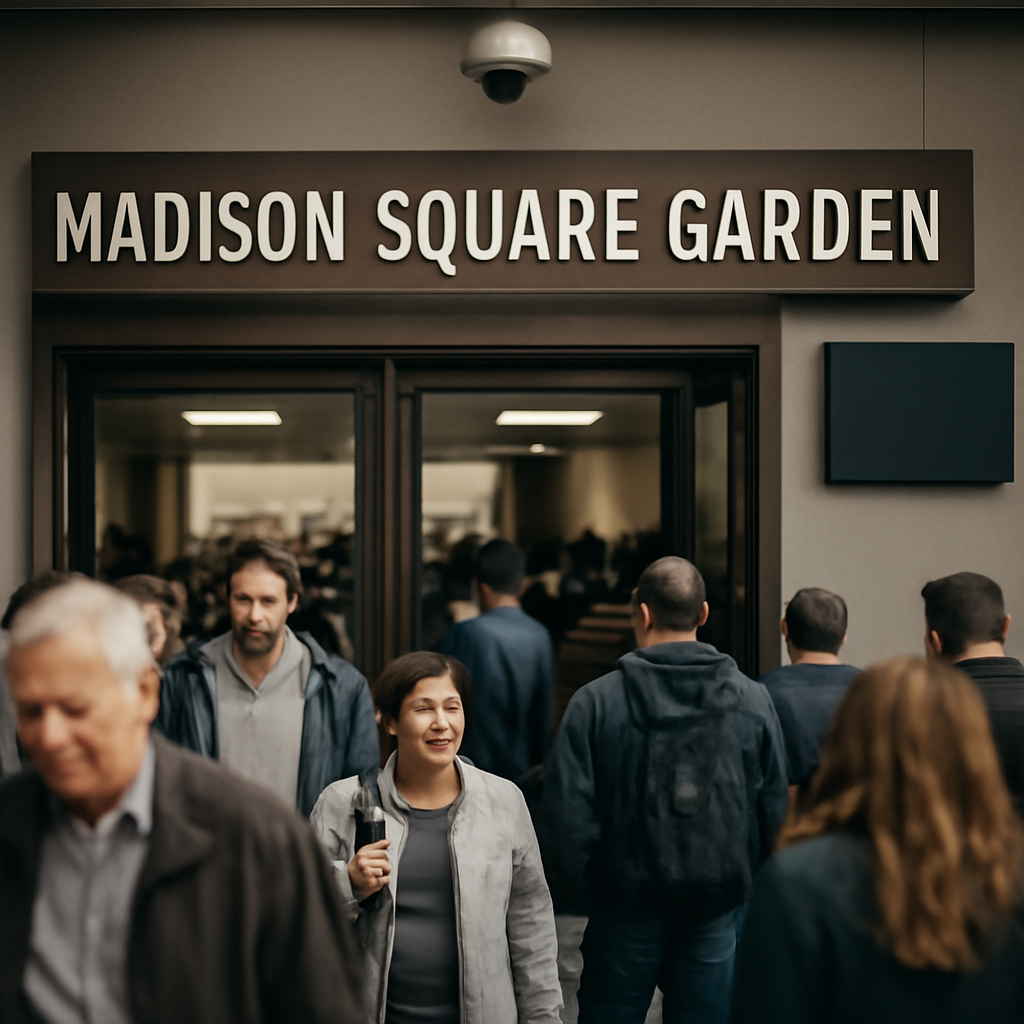
Madison Square Garden’s facial recognition on everyone entering the facility
Last month reporting revealed that Madison Square Garden uses facial recognition software on everyone entering the facility. The reporting specifically said the system flags, among other groups, activists who oppose the use of facial recognition. The disclosure put a major public venue into the spotlight for using automated identification at scale on all attendees rather than on targeted subsets.
The system was shut off for Taylor Swift’s wedding; no photos leaked
According to the same reporting, the facial recognition system at Madison Square Garden was shut off for Taylor Swift’s wedding. Whatever privacy measures Swift had in place for the wedding seems to have worked: no photos from the event have leaked online. The contrast between continuous surveillance for the general population entering MSG and the apparent absence of that surveillance during a private event is a central detail in the story.

This site is the portfolio.
OSINTSights runs on Cloudflare Workers, D1, R2, and Vectorize, with an AI pipeline on Hetzner ARM. Nubivance designed, built, and operates it. We do the same for clients.
See what we buildEvan Greer and the activists MSG reportedly flags
Evan Greer is named in the reporting as one of the people that Madison Square Garden alerts on. Greer’s quoted comment — used at the top of this piece — explicitly links the MSG practice to a broader critique: she points to a double standard, noting that "Swift herself has reportedly used facial recognition at her own concerts to identify stalkers." That phrase appears within Greer’s statement as an observation about differential application of privacy measures.
What this means for technologists, policymakers, and event organizers
- Technologists and security teams: The MSG disclosure underscores that venue-scale facial recognition can be deployed across all entrants and configured to flag named groups. Engineers and procurement leads will watch for how such systems are implemented, how alert lists are managed, and what operational exceptions — such as shutting the system off for a single event — look like in practice.
- Policymakers and regulators: The report highlights a practical gap between private-event privacy measures and routine public monitoring. Regulators concerned with the deployment of biometric systems will be able to point to the MSG example as a concrete case in which an automated identification system operated universally for a facility but was reportedly disabled for a high-profile event.
- Event organizers and venue operators: The account that the system was shut off for a wedding and that no photos leaked will shape how organizers balance security, guest privacy, and the optics of surveillance. The example suggests venue operators can create event-specific exceptions; how and when they do so will be a subject for both policy review and public scrutiny.
Closing observation
The reporting ties together three simple facts: Madison Square Garden runs facial recognition on everyone entering the facility and flags certain activists; the system was reportedly shut off for Taylor Swift’s wedding; and no images from that private event have leaked online. Evan Greer’s remark — that this sequence illustrates "privacy for me, surveillance for thee" — frames the core tension the reporting presents: selective suspension of surveillance for some events or people, even as surveillance remains the default for the broader public. The immediate record shows a functioning on/off distinction in practice; it leaves open the policy and operational choices that produce such distinctions and who gets to authorize them.