Operation Over Iran: A Calculated Aerial Strike and Its Enduring Military Message
The tension in the Middle East has always been palpable, but recent events have injected a new surge of anxiety and admiration into the collective consciousness of strategic observers and regional policymakers alike. When the Israeli Defense Forces (IDF) confirmed that all pilots involved in a major aerial operation over Iran had returned unscathed, the message was unequivocal: precision meets perseverance in modern warfare.
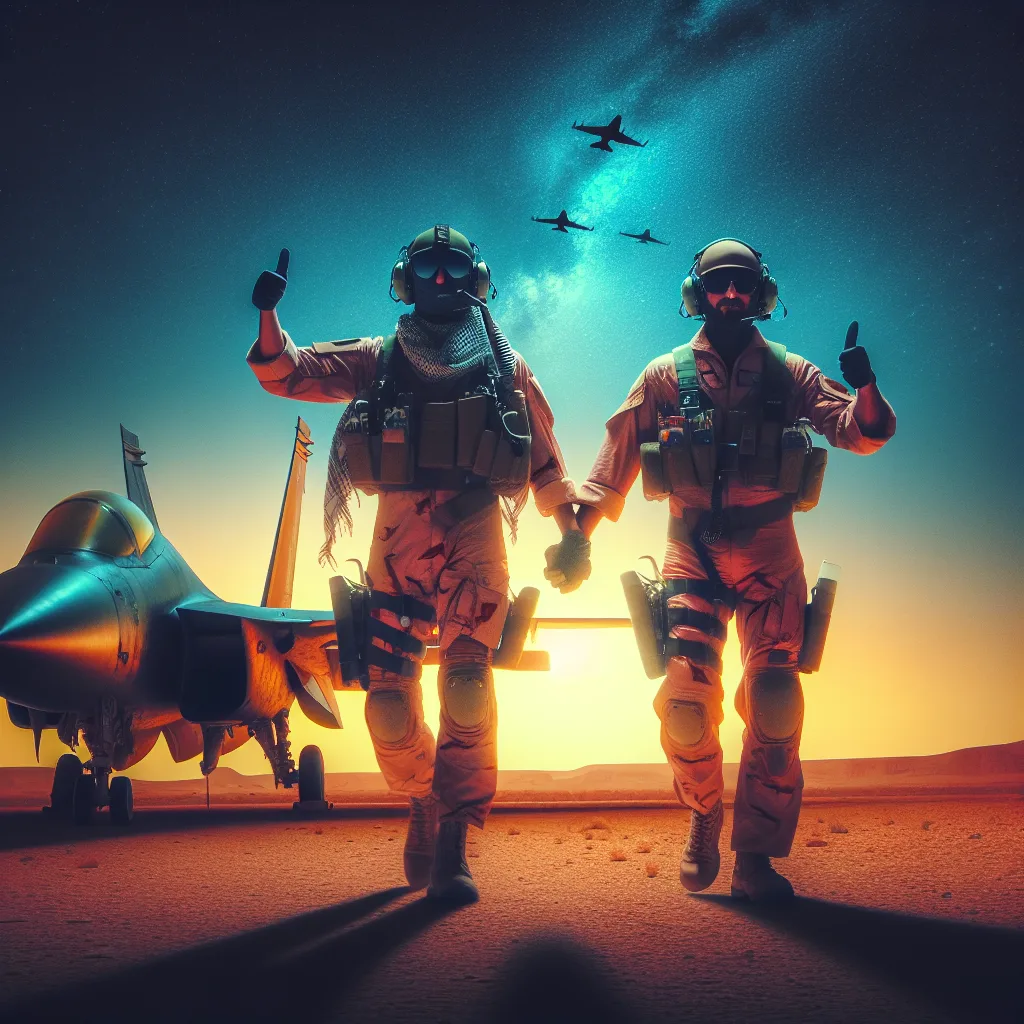
An operation of such scale and complexity—targeting Iran’s ballistic missile infrastructure and air defense systems—has not only reaffirmed Israel’s commitment to its national security but also dramatically underscored the evolution of aerial combat capabilities in an increasingly volatile region. A widely circulated image from the operation captures both the intensity of the mission and the intricate choreography required to execute such a maneuver, stirring conversations on military strategy and regional power balance.
According to an official from the IDF, the mission was the most extensive of its kind to date. Military sources have stressed the operation’s dual nature: a tactical intervention intended to neutralize specific Iranian defense assets and send a broader strategic signal to both allies and adversaries. While details remain limited and classified aspects continue to shadow the mission, the overall picture is clear—Israel’s aerial capabilities are evolving in response to a complex threat environment.
Historically, Israel has had a long-standing policy of preemptive and precise military actions designed to deter potential aggression. The roots of such operations can be traced back to the 1967 Six-Day War and later instances where Israel took calculated risks to neutralize threats in the region. In this context, the latest mission dovetails with a tradition of agile decision-making and technological innovation, mirroring the lessons learned from decades of conflict in the Middle East.
This operation, which targeted vital segments of Iranian military infrastructure, emerges at a time when concerns over the proliferation of advanced missile technologies are reaching new heights. The missile threat—both for Israel and for regional allies—has been amplified by recent intelligence indicating Iranian efforts to bolster its ballistic missile programs and modernize its air defense systems. For strategic analysts, this mission is not merely one isolated incident but rather a demonstration of how modern aerial tactics can play a critical role in neutralizing emerging threats before they materialize into full-scale offensives.
Within the corridors of defense departments and military think tanks, the operation has been dissected with the kind of thoroughness one might expect given its scope. The fact that all Israeli pilots returned safely is a testament to both the rigorous training programs and the cutting-edge technology at the IDF’s disposal. Such outcomes not only enhance national security but also boost public confidence in the military’s ability to safeguard the nation’s borders and interests.
Why does this matter? The successful implementation of this aerial strike has far-reaching implications. First, it recalibrates the strategic calculus for all stakeholders in the region. If Iran is perceived as vulnerable to sophisticated strikes, its strategic posture might shift from bold posturing to a more defensive stance. Second, this mission reinforces the value of intelligence and precision in modern conflict scenarios. Rather than engaging in an overtly broad or destructive campaign, targeted operations such as this serve as a deterrent—signaling to adversaries that Israeli forces are capable of surgical interventions that could, under different contexts, drastically alter the military balance.
Expert military analysts have drawn comparisons between this operation and previous engagements that have shaped regional defense strategies. Colonel (ret.) Amos Yadlin, a recognized authority on Middle Eastern military affairs, observed in a recent symposium that “the precision and scale of the operation over Iran indicate a notable shift in tactical doctrines. The integration of real-time intelligence with high-precision munitions sets a new benchmark for how nations can mitigate threats without resorting to ground invasions.” His perspective, while not officially representing any government’s position, highlights the operational sophistication mirrored in this strike.
Observers on both sides of ideological divides have now taken up the issue. On one side, regional partners see this operation as a necessary step to counterbalance Iran’s expanding military capabilities. On the other, critics caution against the potential escalation that such strikes might incite. Nonetheless, the operation has undeniably elevated discussions about the broader trajectory of military deterrence and the ethical complexities inherent in preemptive warfare.
Looking forward, policy analysts and strategists are already anticipating potential shifts in both diplomatic dialogue and military posture in the region. Key questions loom large: Will this operation dissuade further Iranian military advancements, or might it inadvertently spark a new cycle of regional armament? How will international allies interpret the operation’s success, and will it encourage similar tactics by other states facing asymmetric threats?
For policymakers, the strategic calculus now must account for the unpredictable nature of conflict in an era where technological and tactical innovations often redefine the battlefield. The safe return of Israeli pilots speaks volumes about the strides taken in aerial combat and the potential such advancements hold for ensuring security amidst growing regional instability. However, it also poses a profound challenge—one that forces all involved to rethink the delicate balance between assertive defense and the risk of unintended escalation.
In the final analysis, the mission over Iran is emblematic of modern conflicts: high stakes, advanced technology, and a ceaseless pursuit of strategic superiority. As nations across the globe recalibrate their defense doctrines to better suit 21st-century warfare, one must ponder whether the silent hum of advanced fighter jets and the quiet confidence in state-of-the-art command systems are enough to keep the larger specters of war at bay. The human element—the pilots who risk their lives and the citizens whose security depends on these critical decisions—remains at the center of this unfolding story.
Ultimately, this event raises enduring questions about the nature of military engagement in our time. When precision and technology converge in exactly the right way, success is certain. But at what point does such calculated force tip into a cycle where retaliation is inevitable? In the intricate chess game of modern geopolitics, every move is weighed not just in terms of immediate tactical gains, but long-term strategic consequences—a reality that policy leaders and military strategists will scrutinize in the coming months.