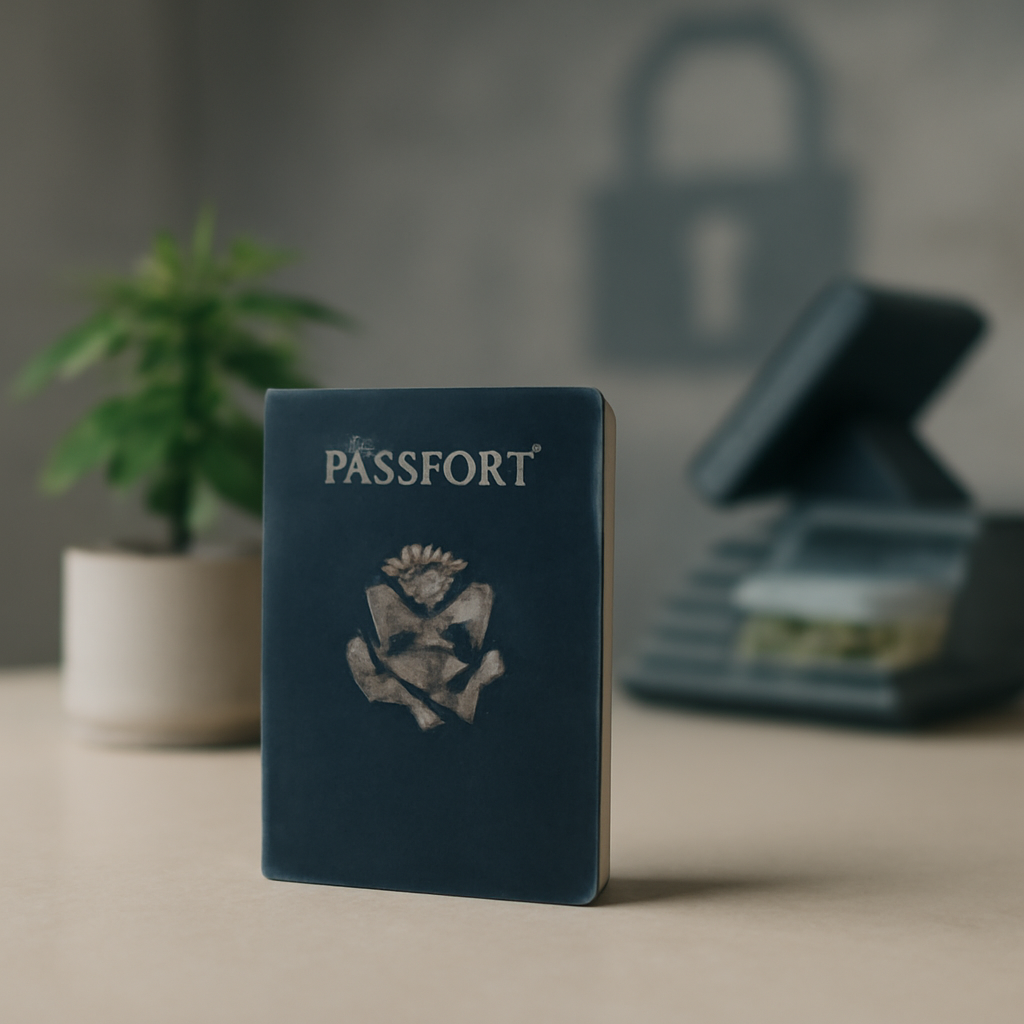
A database of almost a million passports from around the world was leaked online.
What was exposed: almost a million passport records
The recently disclosed dataset contains nearly one million passport records, drawn from multiple countries, and was published online. The post reporting the leak highlights a specific operational detail: passports—long‑standing high‑value identity credentials—were being collected and relied upon by a separate, lower-value system to validate customers at cannabis dispensaries.
How the ancillary ID system became the attack vector
According to the report, the passports were used as part of an ancillary authentication flow: "ID verification for cannabis dispensaries." That low-value verification system itself was breached, and because it stored or processed passport information, the compromise carried the higher risk of exposing the passports themselves. In short, the breach hit the weaker link in a chain where a high-value credential was treated as a convenience token in a lower‑security setting.

The cyber insurance questionnaire just landed. Now what?
SOC 2, HIPAA, insurance renewals - someone has to own security strategy. Nubivance provides fractional CISO leadership without the full-time salary.
Get a security leadWhy the contrast between high-value and low-value matters
The post frames the situation sharply: a high-value credential—a passport—was placed inside a lower-value system, and that lower-value system was the one that got hacked, "putting the high-value credential at risk." The technical takeaway offered by the reporting is procedural rather than forensic: the design choice to reuse a universally trusted credential in a sector-specific, lower-security process created a pathway for widescale exposure.
What this means for technologists, policymakers, and dispensaries
- Technologists and security teams: Will need to scrutinize integrations that accept or retain passport data for convenience checks, particularly where the relying system is not built to the protection level passports imply. The immediate task is to inventory where passport images or numbers are routed and whether those systems meet appropriate safeguards.
- Policymakers and regulators: May focus on cross-sector data flows when a national identity document is repurposed for a private, sector-specific function such as cannabis retail verification. The leak draws attention to whether rules governing collection, storage, and third-party use of passports are adequate in these contexts.
- Affected enterprises and procurement leaders (cannabis dispensaries and their vendors): Face the practical decision of reassessing vendor practices and contracts that permit storage or transmission of passport data. The report highlights that reliance on an ancillary ID verification provider can become the locus of risk for passports entrusted during routine transactions.
A concise, practical conclusion
The breach distilled to a single, actionable observation: when a universally trusted credential is inserted into a lower‑security workflow, the weak link becomes the risk carrier. The published account leaves open operational questions that matter to affected parties—how many records were complete passport images versus partial identifiers, which vendors or verification systems routed the data, and which jurisdictions’ passport holders are represented—but the central fact is straightforward and stark: almost a million passport credentials were placed at risk because they were used by an ancillary ID verification system that was compromised.



