"lock on to moving, time-sensitive threats," Lockheed said in a February release describing the new seeker that underpins the Army's Increment 2 Precision Strike Missile (PrSM) effort.
The $1.2 billion Lockheed award
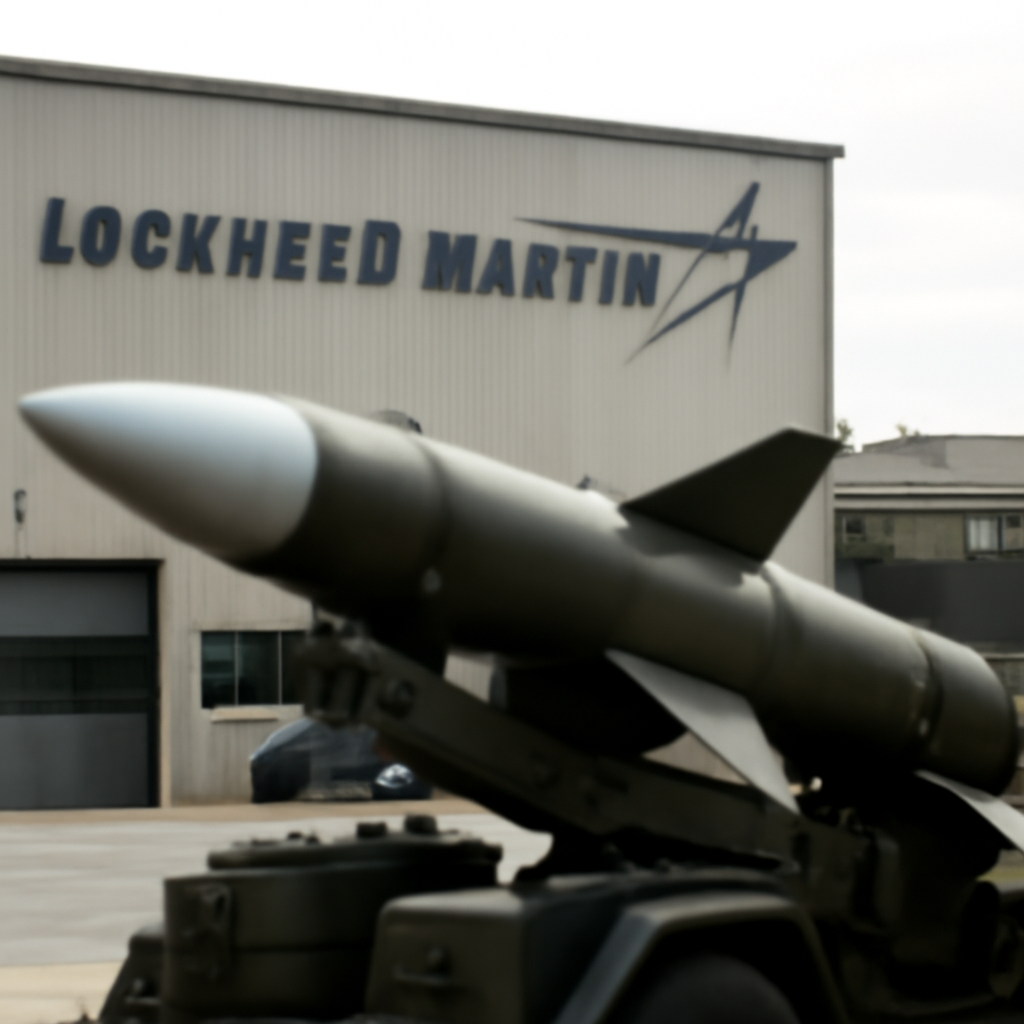
The Department of Defense posted Monday evening that the Army has awarded Lockheed Martin a $1.2 billion contract for an "early operational capability" PrSM Increment 2 system. According to the DoD notice, Lockheed's bid was the only one solicited and the only one received. The posting says work locations for the initial Increment 2 capability will be "determined with each order," and that the work is estimated to be complete by Sept. 13, 2031.
What the Increment 2 seeker is designed to do
PrSM Increment 2 is the Army initiative to field a missile with a multimode seeker capable of engaging maritime targets on the move. The seeker is also referred to in program materials as the Land-Based Anti-Ship Missile seeker. Lockheed said its February test used a seeker with a new guidance system that allows the missile to "lock on to moving, time-sensitive threats."
Published program descriptions put Increment 2's combat range at up to 500 km (310.7 miles); Lockheed reported that its first Increment 2 launch in February flew 350 km (217.5 miles) from a M142 High Mobility Artillery Rocket System launcher.

The cyber insurance questionnaire just landed. Now what?
SOC 2, HIPAA, insurance renewals - someone has to own security strategy. Nubivance provides fractional CISO leadership without the full-time salary.
Get a security leadCombat use, inventory pressures, and production steps
The Army has already fielded Increment 1 PrSM and used those capabilities in combat in March during the on-and-off-again conflict in Iran. Reuters reported last month, citing two sources, that the U.S. has used "virtually all" of its PrSM systems during the same period. In response to operational demand, the Pentagon has signed a series of framework agreements with vendors, including one with Lockheed Martin intended to accelerate PrSM production.
Planned follow-on increments: 3, 4 and 5
The service is not stopping at Increment 2. Plans under discussion and reported earlier describe Increment 3 as focusing on enhanced lethality payloads. Increment 4 is expected to extend range substantially, with program reporting indicating it will fly over 1,000 km (621.4 miles); the Army has tapped a Lockheed team and a Raytheon–Northrop Grumman team for that competition. The Army is also seeking an Increment 5 solution that would fly more than 1,000 km and be capable of firing from an autonomous launcher.
What this means for the Army, Lockheed Martin, and conflict planners
- The Army: Awarding Increment 2 to Lockheed moves a maritime-capable PrSM capability toward operational fielding while formalizing further production timelines; program work locations and delivery pacing will be set "with each order."
- Lockheed Martin: The contract follows a successful February launch and sits alongside a Pentagon framework agreement intended to speed production — a commercial and programmatic pathway to turn a tested seeker and missile into deployed inventories.
- Conflict planners and force managers: The reported depletion of Increment 1 stocks during recent operations, paired with a production acceleration effort, underscores a near-term tension between combat demand and available missiles that Increment 2 and subsequent increments are intended to help address.
The Army's Increment 2 award ties a tested seeker and a production commitment to an operational timeline through 2031, even as the service pursues longer ranges and additional capabilities in Increments 3–5. The contract notice leaves several practical details — where work will be done and the tempo of delivered missiles — to be set "with each order," while reports that "virtually all" Increment 1 missiles were expended in recent operations crystallize the program's immediate relevance.
Original reporting: https://breakingdefense.com/2026/09/army-awards-lockheed-1-2b-contract-for-prsm-inc-2-system/