"Our first fielded instance Scout-S system, Scout Hawaii, became operational in June 2026," a LeoLabs spokesperson told Breaking Defense.
Scout Hawaii: a transportable radar now in the field
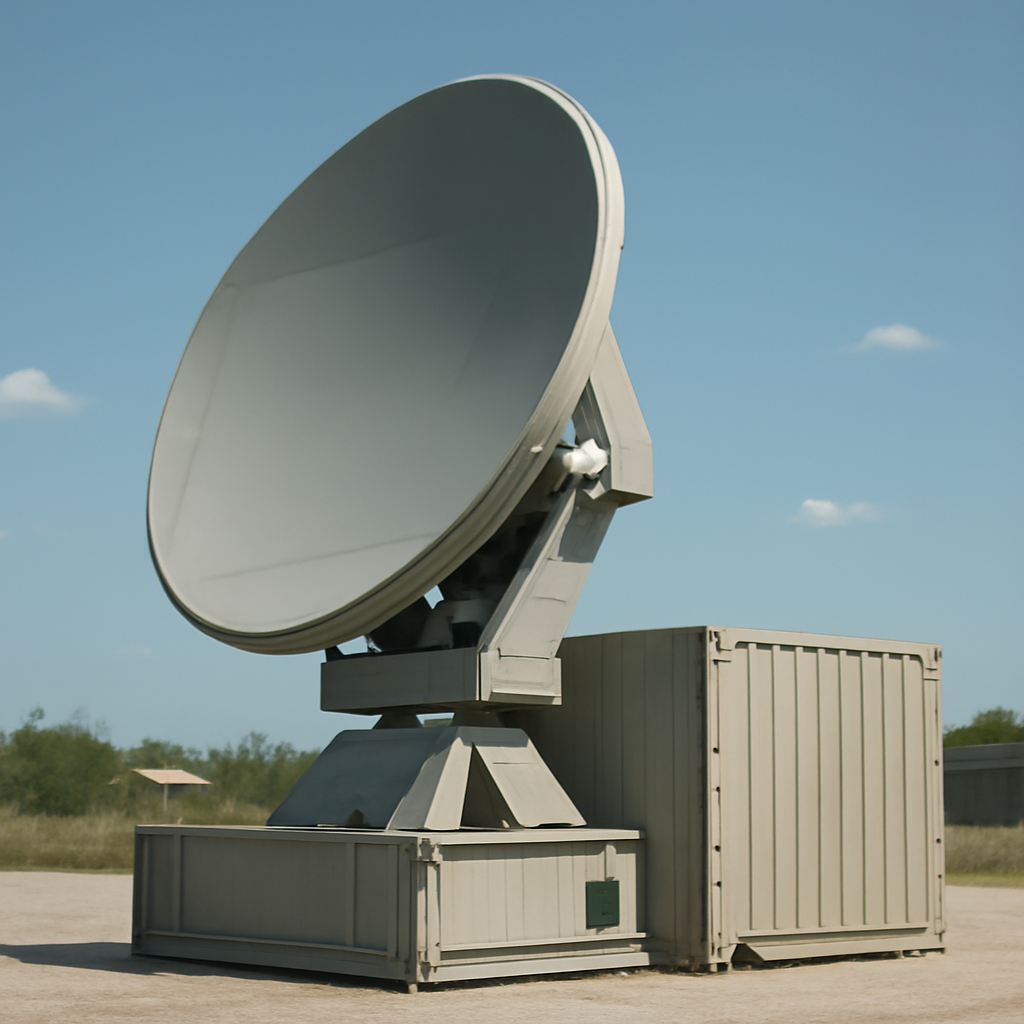
LeoLabs announced that its first Scout-S radar — called Scout Hawaii — became operational in June 2026. The company describes the Scout-S as a "transportable" radar that fits into a standard 20-foot ISO container so it can be moved by land, air or sea. LeoLabs said the unit will remain in Hawaii after an upcoming exercise for continued experimentation and "real-world testing" of future radar capabilities, and that it is already contributing data to the company's space monitoring network.
Valiant Shield 2026 participation and schedule
Scout Hawaii is slated to take part in experimentation activities during U.S. Indo-Pacific Command's Valiant Shield 2026 exercise. Valiant Shield is a biennial U.S. joint force exercise in the Indo-Pacific theater that, the release notes, has included regional allies since 2024. This year's exercise will run June 22–July 1 in, and in the waters around, Hawaii, Guam and Japan. LeoLabs said Scout Hawaii will support the company's broader effort to evaluate transportable, 3D search sensing capabilities "in operationally relevant environments."

Audit-ready is a season. It shouldn't be.
Evidence in spreadsheets, controls drifting between audits, frameworks multiplying on flat headcount. Nubivance runs continuous compliance on Rapid7 Cyber GRC - SOC 2, HIPAA, ISO 27001, PCI, CMMC.
End the scrambleTechnical features: 3D scanning, DRA and modular S‑band design
According to LeoLabs, the Scout-S employs 3D scanning, direct radiating array (DRA) technology and a modular S‑band electronic design. The company said those elements allow the radar to "significantly extend observation durations from seconds to several minutes during a single orbital pass," enabling operators to maintain custody of objects for a greater portion of their orbit. LeoLabs also described the Scout-S as designed to be rapidly proliferated into a network to close coverage gaps left by fixed-site radars.
Early tracking results: Yaogan satellites, a spaceplane, and low-altitude objects
The company release says Scout-S has already provided "persistent tracking" of Chinese intelligence, surveillance and reconnaissance satellites, citing Yaogan military reconnaissance satellites specifically. LeoLabs also reported tracking "China’s Spaceplane" in low Earth orbit (LEO) and demonstrated very low Earth orbit (VLEO) capability by tracking an object at about 230 kilometers (143 miles) altitude. The LeoLabs spokesperson emphasized that longer observation windows enable improved ability to detect maneuvers, characterize behavior, observe proximity operations, identify payload deployments and "distinguish routine activity from potentially threatening actions."
What this means for military operators, regional actors, and LeoLabs
- Military operators: The company frames Scout-S as a tool to move beyond periodic snapshots of space objects toward "persistent custody" of maneuverable payloads, which LeoLabs says is increasingly important as "adversarial activity in space" accelerates. Operators participating in Valiant Shield will have an early opportunity to assess Scout-S performance in an exercise environment and in subsequent real‑world testing from the Hawaii location.
- Regional allies and adversaries in the Indo‑Pacific: Valiant Shield's multinational footprint and the release's mention of tracking specific foreign assets mean partners and potential adversaries will see a new transportable sensing capability operating in the theater; LeoLabs positions Scout-S as a way to fill coverage gaps that fixed radars cannot cover.
- LeoLabs and procurement planners: LeoLabs said the Scout-S was developed through a "combination of private investment" and U.S. Space Force support, including a Tactical Funding Increase (TACFI) award announced in 2025. The company is "on track to manufacture a second Scout article by early 2027 and will ramp up production mid to late 2027," signalling a near‑term production timetable tied to the outcome of current experiments.
LeoLabs CEO Tony Frazier summed the rationale in the company's release: "The acceleration of adversarial activity in space is challenging U.S. and Allied Space Superiority. Tracking objects periodically to predict orbits is no longer enough. What matters now is the ability to maintain persistent custody of maneuverable payloads so our customers can respond to emerging threats."
Immediate next steps are concrete and narrow: Scout Hawaii's participation in Valiant Shield (June 22–July 1), continued on‑island experimentation afterward, and the planned manufacture of a second Scout by early 2027 with a production ramp mid to late 2027. Those milestones will show whether the containerized Scout-S can reliably extend observation windows from seconds to minutes, sustain custody of individual objects across orbital passes, and be proliferated quickly enough to fill the coverage gaps LeoLabs identifies.
Original reporting: LeoLab’s new, mobile space-watch radar to participate in Valiant Shield exercise