"denial capabilities," Defense Minister Koizumi Shinjiro said when asked how Japan should explain kyohi-ryoku (拒否力) to an international audience.
Koizumi Shinjiro: denial as the link between deterrence and response
On November 10 on the YouTube program SIGNAL, Japan’s defense minister offered an English rendering — “denial capabilities” — to describe kyohi-ryoku. Koizumi distinguished deterrence capabilities, which “help persuade an adversary to forgo an attack,” from response capabilities that “come into play if deterrence fails,” and argued that denial “is the purpose that connects the two.” He reiterated a core policy line: “Japan will not attack another country on its own initiative.”
Koizumi framed denial as compatible with Japan’s exclusively defense-oriented policy and said the public debate on nuclear issues “should be more open.” He also urged “true integration,” combining overlapping functions across the ground, maritime, and air services while preserving service expertise, as recruitment falls short.
The domestic debate over a port‑call exception to the third Non‑Nuclear Principle
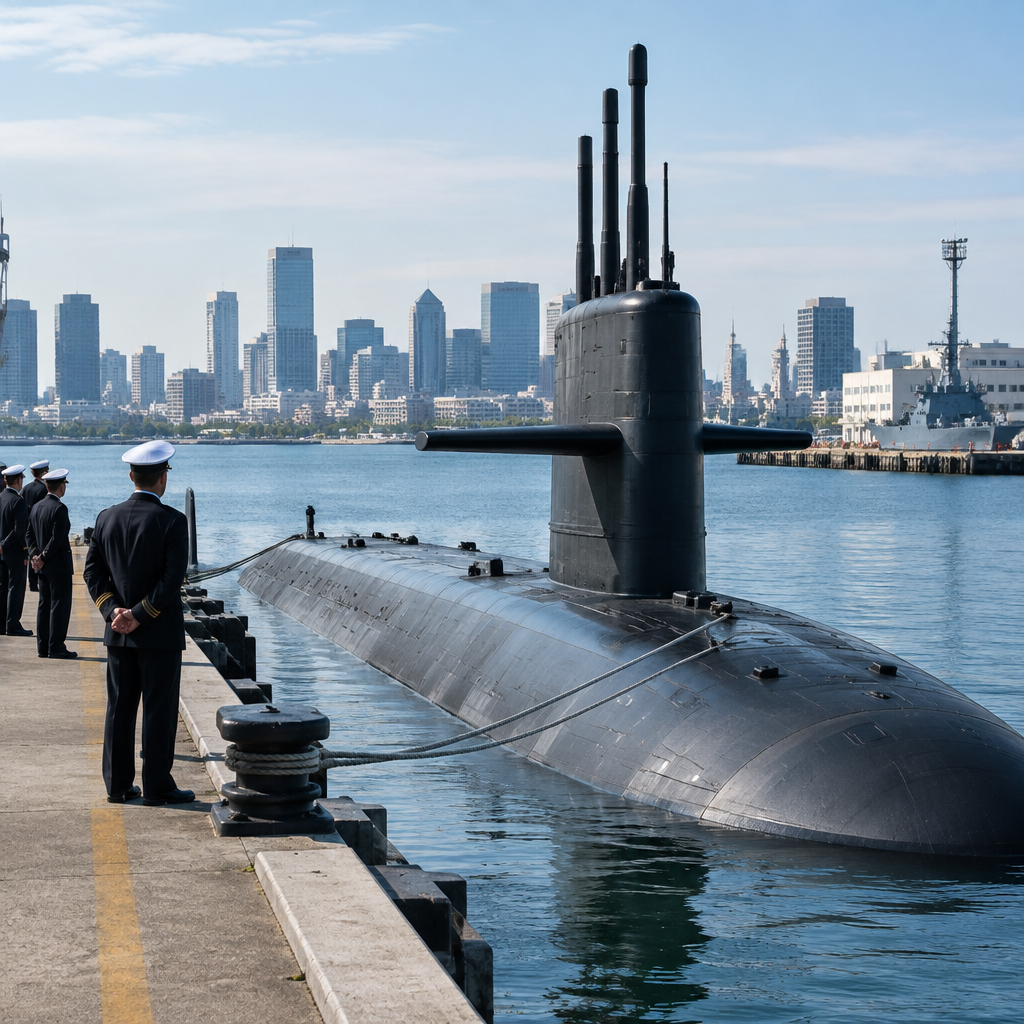
Japan’s Three Non‑Nuclear Principles — not possessing, not producing, and not permitting the introduction of nuclear weapons — remain central to the discussion. Kyodo News reported the government is considering keeping all three principles while spelling out an emergency exception to the third in a revised National Security Strategy. That proposal draws on a March 2010 Diet answer by then‑Foreign Minister Okada Katsuya: “If Japan’s security could not be protected without allowing a temporary port call by a nuclear‑armed U.S. vessel, the government of the day would have to decide and explain its decision to the public.”
Before taking office, Prime Minister Takaichi Sanae said the third principle was impractical if Japan relied on U.S. extended deterrence, and on October 14 she told a Diet committee the review could address extended deterrence and Okada’s testimony. Political journalist Tazaki Shiro noted some ruling Liberal Democratic Party lawmakers, including former Prime Minister Kishida Fumio, saw no need to spell out an exception because Okada’s 2010 testimony already provided flexibility; the report adds that Kishida has family and political roots in Hiroshima.

This site is the portfolio.
OSINTSights runs on Cloudflare Workers, D1, R2, and Vectorize, with an AI pipeline on Hetzner ARM. Nubivance designed, built, and operates it. We do the same for clients.
See what we buildDefense Ministry priorities: uncrewed systems, stand‑off, IAMD, sustainment
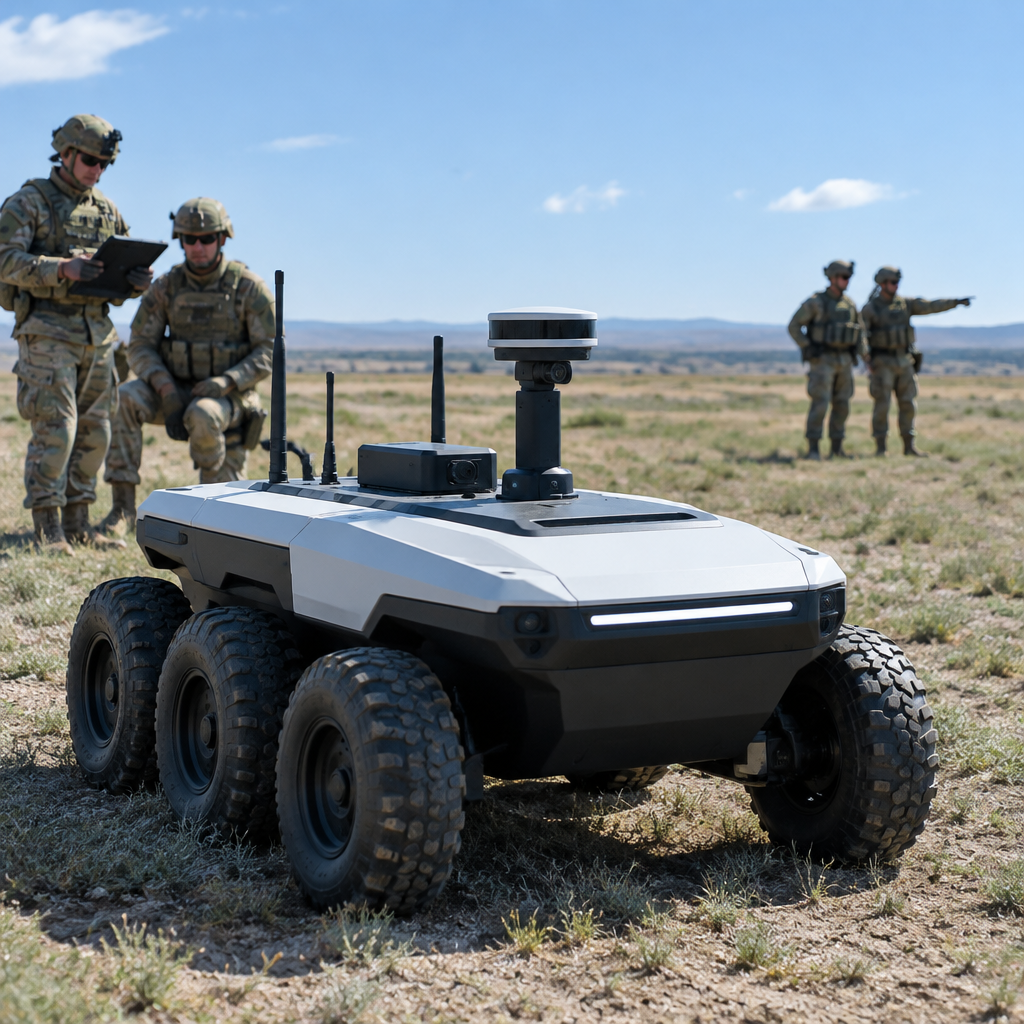
A Defense Ministry briefing paper released by November 11 identified four priority capabilities for Japan’s defense build‑up: defense using uncrewed systems, stand‑off defense, integrated air and missile defense (IAMD), and the ability to sustain operations. The paper stressed that sustaining operations under attack requires ammunition stocks, repair capacity, and resilient facilities.
Those priorities reflect the practical side of kyohi‑ryoku: denying an adversary a quick gain through resilient logistics and layered defenses, not only by fielding weapon systems but by ensuring they can operate under sustained pressure.
U.S.-Japan alignment, extended deterrence, and the prospect of SLCM‑N
The U.S. National Defense Strategy released in January calls for a “strong denial defense” along the First Island Chain, and an October 28 readout of a meeting between Koizumi and U.S. Secretary of War Pete Hegseth used the fuller phrase “denial defense capabilities” and said the two ministers would “work to align views.” Koizumi told the author that he and Hegseth had also discussed extended deterrence, a term the readout does not use, and added: “The fact that Japan and the United States are discussing these matters is itself an important deterrent.”
Tokyo’s 2026 defense white paper noted China’s DF‑26 can reach both Japan and Guam and carry either a conventional or a nuclear warhead. The United States has no equivalent ground‑launched intermediate‑range nuclear missile, though its guarantee to Japan “draws on a broader arsenal, including sea‑ and air‑based nuclear forces,” the report says. The story of whether to permit a temporary port call by a nuclear‑armed U.S. vessel could become more concrete if Washington deploys the nuclear‑armed sea‑launched cruise missile (SLCM‑N) it is developing.
How the prime minister, the Self‑Defense Forces, and the public are positioned
- Prime Minister Takaichi Sanae: The defense minister indicated the final decision on any exception “rested with the prime minister,” and the prime minister has previously signaled the review could address extended deterrence and Okada’s testimony (October 14).
- Japan Self‑Defense Forces and planners: The Defense Ministry’s November 11 briefing paper directs attention to uncrewed systems, stand‑off capabilities, IAMD, and sustainment — concrete priorities for force development and logistics under attack.
- The Japanese public, especially in Hiroshima: Debates over an exception to the third Non‑Nuclear Principle will require “a clear explanation of what kind of emergency would justify such a visit,” the source emphasizes; the political resonance is heightened by references to Hiroshima, where the United States dropped an atomic bomb in 1945.
Tokyo’s decision to make “denial” an explicit goal ties doctrine to concrete acquisitions and political choices. Working‑level talks on revising Japan’s three strategic documents aim to conclude by year’s end; the next steps will test whether words like kyohi‑ryoku translate into enduring capabilities or into a narrow political compromise that must be explained to a wary public. If a port‑call exception is retained in any form, the government will be forced to name the emergency scenarios that would trigger it — and to say why that step strengthens, rather than weakens, Japan’s defense posture.