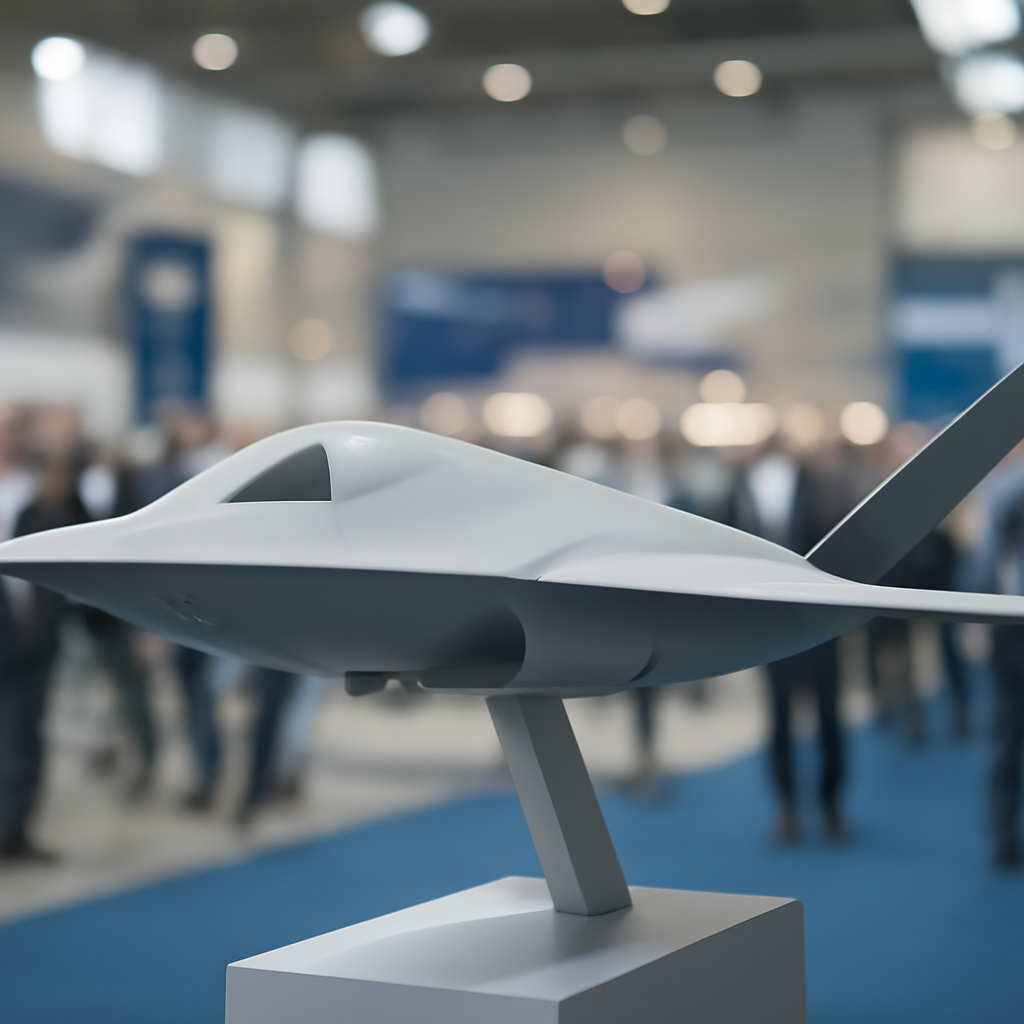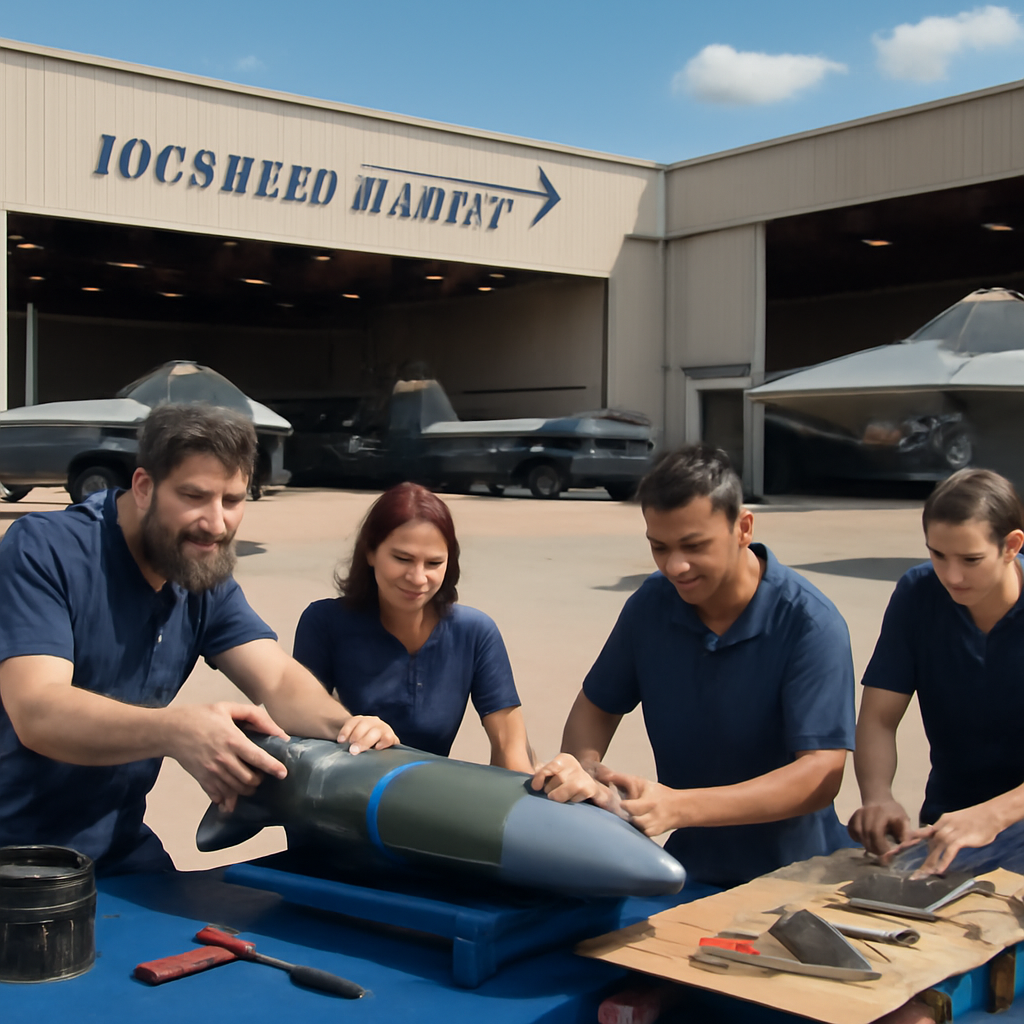
"At a later stage, F-35 operators worldwide will be able to field SPICE 1000," Rafael Advanced Defense Systems said on September 15, 2026, announcing a joint workstream with Lockheed Martin to integrate the Israeli-made SPICE 1000 standoff weapon onto the F-35I Adir.
Rafael and Lockheed Martin: the integration effort
The companies are conducting the work as a joint project at Lockheed Martin’s facilities in the United States, Rafael said, and the effort is expected to take several months. The announcement came during the Air & Space Forces Air, Space and Cyber Symposium on September 15, 2026. Rafael and Lockheed Martin already have a history of cooperation: a 2019 teaming agreement covered joint development, marketing and manufacture of SPICE guidance kits for the U.S. market, and that arrangement was expanded in 2021 to include SPICE 250 development for potential sales to the United States and Poland.
SPICE 1000: technical profile and combat pedigree
SPICE — Smart, Precise Impact, and Cost-Effective — is a family of electro-optically guided stand-off weapons that includes SPICE 2000, SPICE 1000, and SPICE 250. SPICE 1000 is built around a 1,000‑pound‑class bomb and uses pop‑out wings to achieve a manufacturer‑stated range of approximately 125 kilometers (about 78 miles). Rafael gives the weapon a claimed circular error probable of around three meters.
The glide bomb combines inertial and satellite‑aided navigation with an electro‑optical seeker that, during the terminal phase, can compare the observed target area with stored imagery using scene‑matching algorithms. That allows the munition to continue its attack without relying exclusively on GPS, enabling an autonomous, “fire and forget” capability and resilience in GPS‑denied or degraded environments. SPICE also can be programmed for approach azimuth and impact angle, supporting steep‑angle attacks and selectable terminal geometry.
Rafael says SPICE 1000 has been operational with the Israeli Air Force since 2017 and is already integrated on F‑16I Sufa, F‑16C/D Barak, F‑15I Ra’am and F‑15 Baz fighters. Rafael added that “SPICE 1000 has been sold to several countries and is in operational service with a number of air forces worldwide,” and that it has seen “extensive use in recent long‑range operations flown from F‑15 and F‑16 aircraft.”

Audit-ready is a season. It shouldn't be.
Evidence in spreadsheets, controls drifting between audits, frameworks multiplying on flat headcount. Nubivance runs continuous compliance on Rapid7 Cyber GRC - SOC 2, HIPAA, ISO 27001, PCI, CMMC.
End the scrambleF-35I specifics: TR-3, external carriage history, and unknowns
Israel’s F-35I Adir is an atypical member of the global Joint Strike Fighter fleet. The service has previously demonstrated an external JDAM carriage capability and said in March 2025 that the Adir was the only F‑35 to have conducted operational strikes with an external weapons configuration. The Jerusalem Post reported that SPICE is expected to be carried internally by F‑35Is equipped with Technology Refresh 3 (TR‑3) hardware — a move that would preserve the aircraft’s low‑observable configuration.
But Rafael and Lockheed Martin have not publicly detailed the final carriage configuration, aircraft modifications, or software associated with this integration. The Pentagon’s August F-35 Modernized Selected Acquisition Report identified the weapon as the “Israel‑unique Smart, Precise Impact, Cost‑Effective 1000B” (SPICE 1000B) and said integration was progressing “with a strategy to accelerate the implementation via a SPICE Lite process,” without explaining what “SPICE Lite” entails. It therefore remains unclear whether the integration requires the full Block 4/ TR‑3 software and hardware baseline or what flight‑test schedule and operational clearance timelines will be.
What this means for other F-35 operators, the U.S. Department of Defense, and the Israeli Air Force
- Other F‑35 operators: The completed Israeli integration could offer a pathway to fielding SPICE 1000 without starting integration from scratch, but Rafael notes that any other operator would still require additional work — national configurations, software baselines, certification, weapons procurement, and export approvals.
- The U.S. Department of Defense and program office: The Pentagon previously flagged SPICE 1000B and referenced the SPICE Lite acceleration strategy. The example of the U.K.’s delayed SPEAR 3 integration — where mission‑system integration and jettison trials remained part of a wider weapons‑integration program, pushing release to service into the early 2030s — underscores how long and programmatically complex such integrations can be within the F‑35 program.
- The Israeli Air Force and defense industry: Israel’s unique access to F‑35 software and a specially instrumented test jet have already enabled national integrations of sensors, EW systems, and external weapons. Rafael’s push to make SPICE 1000 available “at a later stage” is consistent with Israel’s broader efforts to extend the Adir’s reach, including an Elbit Systems subsidiary Cyclone contract in May 2026 for an extended‑range fuel capability and announced fleet expansions (F‑35I from 50 to 100 aircraft; F‑15IA from 25 to 50).
The core facts are straightforward: an established, combat‑proven Israeli glide weapon is being worked into the F‑35I at Lockheed Martin facilities, with Rafael explicitly pitching eventual wider availability. The remaining, consequential unknowns are equally tangible — carriage configuration, software baselines, flight‑test timelines and the export or certification steps that would let other F‑35 operators adopt the munition. Those specifics will determine whether this is a practical shortcut to a new standoff capability for other users, or a narrowly Israeli pathway that still requires substantial local work elsewhere.
Source: TWZ — Israel Is Bringing SPICE 1000 Standoff Weapon To The F-35