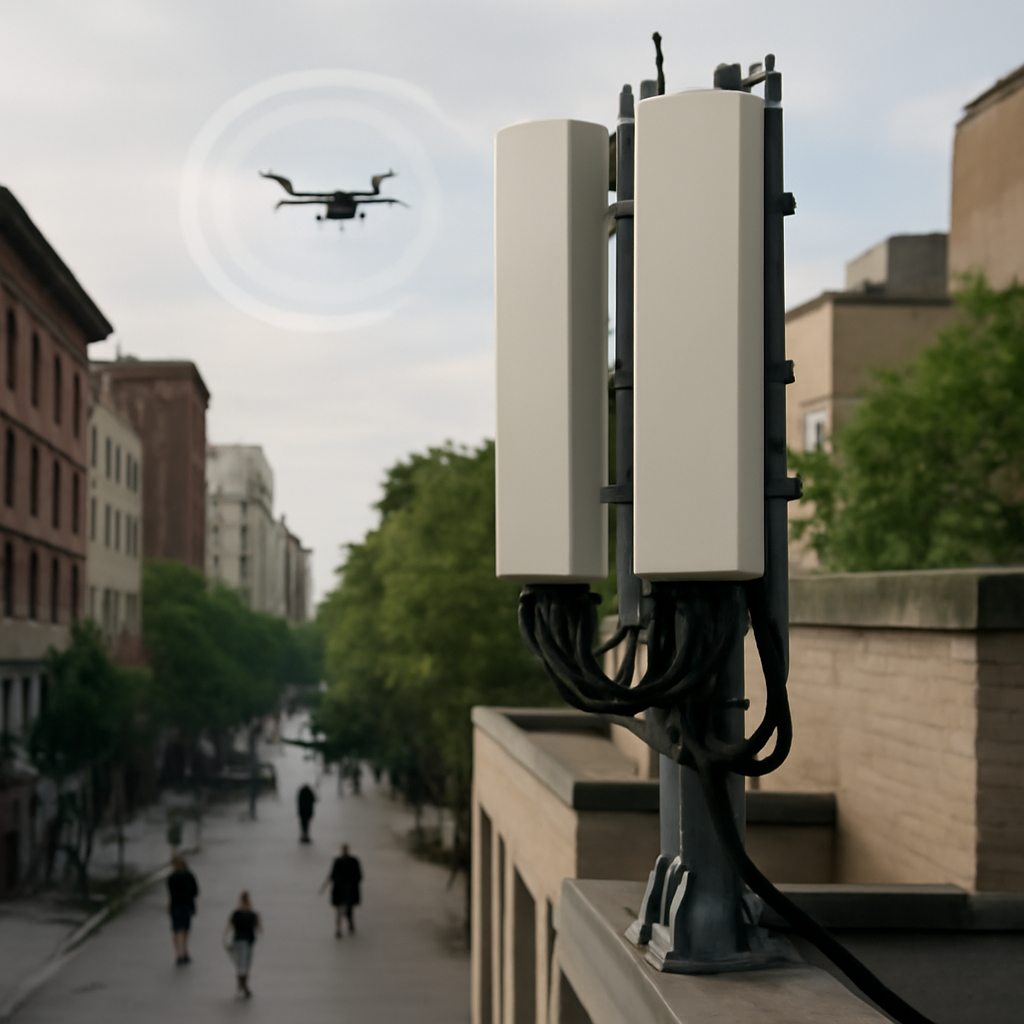
“Using existing 5G transmissions, ISAC can detect and track objects, including drones that might otherwise be difficult to identify.”
How ISAC leverages existing 5G transmissions
Integrated Sensing and Communications (ISAC) folds sensing functions into the same radio infrastructure that already carries voice, data and machine traffic. The technology relies on radio frequency signals plus signal processing and artificial intelligence to turn communications networks into sensors. According to the podcast discussion, ISAC is not a distant, 6G-only prospect: while 6G is anticipated to increase capabilities, ISAC can already be explored and prototyped on current 5G networks. That creates a practical pathway for organizations — and the federal government specifically — to build situational awareness without deploying separate, specialized sensing systems.
Passive, monostatic and bistatic sensing models explained
On the Government Technology Insider podcast, host Matt Langan spoke with John Macias, Associate Fellow Systems Architect at Verizon, and Amitav Mukherjee, Founder and CEO at Tiami Networks, about the different sensing geometries ISAC can use. They described three models commonly discussed in the field: passive sensing (listening to existing transmissions without an active radar-like emitter), monostatic sensing (transmit and receive at the same location), and bistatic sensing (transmit and receive at different locations). Each model supports different operational requirements, and the panel emphasized that those trade-offs shape where and how ISAC is applied.

The cyber insurance questionnaire just landed. Now what?
SOC 2, HIPAA, insurance renewals - someone has to own security strategy. Nubivance provides fractional CISO leadership without the full-time salary.
Get a security leadFrom drone detection to digital twins: early and emerging applications
Macias and Mukherjee focused on concrete mission areas where ISAC could add immediate value. The conversation highlighted the use of existing 5G signals to detect and track objects — drones were named specifically as a class of objects that ISAC can address, including drones that “might otherwise be difficult to identify.” Beyond unmanned aircraft, the speakers pointed to broader applications such as crowd monitoring and the creation of digital twins, and they noted a longer-term trajectory toward extended-range sensing as the technology matures.
How the federal government, Verizon, and Tiami Networks are positioned
- The federal government: The podcast framed ISAC as an opportunity for federal operators to build new forms of situational awareness without putting in place entirely new sensing networks. Because ISAC can run on current 5G infrastructure, the government has a near-term option to explore capabilities before any potential 6G rollout.
- Verizon: Represented on the podcast by John Macias, Verizon figures in the conversation as a practitioner and systems architect perspective on how communications operators can enable sensing on their networks.
- Tiami Networks: As described by Amitav Mukherjee, Tiami Networks approaches ISAC from the vendor and technology-innovation angle, contributing perspective on sensing techniques and potential applications such as drone detection, crowd monitoring and digital twins.
Technical enablers: RF signals, signal processing and AI
The discussion boiled the enabling stack down to three core ingredients: radio-frequency transmissions (the physical signals already present in cellular networks), signal-processing techniques to extract reflections and other sensing cues from those transmissions, and artificial intelligence to interpret ambiguous or noisy observations. That combination is what allows communication links to be repurposed as sensors and to support the range of sensing models—passive, monostatic and bistatic—that the guests outlined.
Operational questions for federal adoption
The podcast framed ISAC as both an operational opportunity and a set of implementation questions. Because ISAC can be explored on 5G today, federal decisionmakers have an immediate window to test concepts and evaluate performance against mission needs in defense and homeland security contexts. At the same time, the panel made clear that different sensing models and use cases imply distinct deployment choices, trade-offs and partnerships with commercial network operators and vendors.
The conversation closed on an implicit challenge: with ISAC already feasible on deployed 5G and 6G promising further capability, will agencies and operators seize the chance to prototype and operationalize networks that can see? The podcast episode is available in full for listeners who want the original exchange with Matt Langan, John Macias and Amitav Mukherjee.