"This is on the verge of a kinetic cyber attack," Kevin Kirkwood, CISO at Exabeam, warned.
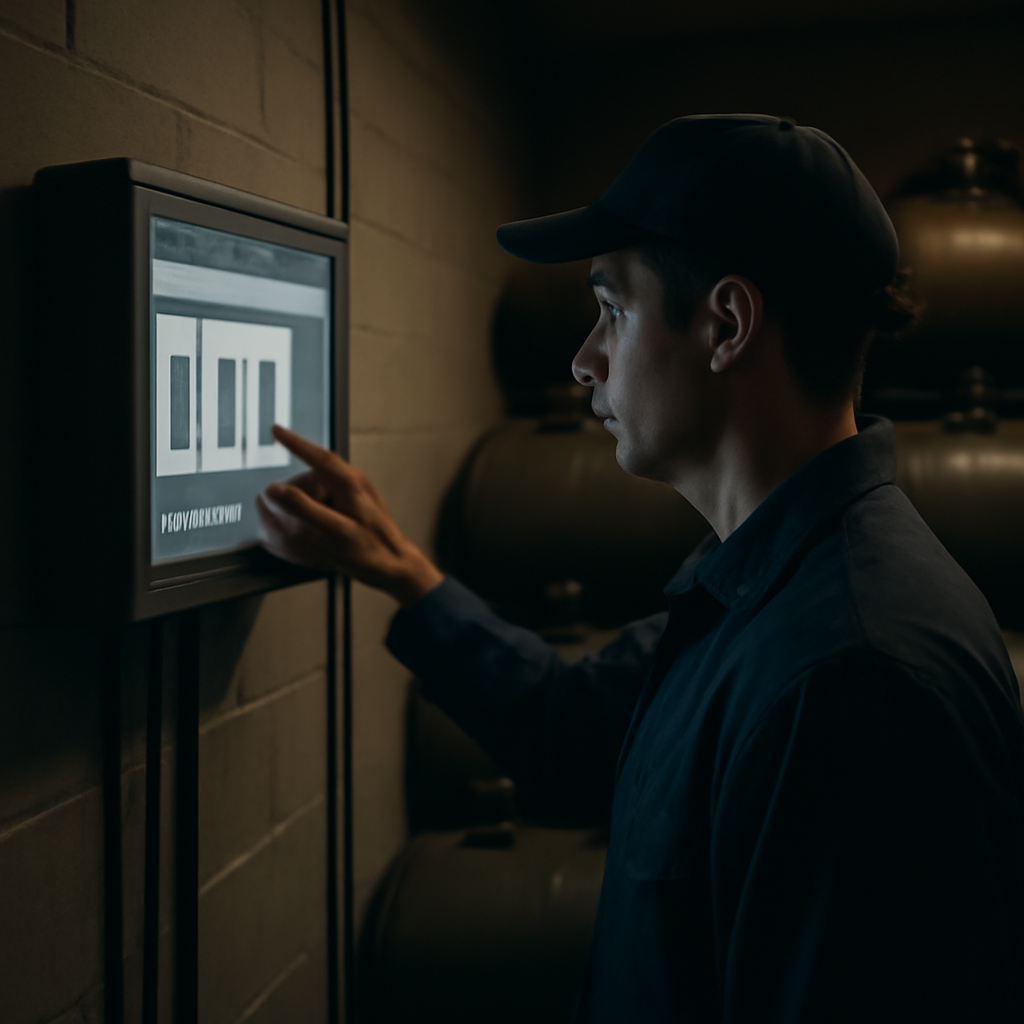
U.S. officials, according to a CNN report relayed by Security Magazine, suspect Iranian actors may have hacked automatic tank gauge (ATG) systems that monitor fuel levels at gas stations across the United States. The breach targeted ATG systems that were reportedly online and without password protection, allowing attackers to alter the tanks' display readings while not changing the actual amount of fuel in storage. No damage or harm has been reported, but observers note the theoretical danger that a manipulated reading could allow a gas leak to go undetected. A lack of forensic evidence may make definitive attribution impossible, though Iran's history of targeting gas tank systems makes it a top suspect for U.S. officials. Security leaders quoted in the coverage use the incident to highlight wider concerns about exposed operational technology, remote access, and the merging of IT and OT risk.
Automatic tank gauge systems: online, unprotected, and presenting a false picture
The core technical detail in the report is direct: automatic tank gauge (ATG) systems that monitor storage-tank levels were connected to the internet and lacked password protection. That exposure enabled actors to change what operators and customers see on tank displays without altering the physical inventory. While the immediate incident reportedly caused no physical harm, the possibility that a false reading could mask a leak underscores how sensor integrity — not just uptime — becomes a security problem when OT devices are reachable and unauthenticated.
Why U.S. officials are focusing on Iran
The reporting states U.S. officials suspect Iranian actors. It also emphasizes a key constraint: investigators may not be able to reach a definitive attribution because of a "lack of forensic evidence." Still, the story says that Iran's prior targeting of gas tank systems makes the nation a leading suspect for those officials. The implication in the coverage is not certainty but heightened concern based on historical targeting patterns.

This site is the portfolio.
OSINTSights runs on Cloudflare Workers, D1, R2, and Vectorize, with an AI pipeline on Hetzner ARM. Nubivance designed, built, and operates it. We do the same for clients.
See what we buildNick Tausek on exposed OT and the attack "throughline"
Nick Tausek, Lead Security Automation Architect at Swimlane, framed the incident as fitting a broader pattern: "Iranian threat actors tend to look for pressure points, and this target fits that pattern." He argues the appeal of U.S. systems lies in how much critical infrastructure is connected, locally operated, and unevenly defended. Tausek called attention to "exposed operational technology and weak remote access" and urged defenders to build capabilities that can spot abnormal activity, prioritize alerts, coordinate response, and contain threats quickly before a local incident becomes a wider infrastructure problem.
Kevin Kirkwood and Gabrielle Hempel: AI, kinetic risk, and the gray zone of online warfare
Kevin Kirkwood tied the attack to a broader shift in how cyber operations can produce real-world effects. He warned that attacks on operational systems are "increasingly targeting real-world infrastructure and operational systems, not just data and applications," and suggested organizations must move from assuming data and systems are reliable to "trust validation." Kirkwood recommended stronger identity and cryptographic controls, better visibility into operational assets, segmentation between IT and OT, verification of sensor and telemetry integrity, and governance controls for AI-driven automation — with critical decisions retaining human oversight.
Gabrielle Hempel, Security Operations Strategist at Exabeam, echoed the escalation in scope: "The next war is going to have large portions that are waged online." Hempel described the gas station/tank reader manipulation as a "gray area between nuisance and legitimate disruption" — disruptive enough to shake public confidence while staying below the threshold of conventional military escalation. She suggested that the "soft connective tissue" of cloud-connected monitoring and remote management is often easier to hit than industrial hardware, and that traditional separations between IT and OT security are increasingly obsolete.
Ross Filipek: scaling the risk and practical defenses for fuel operations
Ross Filipek, CISO at Corsica Technologies, emphasized the strategic arithmetic: gas stations and tank storage systems "sit right at the intersection of economic pressure and public disruption," making them attractive targets. Filipek warned that if such activity were to scale nationally, attackers who can disrupt visibility into fuel storage could cause wider supply-chain chaos. He recommended treating these systems as critical infrastructure rather than "back-office equipment," and urged around-the-clock monitoring, strong network segmentation, and tested recovery plans to halt disruption before it spreads.
The incident, limited so far to altered displays on passwordless ATG systems and reported without physical harm, nonetheless crystallizes a narrow but potent risk: when operational sensors are exposed, a technical compromise can be leveraged to create confusion and operational stress. With attribution uncertain but Iran a leading suspect in U.S. assessments, the immediate practical takeaway from the security leaders quoted is clear — shore up remote access, validate sensor telemetry, and integrate IT, OT and AI governance to keep a local anomaly from becoming a sector-wide emergency.



