IMO pauses its evacuation plan after a strike
The International Maritime Organization (IMO) announced a temporary pause to an evacuation plan intended to move hundreds of vessels out of the Persian Gulf after a ship was attacked on Thursday in the Strait of Hormuz. Secretary‑General Arsenio Dominguez framed the decision as a safety measure: the plan will be halted "until further clarity is obtained" so that "necessary safety guarantees continue to be in place for the ships on our evacuation list and all those in the region." Dominguez emphasized seafarer welfare on the Day of the Seafarer, saying the safety, security and welfare of seafarers "remain our highest priority."
The strike on the Ever Lovely: location and damage
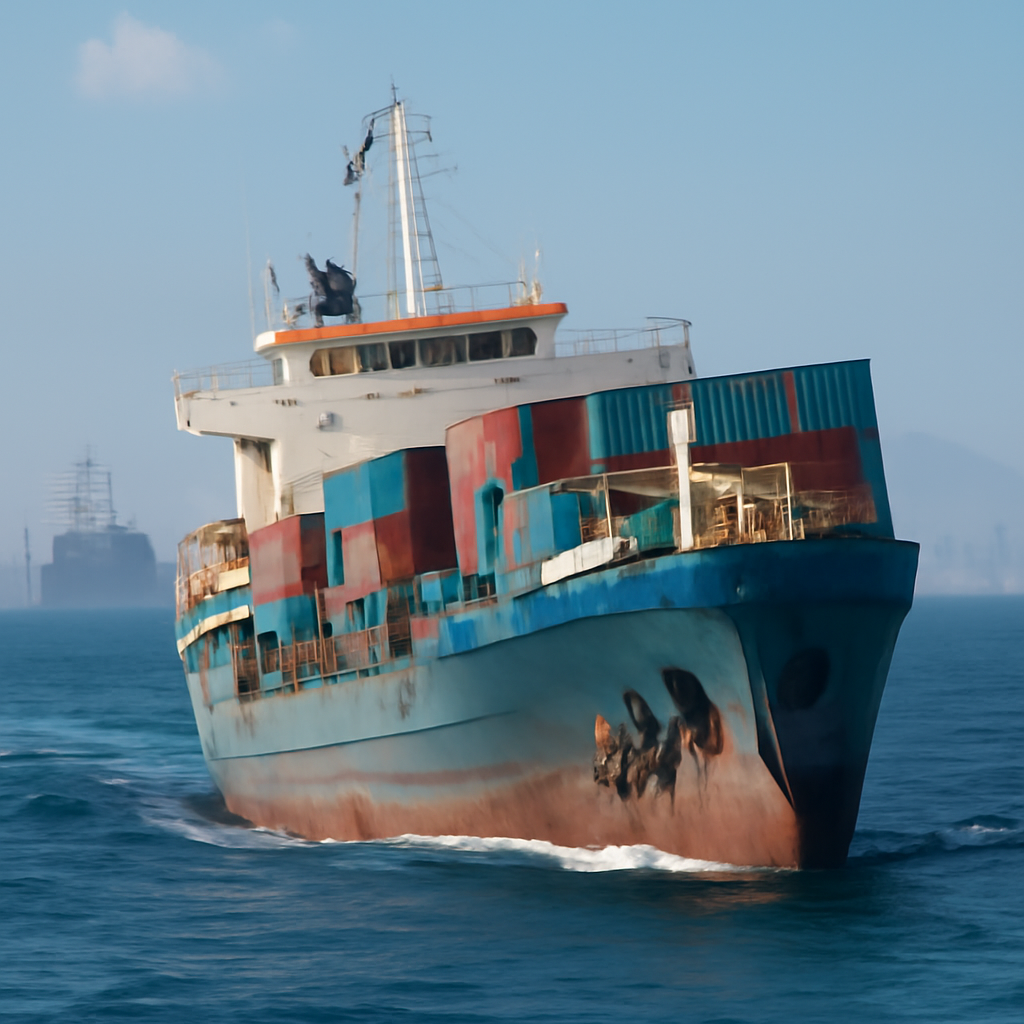
A maritime security official and MarineTraffic identified the vessel hit as the Ever Lovely, a Singapore‑flagged cargo ship. The United Kingdom Maritime Trade Operations (UKMTO) center located the incident about 7.5 nautical miles southeast of Dahit, Oman. UKMTO reported that "a cargo vessel has been hit on the starboard side by an unknown projectile, causing damage to the bridge," and that the master reported no casualties and no environmental impact. Authorities are investigating, and UKMTO advised vessels to "transit with caution and report any suspicious activity to UKMTO."

This site is the portfolio.
OSINTSights runs on Cloudflare Workers, D1, R2, and Vectorize, with an AI pipeline on Hetzner ARM. Nubivance designed, built, and operates it. We do the same for clients.
See what we buildAttribution, routes, and operational context
A U.S. official told the reporting outlet the attack was carried out by an Iranian drone, a claim the source says was confirmed by Iranian officials. The strike occurred even as the IMO and the Sultanate of Oman had been rolling out a southern evacuation corridor along the Omani coastline designed to provide safe passage for vessels unable to use the Strait’s main route.
The Joint Maritime Information Center described the southern route as clear of mines and the preferred option, while an alternative northern route runs close to the Iranian coastline. Concerns remain about mines in the principal central route through the Strait.
IRGC‑N warnings and operational friction
The Islamic Revolutionary Guard Corps Navy (IRGC‑N) issued a separate warning earlier Thursday, telling mariners that safe passage would be limited to routes designated by Tehran and that other routes were "unacceptable and completely dangerous," according to The Washington Post citing Iranian state media. The IRGC‑N also said it turned back several ships attempting to use the southern route that the IMO and Oman had suggested.
Maritime intelligence firm Windward cautioned that the IRGC‑N’s stance "marks a reversal in the normalization trajectory building since the MoU signing." Windward reported that the IRGC claimed on its official Telegram channel that three tankers had been ordered to turn back; Windward identified five vessels exhibiting behavior consistent with that claim and a sixth that lost its AIS signal during the incident. A VHF Channel 16 broadcast reportedly warned that vessels transiting without AIS or IRGC permission would be "at their own risk."
Traffic trends since the MoU and the demining effort
Traffic through the Strait of Hormuz had begun to recover in the days before the attack. Kpler reported confirmed crossings rose to 70 on 24 June, an increase of 105% day on day, as demining efforts advanced and operators increasingly used the Omani southern route; commercial vessels accounted for most of that activity, with 53 transits. Still, the reporting notes those transits represent "a tiny fraction of what took place before the war."
IMO’s initial description of the evacuation effort envisaged "close cooperation with Iran, Oman, all other coastal States in the region, the United States and the maritime industry." The IRGC‑N’s recent broadcasts and the attack on the Ever Lovely demonstrate that operational cooperation along the Strait remains fragile.
What this means for seafarers, maritime operators, and policymakers
- Seafarers: The IMO’s pause was explicitly justified on the grounds of seafarer safety. Crews on vessels in and around the Persian Gulf should expect uncertainty about evacuation schedules and routes and must remain vigilant to navigational warnings and broadcasts from UKMTO and local authorities.
- Maritime operators: The Ever Lovely incident and IRGC‑N broadcasts mean the southern corridor — previously described as clear of mines and preferred — is now subject to enforcement by Iranian naval forces according to multiple reports. Operators will need to weigh the evolving security advisories and the risk of vessels being ordered to turn back or losing AIS signals.
- Policymakers and regional coordinators: The pause undercuts the nascent coordination framework the IMO and Oman were assembling and raises questions about which authorities are exercising control over transit routes. Simmering frictions between IRGC forces and other elements cited in the reporting make command and control unclear, complicating diplomatic and operational responses.
The immediate facts are stark: an attacked cargo vessel, a paused evacuation plan, and renewed IRGC‑N warnings that complicate a route planners hoped would be a safe alternative. Whether this strike will reverse the modest uptick in traffic seen after last week’s Memorandum of Understanding between Washington and Tehran — and whether the evacuation framework can be resumed with guarantees acceptable to seafarers and operators — remains to be seen.