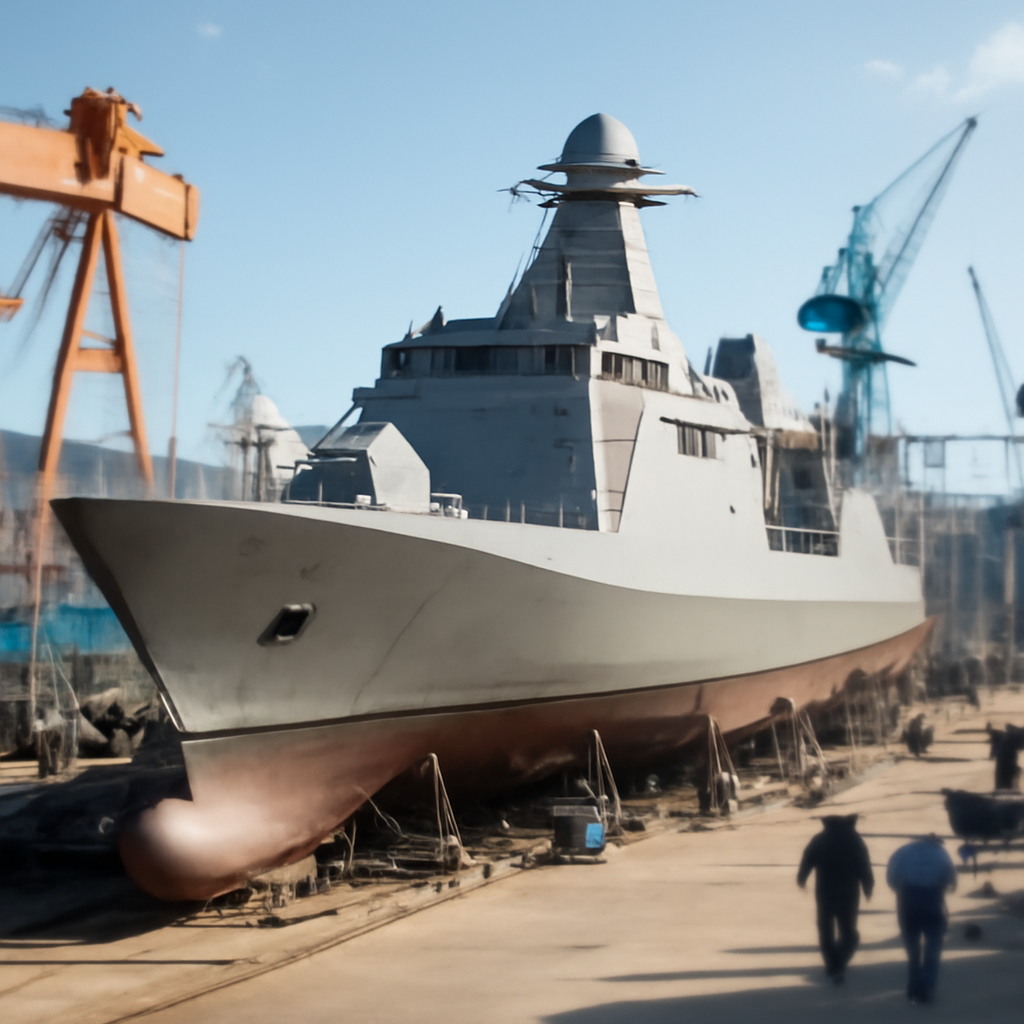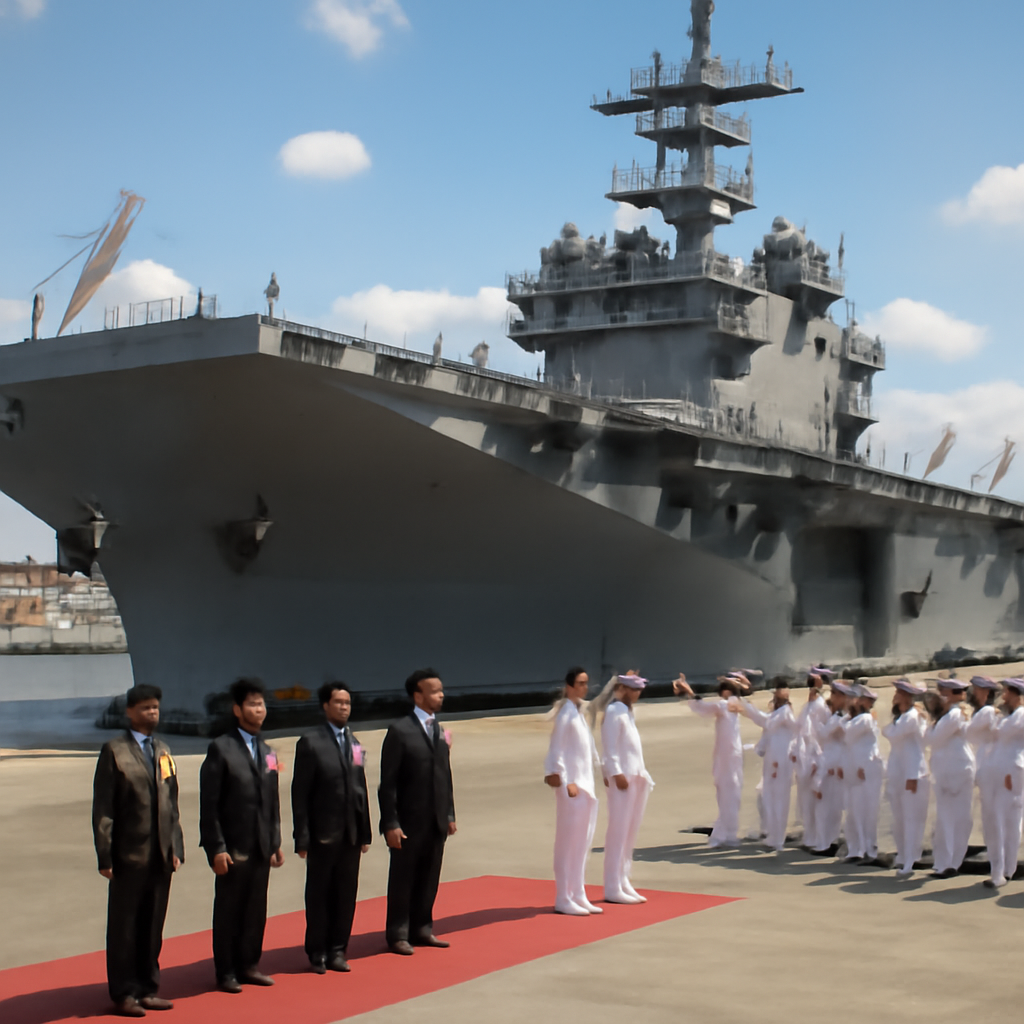
On September 18, the aircraft carrier formerly known as ITS Giuseppe Garibaldi arrived at Tanjung Priok Port in Jakarta; a week later, on September 24, it was formally handed over to the Indonesian Navy, reflagged and christened KRI Sriwijaya.
Arrival, handover, and ceremony
The ship’s arrival was marked by a visible show of senior leadership: the minister of defense, the commander of the Indonesian National Armed Forces, and the chief of naval staff personally welcomed the vessel to port. The formal handover from the Italian Navy to the Indonesian Navy on September 24 completed the transfer and the reflagging of the carrier as KRI Sriwijaya.
Why the name matters: Sriwijaya as symbolism
The Indonesian government chose a name with deliberate historical resonance. Sriwijaya was “a strong monarchy and a respected naval power in Sumatra from the 7th to the 13th centuries,” and that historical reference is the explicit symbolism the government attached to the vessel’s new name.

This site is the portfolio.
OSINTSights runs on Cloudflare Workers, D1, R2, and Vectorize, with an AI pipeline on Hetzner ARM. Nubivance designed, built, and operates it. We do the same for clients.
See what we buildA ship doesn’t equal capabilities: escort fleets and the carrier strike group (CSG)
Aircraft carriers confer range and flexibility, but, as a matter of operational practice, they do not operate alone. The source lays out the conventional model: a carrier strike group typically includes an aircraft carrier, a guided missile cruiser, anti-aircraft warships, and anti-submarine destroyers or frigates, and is often escorted by attack submarines. Each element serves complementary roles—air defense, anti-submarine warfare, logistics, and command and control—so the combat effect derives from integration across platforms, not from the carrier by itself.
The ITS Giuseppe Garibaldi’s own recent operations underscore that point: during a Passing Exercise in the Mediterranean Sea in 2020, Garibaldi operated with at least two multirole frigates and one supply ship. The Indonesian Navy now faces the inverse problem: it has the carrier hull, but does not yet possess the full escort and support ecosystem typically required for sustained carrier operations.
Force shortfalls: frigates, missile boats, and submarines
Data drawn from the Laboratorium Indonesia 2045 database is explicit about the gaps the navy faces relative to the government’s stated Archipelagic Trident Shield defense posture. Indonesia “still lacks 12 frigates and seven fast missile boats” to meet those goals, and the submarine fleet is “recorded to still be short of at least eight submarines.” Those shortfalls matter because a carrier operating without adequate surface and sub-surface escorts will be unable to realize the layered defenses and logistics that define a modern carrier strike group.
Planned mission set: humanitarian assistance, disaster relief, and diplomacy
The government and the Indonesian National Armed Forces (TNI) have repeatedly said KRI Sriwijaya is not intended for expeditionary combat. Instead, they have prioritized military operations other than war—specifically humanitarian assistance and disaster relief (HADR)—and defense diplomacy, such as port visits. The government indicated that, once operational, KRI Sriwijaya would be deployed to assist in handling ongoing forest fires in Kalimantan. The Indonesian Navy chief of staff has stated the carrier will be used for defense diplomacy activities, too.
But the source cautions that HADR relevance does not automatically justify the platform choice. If KRI Sriwijaya’s HADR role is to support land-based responses, Indonesia must ensure the carrier is backed by an appropriate ecosystem—most immediately, sufficient transport helicopters to move people and materiel to disaster zones. Without that investment, the vessel risks becoming “a sitting duck in the middle of the Nusantara sea” at moments when land-based disasters demand rapid, distributed response.
What this means for the Indonesian Navy, the government, and disaster responders
- The Indonesian Navy: must decide whether to prioritize building escort and support fleets (frigates, missile boats, submarines) and invest in logistics and command-and-control infrastructure to operate the carrier safely, or to limit Sriwijaya’s use to low-risk diplomacy and constrained HADR tasks.
- The government: will need to weigh the prestige and symbolic value of a carrier against the continuing resource requirements—platform procurement, helicopter inventories, and sustainment—necessary to create a sustainable capability.
- Disaster responders and civilian authorities: should expect potential naval support for large-scale HADR events, but the effectiveness of that support will depend on whether the carrier is equipped and integrated with the helicopters, logistics chains, and shore coordination that make maritime-to-land relief operations effective.
The arrival and reflagging of KRI Sriwijaya closes a debate about possession and opens a harder one about purpose. The central question set out by the available facts is not whether Indonesia has an aircraft carrier—it does—but whether Jakarta can build the ecosystem around that ship to produce durable, cost-effective capabilities. Without the escorts, submarines, helicopters, and logistics to match the carrier’s promise, Sriwijaya may remain more symbol than instrument.