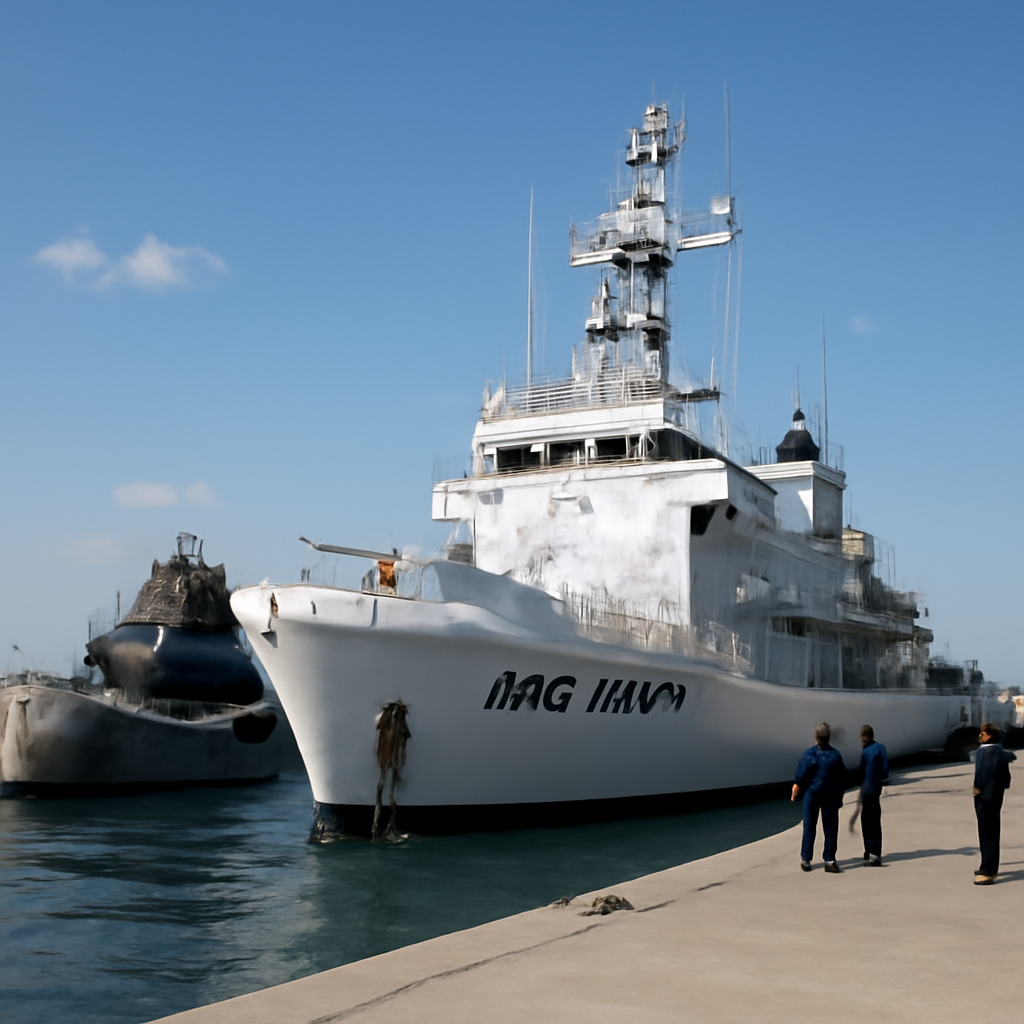
"The Nipun significantly enhances the capacity to respond to a distressed submarine, whether of the Indian Navy or that of a partner navy," said Indian Navy Chief Admiral Krishna Swaminathan, adding the capability would enable India to emerge as the "preferred submarine rescue partner" in the region.
INS Nipun and INS Nistar: the motherships now in service
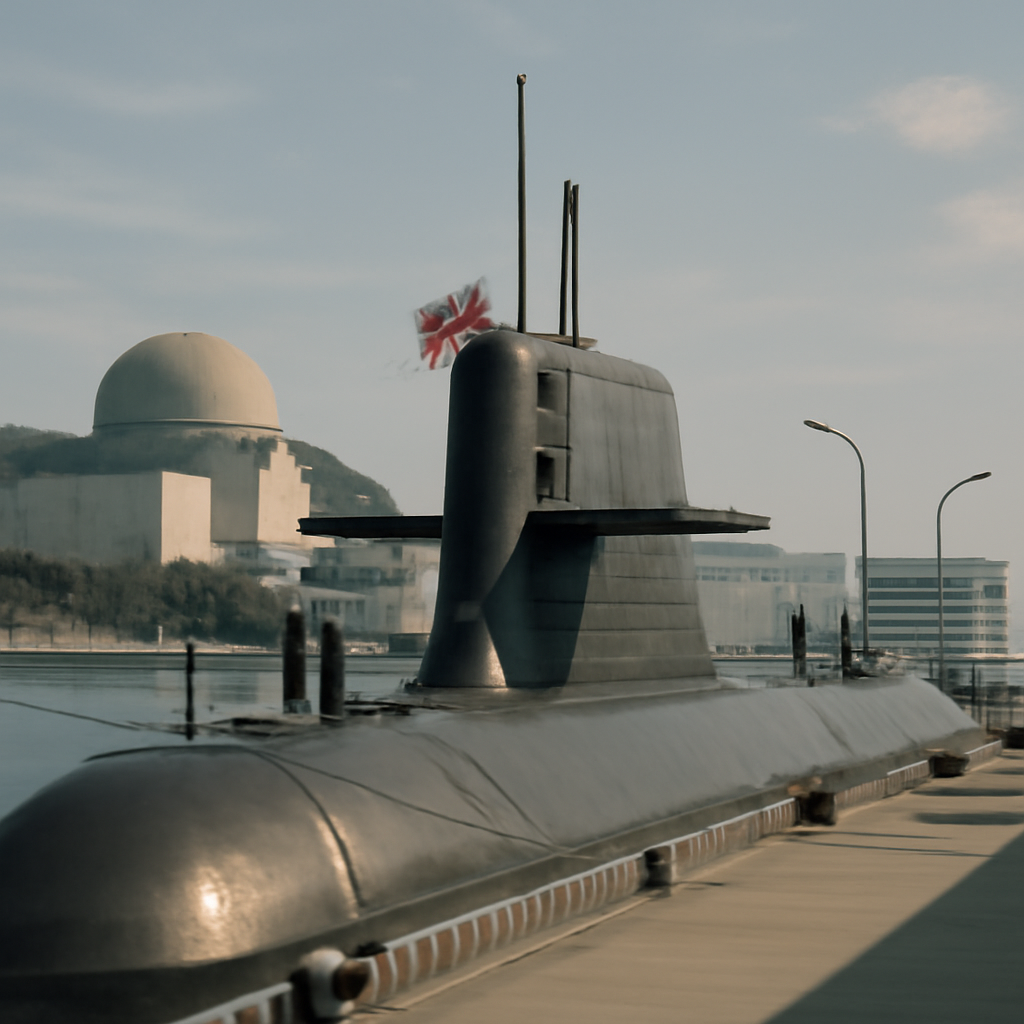
On August 31, India commissioned INS Nipun, the second dedicated Diving Support Vessel (DSV) intended to act as the mothership for the navy's two Deep Submergence Rescue Vehicles (DSRVs). The induction of INS Nipun follows the commissioning of INS Nistar on July 18, 2025, and completes the pair of purpose-built DSVs that the navy says close a prior operational gap in submarine rescue, diving support, and underwater intervention.
Each DSV displaces 10,000 tons, measures more than 118 meters in length, and has an endurance of 60 days. They accommodate 25 officers and 225 sailors and are fitted with life‑support and medical facilities intended to sustain prolonged at‑sea operations.
DSRVs and their technical reach
The two DSRVs acquired under a 2016 contract with U.K.-based James Fisher Defense are the rescue workhorses the DSVs are built to carry. The DSRVs can descend to a maximum depth of 650 meters and take 14 people up in a single lift; together with their onboard ROVs and side‑scan sonar, they can locate submarines at depths of up to 1,000 meters. The DSVs provide the heavy lifting and support: a 15‑ton subsea crane, a diving bell, remotely operated vehicles, side‑scan sonar, compression chambers, and a self‑propelled hyperbaric lifeboat. The DSVs themselves can undertake deep‑sea diving and salvage operations to depths of 300 meters.
Notable trial results preceded induction. Before formal induction in 2018, a DSRV dived to 666 meters — recorded as the deepest submergence by a manned vessel in Indian waters — carried out ROV operations at over 750 meters, and performed side‑scan sonar operations at over 650 meters. The DSRV system was engineered for transportability: the whole system breaks into 24 components for movement by road, sea, or air, and can be airlifted by heavy transport aircraft such as the IL‑76 and the C‑17.

Audit-ready is a season. It shouldn't be.
Evidence in spreadsheets, controls drifting between audits, frameworks multiplying on flat headcount. Nubivance runs continuous compliance on Rapid7 Cyber GRC - SOC 2, HIPAA, ISO 27001, PCI, CMMC.
End the scrambleProcurement, interim arrangements, and capability gaps
The procurement picture stretches back a decade. In 2016 the Indian Navy signed a deal worth 193 million British pounds (around $217 million) with James Fisher Defense for the two DSRVs, a Launch and Recovery System (LARS), and a LARS‑integrated decompression chamber. Concurrently, in September 2018 the navy contracted Hindustan Shipyard Limited at Visakhapatnam to build two DSVs, with an initial delivery estimate of 36 months. The DSV hulls were launched into water in September 2022.
Until the DSVs were completed, the navy used INS Sabarmati of the Ship Building Corporation of India as an interim mother ship for the DSRVs. The navy previously relied on an older diving support vessel, INS Nireekshak, whose submarine rescue capability was limited — a shortfall that, according to the navy, left precious time on the clock in potential submarine‑rescue scenarios.
Regional deployments, exercises, and bilateral accords
India has actively positioned submarine rescue as both a national capability and a regional service. In April 2021, two DSRVs were dispatched to help locate the missing Indonesian submarine KRI Nanggala — one aboard a mother ship and another airlifted in a C‑17 — but were recalled after the submarine was located, with no survivors. The navy has also signed a series of cooperative documents: an implementing agreement with Singapore on submarine rescue support in January 2021; an implementing agreement with South Africa in September 2024; a Memorandum of Understanding with Australia on submarine search and rescue in October 2025; and an MoU with Vietnam in November 2025.
The navy integrates submarine rescue into multinational exercises. In September 2025, INS Nistar deployed for Exercise Pacific Reach (XPR‑25) hosted by the Singapore Navy in the South China Sea, where the DSRV Tiger X made its maiden dive outside the Indian Ocean Region and achieved mating with South Korea’s submarine Shin Dol‑Seok. Submarine rescue drills are also a recurring element of Indian‑hosted multilateral events such as Exercise Milan and the Goa Maritime Conclave.
What this means for the Indian Navy, partner navies, and regional maritime safety
- Indian Navy: The commissioning of INS Nipun completes the mothership pairing for the two DSRVs and, according to naval leaders, materially reduces response times in submarine distress scenarios — a critical factor given the navy's 16 conventional submarines and an aging subset of those platforms.
- Partner navies: Nations with formal implementing agreements or MoUs — Singapore, South Africa, Australia, Vietnam — and those participating in regional exercises have a clearer path to request and receive India’s rescue assets, including airlifted DSRV components on IL‑76 or C‑17 heavy transports.
- Regional maritime safety: The combination of DSV endurance, DSRV depth capability, and transportability expands the practical reach of submarine rescue and humanitarian assistance in the wider ocean area, particularly as submarine numbers grow across the Indo‑Pacific.
Captain Vikas Gautam, officer‑in‑charge of the Submarine Rescue Unit (East), summed a service‑centric view at Exercise Milan in February: the true measure of any navy is not only its firepower, but "its resolve and capability to bring its men and women home safely." With INS Nipun now commissioned and paired with INS Nistar, India has closed a technical and operational loop that naval leaders say positions the country to lend timely assistance across the region — and to do so with a set of purpose‑built platforms that can be moved by sea or air to where they are needed most.