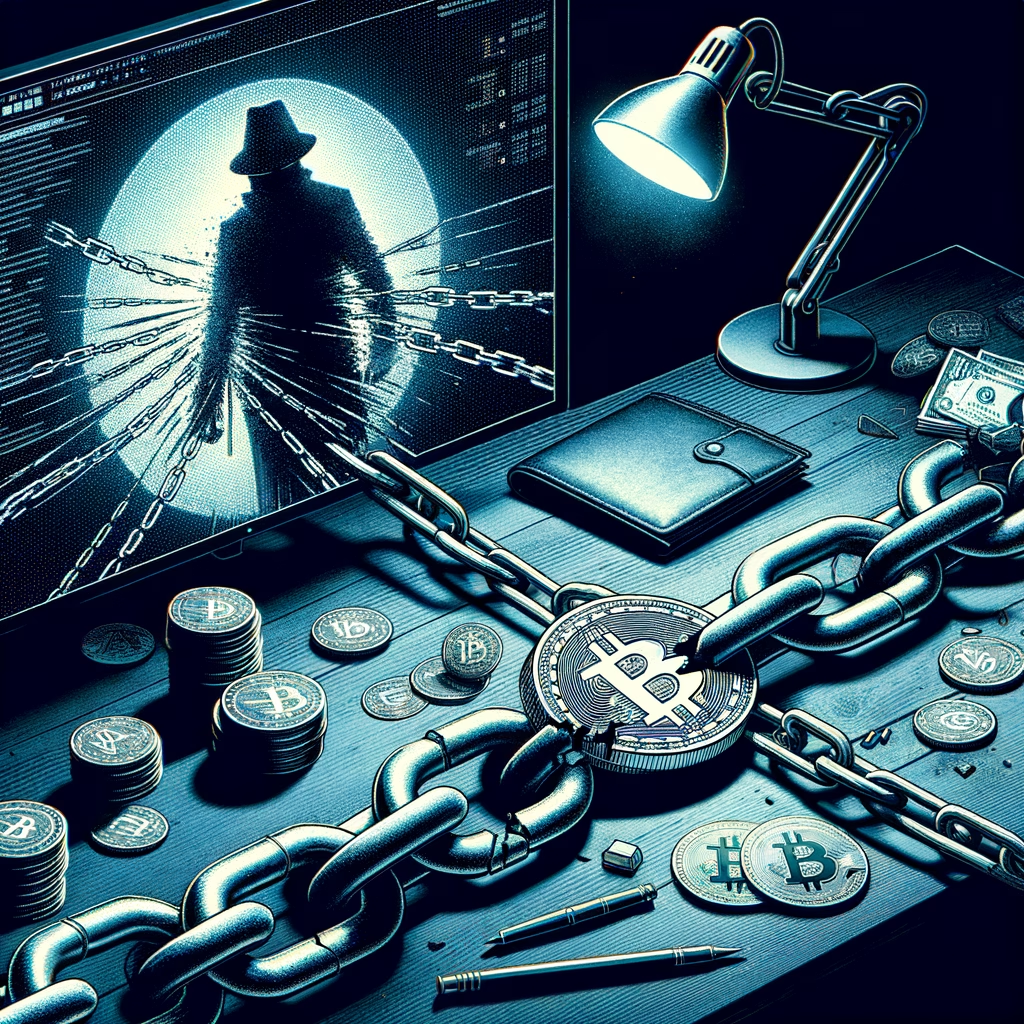
BtcTurk Suspends After Alleged $49M Hot Wallet Heist
When customers discovered their accounts frozen and withdrawals halted, they confronted a stark question: had their long-standing trust in crypto custody been misplaced? Turkish exchange BtcTurk temporarily suspended deposits and withdrawals after reporting that attackers allegedly accessed its hot wallets and siphoned about $49 million in assets. The disclosure lands amid a spate of high-profile crypto thefts, and it raises familiar — and urgent — debates about operational security, user protection, and regulatory oversight.
BtcTurk announced the suspension through public channels, saying it had halted on-chain movements while it investigates the breach and coordinates with law enforcement and blockchain analytics firms. The exchange says it is taking “urgent measures” to assess losses and safeguard remaining funds, but details about the attack vector and the exact assets taken remain sparse. For affected users, the immediate distress is understandable: frozen funds, interrupted trading, and uncertainty about recovery timelines.
Hot wallets and the trade-off between speed and security
Hot wallets — wallets connected to the internet and used to facilitate fast withdrawals — are inherently more exposed than offline cold storage. That operational convenience comes with a larger attack surface, making hot wallets a frequent target in exchange breaches. In this incident, the alleged compromise of hot wallets appears to have enabled a rapid exfiltration of funds, prompting the precautionary suspension of user services.
The risk profile of hot wallets is well-known: they streamline user experience and liquidity but require rigorous access controls, multi-signature setups, secure key management, and hardened operational procedures to mitigate threats. Failures can stem from many places — compromised private keys, bugs in wallet management software, insecure third-party integrations, or successful social engineering directed at employees — and each failure mode can result in catastrophic transfers that are difficult to reverse.
What happened at BtcTurk underscores that even seasoned platforms remain vulnerable when hot wallets are targeted. The speed with which funds can move on-chain complicates recovery and increases the importance of rapid forensic response and collaboration with blockchain tracing firms.
Wider context: a pattern of high-value thefts
The cryptocurrency sector has experienced a string of major thefts targeting exchanges, custodians, and decentralized platforms. Such incidents deepen concerns among users and regulators about operational security, internal controls, and the adequacy of legal protections for crypto holders. For exchanges, reputational damage can be as consequential as direct financial loss — particularly when transparency or remediation is lacking.
Several interconnected issues arise after a breach:
– Operational risk: Hot wallets enable a smooth user experience but represent a persistent attack surface.
– Regulatory scrutiny: High-profile incidents spur regulators to demand stricter custody standards, proof-of-reserves transparency, and clearer incident reporting.
– User protection: Many customers lack deposit insurance or clear legal recourse following custodial failures, raising systemic consumer risk.
– Market confidence: Repeated high-value hacks reduce trading volumes, encourage capital flight, and increase volatility.
How investigators and policymakers respond
Technologists and forensic analysts typically trace stolen funds on-chain, following their movement through mixers, bridges, and exchange deposits. Blockchain analytics can reveal laundering patterns and sometimes identify endpoints that lead to arrests or asset freezes, but attribution and recovery are slow and incomplete when perpetrators rapidly obfuscate funds.
Policymakers face a balancing act. Governments want to foster innovation and attract fintech activity while protecting retail investors and preserving market integrity. In response to past breaches, some jurisdictions have proposed or implemented measures requiring proof-of-reserves, mandatory custody protocols, insurance or capital buffers, and faster incident-reporting rules. Yet implementation and enforcement vary widely, and crypto’s global nature complicates coordinated oversight.
Practical takeaways for users
This episode is a reminder for users to evaluate counterparty risk and custody choices. Noncustodial wallets and hardware wallets reduce reliance on third parties but demand personal responsibility for private keys. Diversifying custody — using multiple platforms or separating operational funds (hot wallets) from long-term holdings (cold storage) — can limit exposure. Ultimately, convenience, cost, and security form a trade-off triangle that each user must navigate.
Attackers behind these breaches range from criminal syndicates exploiting technical flaws to opportunistic hackers using stolen credentials, and in some cases state-affiliated actors with larger strategic aims. The incentives are strong: digital assets are valuable, portable, and often difficult to reclaim, which makes prevention and deterrence a priority for exchanges and their customers.
What will determine the outcome
How the BtcTurk episode plays out will depend on several factors: how quickly services are restored, how transparently the company communicates losses, and what remediation it can offer customers. Recovery efforts — legal, technical, and forensic — can take months or longer, and full restitution is not guaranteed.
Industry reactions will also matter. Competitors may see inflows if users withdraw from the affected platform; regulators may tighten oversight; and developers may accelerate custody innovations aimed at reducing hot wallet exposure. Each response changes the sector’s risk calculus.
Conclusion: rebuilding trust amid hot wallet risks
As investigations continue, key questions remain: can BtcTurk identify the entry point and recover assets? Will regulators impose new custody conditions in Turkey or internationally? And will this episode prompt users and platforms to reassess how much risk they accept when relying on custodial services? In an ecosystem that prizes both freedom and security, incidents like this test the balance. If convenience repeatedly yields to compromise, the sector will have to choose between hardening infrastructure — particularly the systems that manage hot wallets — or accepting recurring financial and reputational costs. How stakeholders respond now will determine whether trust can be rebuilt or whether similar headlines will keep arriving.



