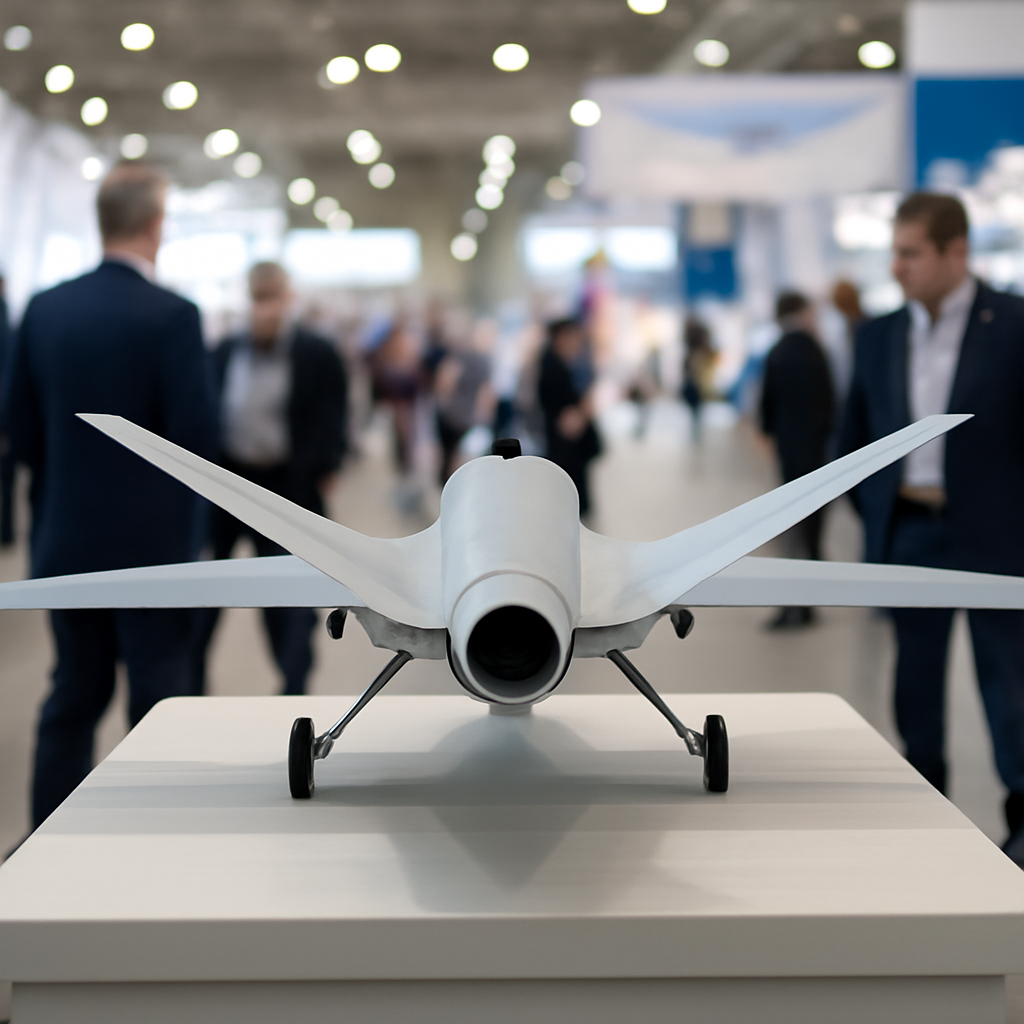
The global market for Collaborative Combat Aircraft (CCA) is expected to grow dramatically in coming years, placing new pressure on suppliers to deliver the parts and systems that will let “loyal wingman” drones operate alongside manned aircraft, Honeywell Aerospace told Breaking Defense.
A widening market and concentrated supplier demand
The central fact Milas and Breaking Defense foregrounded is straightforward: as the global CCA market expands, demand will increasingly fall on industry suppliers. The source describes that growth as dramatic and ties it directly to a need for companies that provide the components “that will define the capabilities CCA can bring to the fight.” That linkage — market growth driving elevated supplier expectations — is the organizing premise of the conversation.
How Honeywell Aerospace plans to position itself
In a fireside chat, Honeywell Aerospace’s Matthew Milas discussed with Breaking Defense Editor-in-Chief Aaron Mehta the company’s expectations for how it will position itself in that market. The source reports that Milas laid out Honeywell’s view of where it sees growth opportunities and how it intends to participate as CCA fleets scale. The detail offered by the source is directional rather than technical: Honeywell is framing strategy around the coming demand and its role among suppliers.

The cyber insurance questionnaire just landed. Now what?
SOC 2, HIPAA, insurance renewals - someone has to own security strategy. Nubivance provides fractional CISO leadership without the full-time salary.
Get a security leadComponents — the locus of capability
The source emphasizes that suppliers who provide specific components will be the ones shaping what CCAs can actually do in operations. It does not enumerate those components, but it does make clear that component providers — rather than platform integrators alone — will define much of the operational capability of loyal wingman systems. That sets supplier offerings, interoperability and performance standards as central determinants of CCA effectiveness.
Industry and government must align on common inputs
Milas told Breaking Defense that industry and government need to “come together for common inputs” if the vision of CCA fleets is to take flight. The source frames this as a necessary coordination problem: without shared inputs, the prospect of fielding fleets of collaborative drones alongside manned platforms will be harder to realize. The conversation therefore situates technical and procurement alignment between private suppliers and public customers as a prerequisite for large-scale deployment.
What this means for Honeywell Aerospace, industry suppliers, and government
- Honeywell Aerospace: The company has announced a strategy to position itself in the expanding CCA market, identifying growth areas and planning supplier-oriented participation as demand rises.
- Industry suppliers: Suppliers who provide the components that determine CCA capabilities will face heightened demand and scrutiny; those suppliers will play an outsized role in shaping what CCAs can deliver.
- Government (defense purchasers and policymakers): Government actors will be a necessary partner in developing common inputs and standards, since Milas framed industry–government coordination as essential to realizing fleet-scale CCA operations.
The Milas–Mehta fireside chat is presented as one episode in a broader series; the source points readers to the first, second, third and fourth videos in that series for more context. Taken together, the conversation lays out a simple, consequential thesis: market growth is coming, component suppliers will matter most, and without coordinated inputs from both industry and government the promise of collaborative combat fleets may remain unrealized.
Read the original conversation and video series on Breaking Defense: https://breakingdefense.com/2026/06/how-honeywell-aerospace-plans-to-tap-into-the-global-cca-market/