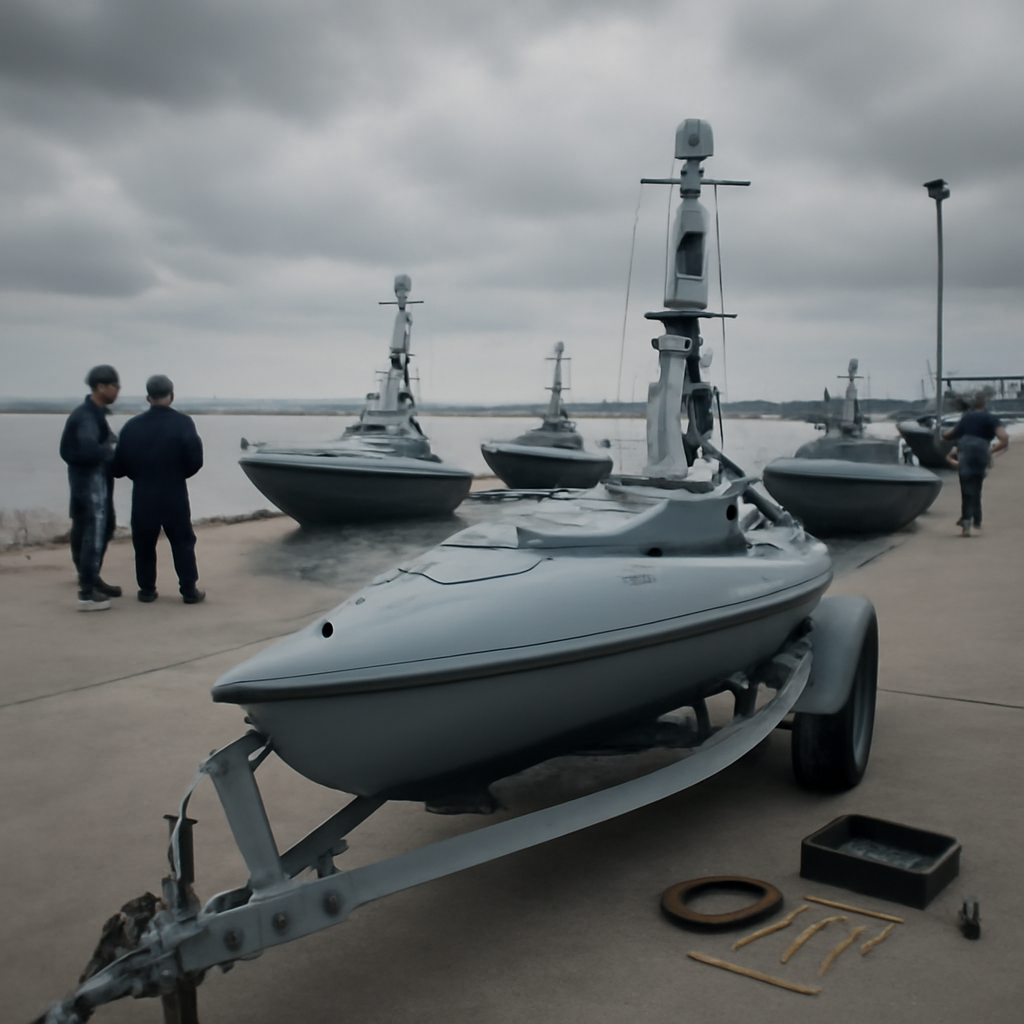
"We know it’s going to become more of the Navy fleet because [unmanned systems] can do excess missions and expand the fleet size," Chris Kastner, HII’s chief executive and president, told investors on the company’s July earnings call. "From a revenue standpoint right now, it’s pretty modest."
Chris Kastner: sea drones are strategically important but not yet a cash engine
Kastner framed unmanned surface and undersea vehicles as mission enablers for the Navy while tempering expectations about near-term revenue. He described HII’s unmanned business—housed in the company’s Mission Technologies division—as "the fastest-growing business unit we have," but said HII does not expect it to become a "billion-dollar battleship." The company will continue to invest in the capability, he added, while noting current revenue remains modest.
Lionfish contract: scale, timeline, and first deliveries
HII recently booked a yearlong production contract extension tied to its Lionfish unmanned undersea vehicle. That work is an extension of a contract originally awarded in 2023, described in the call as "nearly $350 million" and structured as a five-year award with options. The company reported the first Lionfish units were delivered in 2025.

Audit-ready is a season. It shouldn't be.
Evidence in spreadsheets, controls drifting between audits, frameworks multiplying on flat headcount. Nubivance runs continuous compliance on Rapid7 Cyber GRC - SOC 2, HIPAA, ISO 27001, PCI, CMMC.
End the scrambleMission Technologies: recent results and forecast
The Mission Technologies division produced $760 million in second-quarter revenue this year, a decline of roughly $31 million and nearly 4 percent versus the same quarter last year, Chief Financial Officer Tom Stiehle said on the call. Stiehle attributed the drop "primarily due to lower volumes in all domain operations in global security, partially offset by higher volumes in warfare systems and unmanned systems."
Despite the quarterly softness, HII’s earnings update projects Mission Technologies will grow about 5 percent over the next five years and could generate "up to $3.2 billion in revenue for fiscal year 2026," figures the company presented during the call.
The U.S. Navy and the wider unmanned market
The call placed HII’s product strategy in the context of evolving Navy priorities. Kastner said unmanned systems can perform "excess missions," expand fleet size, and carry out tasks that "large capital ships can’t do," implying a role for drones as force multipliers and partial mission substitutes. HII is competing for the Navy’s medium unmanned surface vehicle program, the CEO said, and characterized both international and domestic pipelines as strong.
The company noted broader market dynamics: sea drones have become more visible on battlefields for surveillance, rescues, and kinetic strikes, and more commercial entrants are competing as the Navy increases its unmanned-systems budget and clarifies integration requirements. That market pressure has pushed primes and suppliers to scale manufacturing and deliver units more quickly—an engineering and production challenge HII said it is preparing to meet.
What this means for the Navy, HII investors, and international customers
- The Navy: will gain additional unmanned capacity that HII expects to supply across surface and undersea domains; HII frames unmanned systems as complementary to, and in some missions substitutive of, larger ships.
- HII investors and procurement leaders: should plan for modest current revenue from unmanned systems but watch for rapid unit growth, driven by multi-year contracts such as Lionfish and by competition for medium unmanned surface vehicle programs.
- International customers: are a stated part of HII’s pipeline—Kastner said the company will pursue both international and domestic opportunities, signaling export and allied sales are a business priority as production tempo increases.
HII’s public account balances optimism about capability growth with caution about near-term revenue. The firm points to firm fixed-price contracts as a driver of future profitability for unmanned work, and the company says it is positioned to compete for follow-on Navy programs. Yet the immediate financial picture for Mission Technologies shows a small contraction in quarterly revenue even as unmanned-systems volumes rise within that segment.
As HII expands production of systems such as Lionfish and competes for additional Navy programs, the practical test will be whether orders, deliveries and contract awards convert the unit growth the company describes into sustained revenue and the up-to-$3.2 billion top-line the firm has forecast for Mission Technologies in fiscal year 2026. That is the specific ledger by which Kastner’s "fastest-growing" claim will ultimately be judged.