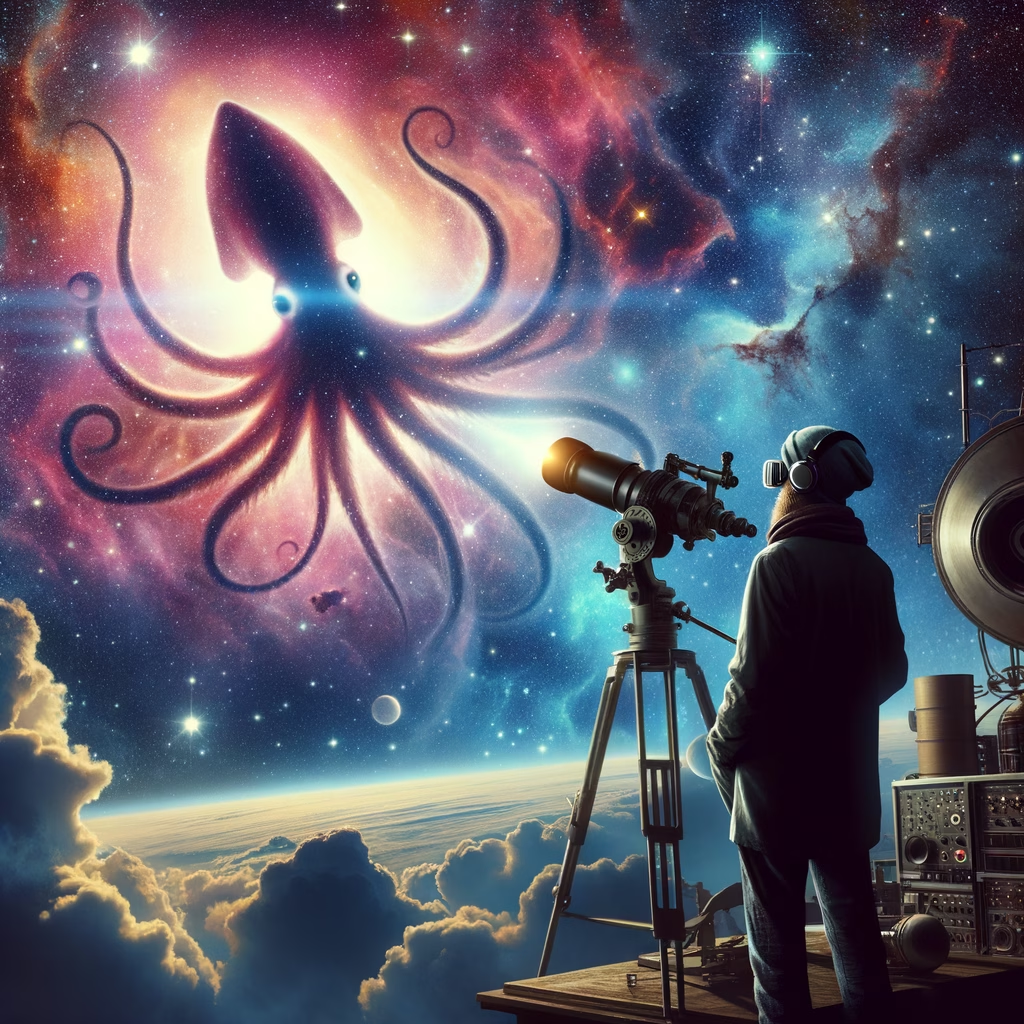
In the vast theater of the cosmos, where stars are born and galaxies collide, one question continues to intrigue astronomers: what secrets lie within the depths of the Giant Squid Nebula? This enigmatic interstellar cloud, which resembles a squid in the night sky, not only captivates the imagination but also challenges our understanding of cosmic phenomena. How does such a formation come to exist, and what does it reveal about the universe we inhabit?
Discovered in 2011 by French astro-imager Nicolas Outters, the Squid Nebula—officially cataloged as Ou4—has garnered attention for its striking visual characteristics. Spanning nearly three full moons across the night sky, its bipolar shape is marked by a distinctive blue glow, a signature of doubly ionized oxygen atoms. Surrounding this cosmic squid is the Sh2-129 region, awash in a red hue from hydrogen emissions, yet deciphering the precise nature and distance of the Squid Nebula remains a complex puzzle for astronomers.
At the heart of the ongoing investigation is the suggestion that Ou4 resides within the broader Sh2-129 complex, positioned approximately 2,300 light-years from Earth. This distance places the Nebula within a zone rich in stellar activity and material outflows, raising questions about its origins. The prevailing theory points to a spectacular outflow of material driven by stellar winds—forces generated by the life cycles of massive stars. Such phenomena not only enrich the surrounding interstellar medium but also foster the birth of new stars.
While the aesthetic appeal of the Giant Squid Nebula is undeniable, its significance stretches far beyond its beauty. For technologists, the Nebula represents a frontier in understanding cosmic processes that could yield insights into everything from star formation to the chemical evolution of the universe. For policymakers, this research might lead to considerations about resource allocation for space exploration and astronomical research. Meanwhile, the public—users of this cosmic knowledge—yearns for a deeper connection with the universe, inspired by breathtaking visuals and the stories they tell.
However, the journey of unraveling the mysteries of the Giant Squid Nebula is not without its challenges. Different perspectives arise regarding the allocation of funding for space research versus pressing terrestrial issues. Critics may argue that the pursuit of such distant phenomena takes resources away from addressing immediate human concerns. Proponents, on the other hand, emphasize that understanding our universe is intrinsic to our existence; it sharpens our curiosity and expands our view of life beyond Earth.
As we ponder the implications of the Squid Nebula, we are reminded of the fragile balance between exploration and accountability. What do we stand to gain, both scientifically and philosophically, from the study of such celestial wonders? The Giant Squid Nebula beckons us to look beyond our immediate surroundings and consider our place in the cosmos. In the end, does the quest for knowledge justify the means, and what truths await us if we dare to venture into the depths of space?
For those captivated by the beauty and mystery of the universe, the Giant Squid Nebula offers not just a visual spectacle but an invitation to explore the infinite possibilities that lie ahead. As we continue to study these distant realms, one can’t help but wonder—what other marvels of the cosmos remain hidden, waiting for a curious mind to uncover their secrets?
Source: https://www.schneier.com/blog/archives/2025/07/friday-squid-blogging-the-giant-squid-nebula.html