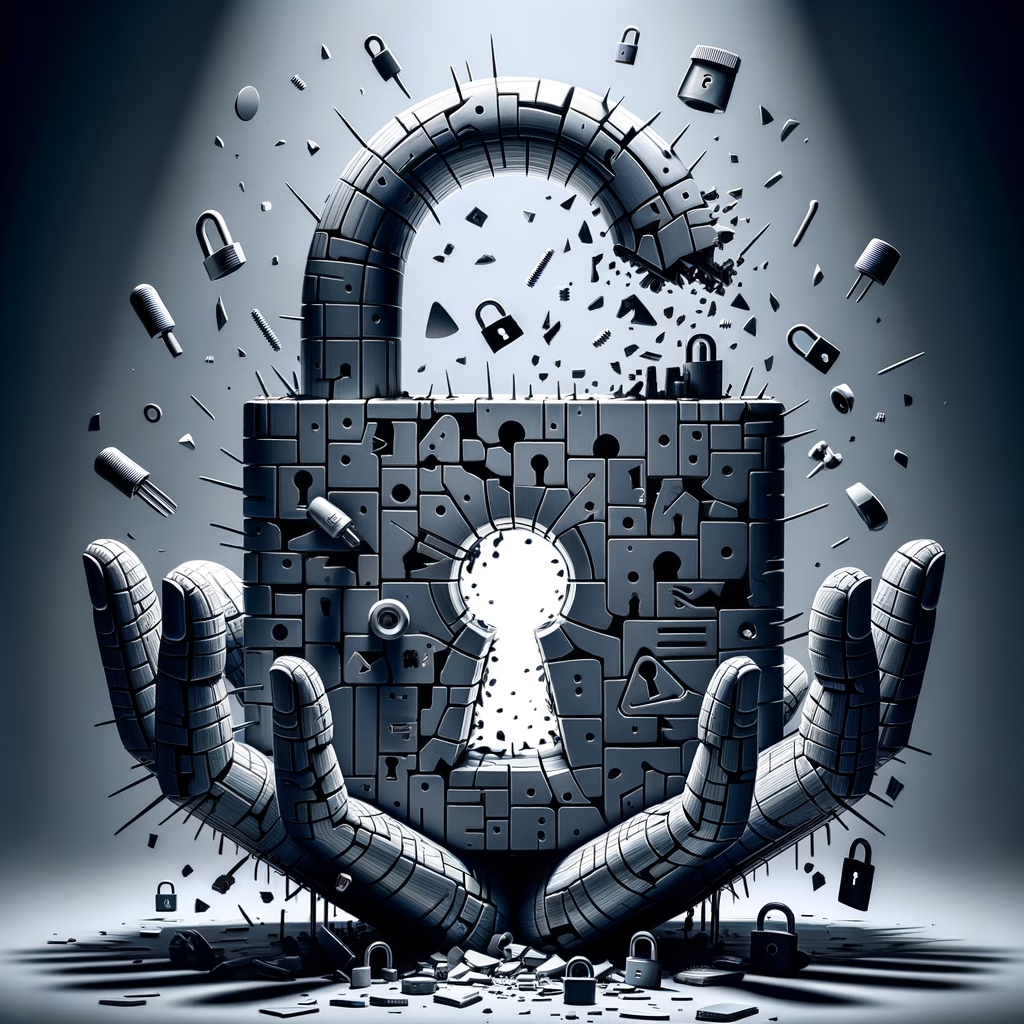
Millions of people install free VPN apps hoping for instant privacy and security — but what they often get is a false sense of protection and, in some cases, serious new vulnerabilities. A recent study by mobile-security company Zimperium, summarized in Infosecurity Magazine, shows that many free VPN apps contain glaring flaws: exposed configuration files, weak encryption defaults, insecure update processes, and coding errors that open the door to interception or code execution on users’ devices. These problems don’t just undermine privacy claims; they actively create attack surfaces that can be exploited by criminals, commercial trackers, or hostile states.
Free VPN apps: common technical failures and how they harm you
At a technical level, the flaws Zimperium found are familiar but dangerous. Problems include improper certificate validation, use of outdated or broken cryptographic libraries, hard-coded keys and tokens, and insecure background services that leak data. Some apps failed to prevent DNS leaks or sent traffic in clear text under certain conditions. Zimperium’s researchers demonstrated that an attacker on the same network — a malicious hotspot operator, for instance — could manipulate or observe traffic that users believed was protected.
The stakes are high because users rely on VPNs for sensitive tasks: banking, researching health topics, private messaging, or evading censorship. When the very layer meant to safeguard those activities is flawed, the consequences multiply. Vulnerabilities can expose personal identifiers, session cookies, browsing histories, and authentication tokens that let attackers hijack accounts. In short, a compromised free VPN app can become a man-in-the-middle, a repository of telemetry, or a pivot point into a user’s broader device and network.
Why free VPN apps so often fall short
Several systemic factors explain why many free VPN apps are insecure:
– Economic pressure: Free services often operate on thin margins and monetize through advertising, data collection, or partnerships. Those revenue pressures can deprioritize security investment.
– Speed-to-market: Hasty development cycles increase the likelihood of coding mistakes and poor cryptographic choices.
– Lack of oversight: Independent audits and rigorous code reviews are costly. Many small providers don’t undergo third-party security assessments or disclose server-side practices.
– Platform variability: Mobile operating systems and app stores enforce inconsistent review standards, meaning risky apps can slip through.
As the adage goes: if you’re not paying for the product, you are the product. That’s a reality especially true for tools marketed as privacy-preserving.

This site is the portfolio.
OSINTSights runs on Cloudflare Workers, D1, R2, and Vectorize, with an AI pipeline on Hetzner ARM. Nubivance designed, built, and operates it. We do the same for clients.
See what we buildWho is most at risk?
While casual users face privacy erosion and fraud risks, the implications can be far more severe for vulnerable populations. Activists, journalists, dissidents, refugees, and people in repressive jurisdictions may view free VPN apps as critical lifelines. If those apps are flawed, the same people who need protection most could be exposed to surveillance, persecution, or targeted exploitation. This asymmetry makes flawed VPNs not just a consumer issue but sometimes a national-security and human-rights concern.
What regulators, platforms, and vendors should do
Policymakers and platform owners have a difficult balancing act. Better consumer protections, mandatory disclosure requirements, and stricter app-store policies could raise the quality bar—but heavy-handed regulation risks reducing access to legitimate tools. Regulatory enforcement (for example, actions by the U.S. Federal Trade Commission and European data-protection authorities) has addressed deceptive privacy promises in some cases, but VPN-specific rules remain inconsistent worldwide.
App stores and platforms can improve vetting for apps that intercept network traffic, require third-party security audits, and mandate transparency about server-side operations. Vendors should prioritize secure coding, independent audits, and candid communication about limitations. These measures would help weed out dangerous offerings without cutting off access for those who rely on low-cost or free services.
Practical steps users can take now
There are concrete steps individuals and organizations can take to reduce exposure to the risks posed by free VPN apps:
– Download only from reputable vendors with clear privacy policies and documented independent security audits.
– Prefer paid, well-reviewed VPN services that publish details about encryption, server infrastructure, and no-logs commitments.
– Use operating-system-level VPN features or vetted open-source clients when possible; verify certificate chains and use trusted update channels.
– Avoid using any VPN — free or paid — for highly sensitive tasks unless the provider’s security posture is verified; combine VPN use with end-to-end encrypted apps and multi-factor authentication.
– Review permissions and telemetry: consider whether a VPN asks for more device access than necessary.
Zimperium’s findings don’t mean every free VPN app is malicious. Rather, the category contains many products with serious, remediable flaws that users and regulators have historically underestimated. The research highlights a central trade-off: tools designed to protect can become threats when poorly built or maintained.
Conclusion: free VPN apps can be dangerous — choose wisely
Free VPN apps can be a useful entry point to better privacy, but they often carry hidden costs. The safest course is skepticism: demand transparency, prefer services that publish technical details and audits, and treat free offerings with caution when your privacy or safety is at stake. If we want reliable protection at scale, vendors must invest in security, platforms must strengthen vetting, and regulators must craft targeted standards that protect users without unintentionally locking out those who need affordable tools. When a service that promises to hide your tracks instead marks them more clearly, the question becomes who pays the price — and whether we’re willing to treat security as something worth paying for, building, and enforcing.



