"A new era began," the Finnish air force declared, announcing the arrival of the first two F-35 fifth‑generation fighters at Rovaniemi Air Base on Sept. 18.
Ceremony at Rovaniemi: who attended and what happened
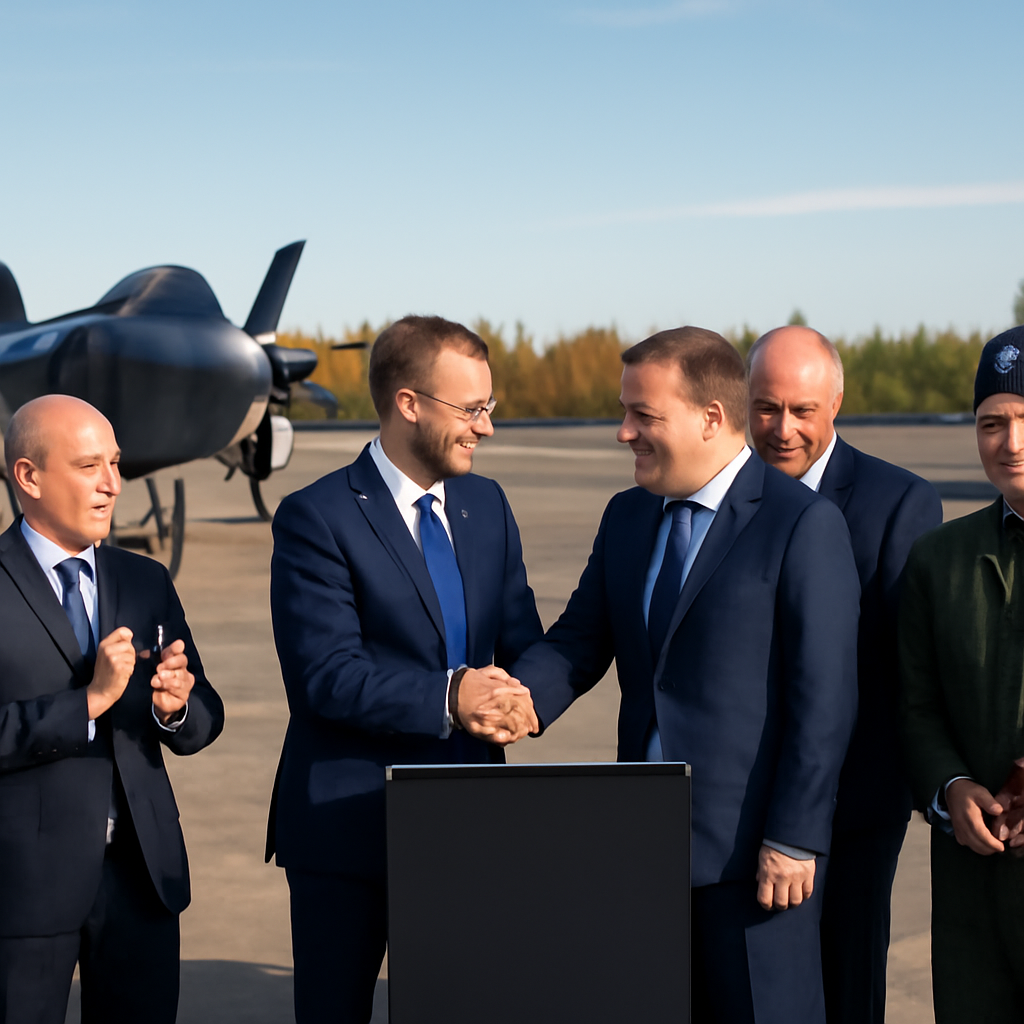
The jets were formally welcomed at a ceremony hosted by the Finnish air force’s Lapland Air Wing, where officials showcased a flight display flown by a Finnish pilot. High‑profile attendees included President Alexander Stubb, Minister of Defense Antti Häkkänen, Commander of the Finnish Air Force Maj. Gen. Timo Herranen, U.S. Ambassador Howard W. Brodie, the head of the F‑35 Joint Program Office Lt. Gen. Gregory Masiello, and Lockheed Martin Aeronautics division President Orlando Sanchez Jr. The Finnish air force said the new combat jet fleet “will form an integral part of Finland’s air defence well into the 2060s.”
Purchase size, price and delivery plan
Helsinki ordered 64 F‑35 aircraft in 2021 in a contract valued at $9.4 billion to replace the aging F/A‑18 Hornet fleet. Two jets have now been delivered in country; a separate batch of eight aircraft is based in the United States for flight training and engineering work. Lockheed Martin is expected to continue deliveries to Finland through the close of 2030.

This site is the portfolio.
OSINTSights runs on Cloudflare Workers, D1, R2, and Vectorize, with an AI pipeline on Hetzner ARM. Nubivance designed, built, and operates it. We do the same for clients.
See what we buildOperational timeline and training expectations
The Finnish air force has set a formal timeline: initial operational capability (IOC) with the F‑35 is planned for “early 2028,” and full operational capability before the end of 2030. The presence of eight jets in the U.S. for training and engineering signals that pilot and support‑crew training will occur partly overseas while additional aircraft are completed and transferred to Finland.
Arctic security context and regional signaling
Finnish officials framed the purchase and arrival of the jets in Arctic security terms. President Stubb, in his ceremony speech, “emphasized the transatlantic partnership and the security of the Arctic region,” the air force said. The delivery comes amid renewed trans‑Atlantic attention to Arctic deterrence; the article notes a recent pact among the U.S., Denmark and Greenland to strengthen “common deterrence,” a joint move that the piece says ended a long standoff over Washington’s earlier threat to annex the semi‑autonomous island.
Separately, Helsinki published an Arctic foreign and security document earlier this year that—according to the Finnish description—takes stock of changes to the security environment “driven by Russia’s war of aggression, Finland’s and Sweden’s membership in NATO and the rising global interest in the Arctic and its natural resources.” Commander Herranen, while not naming any country directly at the ceremony, argued the F‑35’s “ability to detect the enemy at longer distances and at the same time be more difficult to detect […] are a necessary part of the performance capabilities.”
How the Finnish Air Force, NATO partners, and Lockheed Martin are positioned
- Finnish Air Force: The force will integrate the F‑35 fleet into national air defence and Arctic operations, aiming for IOC in early 2028 and full capability by 2030; it will use aircraft both at home and in the U.S. for training and engineering.
- NATO and transatlantic partners: Leaders at the ceremony and referenced diplomatic moves underline a transatlantic framing—President Stubb highlighted partnership and the broader region is experiencing fresh cooperative deterrence measures among the U.S., Denmark and Greenland.
- Lockheed Martin and the F‑35 program office: Lockheed is slated to continue delivering Finland’s aircraft through 2030, and the F‑35 Joint Program Office maintains a role in coordinating training and sustainment alongside partner‑nation arrangements.
Looking ahead, the Finnish air force said the jets will be part of European airpower for decades: by the 2030s, it noted, roughly 700 F‑35 jets will be in Europe and the future will see “joint use and sharing of F‑35 fighters, personnel and weapons systems.” For Finland, the immediate questions are operational integration and training pace—meeting the early‑2028 IOC target—and how the new fleet will be employed to provide situational awareness and deterrence in the Arctic and northeastern Europe.