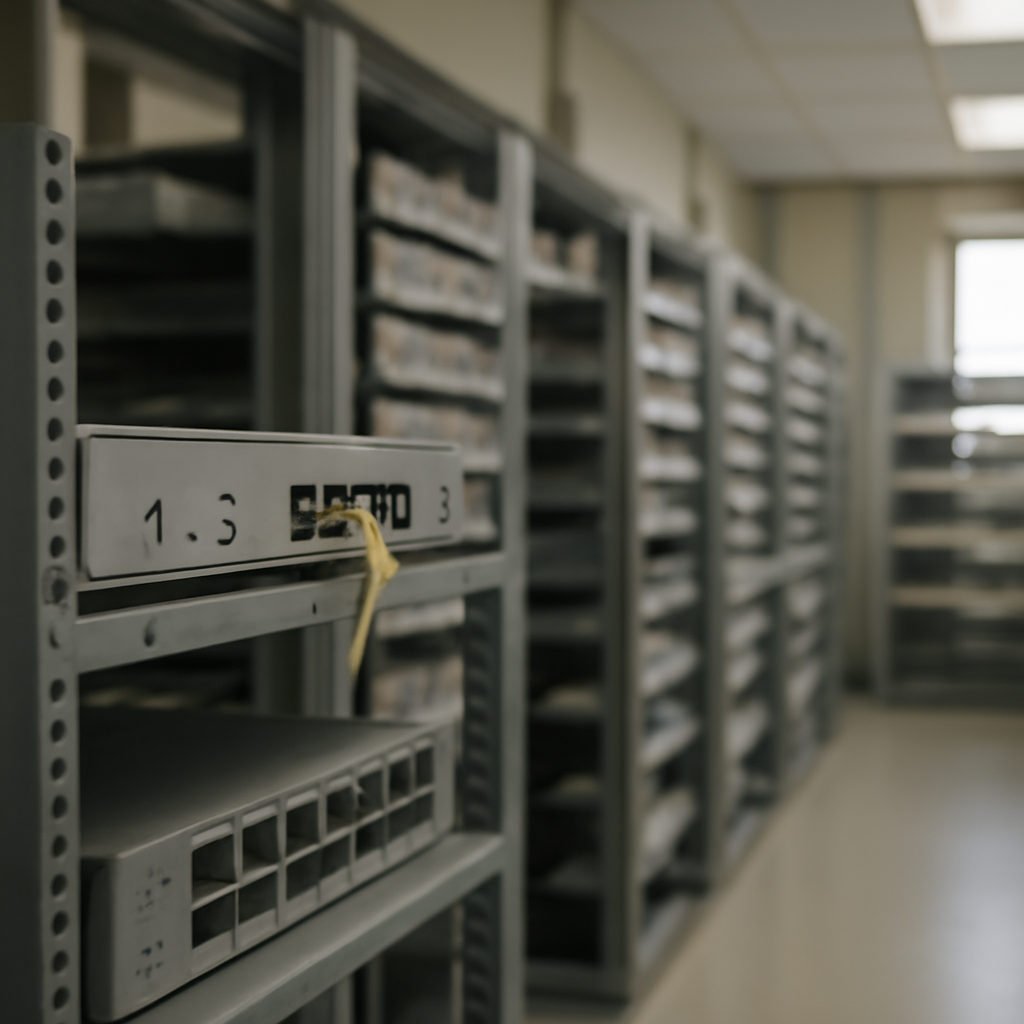
What does sovereignty look like when the threat is a distant government's ability to cut access to critical technology? In Europe, four unnamed tech firms have answered that question with a tangible product: a "fully sovereign disaster recovery pack" designed to sit on corporate premises and, according to the companies, shield users in the region from the much-discussed possibility of the U.S. "flipping the kill switch" on its tech.
What the new offering is — and is not
According to the reporting, four European technology companies have joined forces to offer a stack that they describe as a "fully sovereign disaster recovery pack." The product is intended for organisations in the region that want to hedge against the scenario in which U.S. controls could interrupt access to technology services. The stack is marketed as immediately deployable on-premises, emphasising control within an organisation's own facilities rather than dependence on foreign-hosted infrastructure.
Why companies are pitching on-premises sovereignty
The brief announcement frames the product as a hedge against interruption: an alternative path to continuity that removes dependence on an external actor. By packaging the stack for immediate on-site deployment, the vendors are responding to demands for rapid, locally controlled contingency options. The language used — "fully sovereign" and "disaster recovery" — signals a focus on both political and operational risk-management: sovereignty in governance of systems, and recovery in the event of a disruption.

Audit-ready is a season. It shouldn't be.
Evidence in spreadsheets, controls drifting between audits, frameworks multiplying on flat headcount. Nubivance runs continuous compliance on Rapid7 Cyber GRC - SOC 2, HIPAA, ISO 27001, PCI, CMMC.
End the scrambleWho this matters to — and how
- Technologists: For engineering and operations teams, an on-premises stack promises control over configuration, data flows and recovery procedures. That can simplify compliance with internal policies that require physical control of systems, and can shorten the path to restoring services when external dependencies are severed.
- Policymakers: Officials charged with economic or digital resilience may view a local, quickly deployed recovery option as a tool to reduce vulnerability to decisions made outside their jurisdiction. The package positions itself as a practical step toward reducing strategic reliance on foreign-controlled infrastructure.
- Users and customers: Organisations seeking assurance that services and data remain accessible during geopolitical or legal contingencies may find the pitch appealing because it emphasises ownership and immediate deployability rather than long procurement cycles.
- Adversaries and risk actors: Any system marketed as a recovery stack will also be judged on its security posture. An on-premises solution can shrink certain external attack surfaces but can raise questions about local operational security, maintenance, and the trustworthiness of the supply chain for the stack itself.
Open questions and strategic trade-offs
The announcement raises practical and strategic questions that are not answered in the brief report. Deploying an on-premises disaster recovery stack changes the balance of operational responsibility: organisations gain control but also inherit full responsibility for upkeep, patching, and defending the stack. The speed of deployment promised by the vendors will matter less if organisations lack the staff or processes to integrate the stack into their continuity plans.
There are also trade-offs between sovereignty and interoperability. A locally controlled recovery environment may reduce exposure to external disruptions, but it can complicate collaboration and data exchange with partners who remain on different platforms. Cost, staffing, and supply-chain trust will factor into whether organisations view the pack as a prudent insurance policy or an expensive duplication of capabilities they already maintain.
Europe’s commercial response — four firms offering an on-premises "fully sovereign disaster recovery pack" — converts a geopolitical anxiety into a productised risk-management option. Whether that option becomes a standard part of enterprise resilience planning will depend less on marketing and more on the hard work of implementation, integration and sustained defence. In the end, can sovereignty be bought as a boxed solution, or must it be rebuilt continuously within organisations themselves?