"Europe must be able to develop, build, and operate its critical defense capabilities through its own industry — and that starts with infrastructure," ATMOS CEO Sebastian Klaus said.
ATMOS Space Cargo and MBDA Deutschland formalize a PODS study
On November 18, ATMOS Space Cargo and MBDA Deutschland announced a cooperation agreement to assess a Precision Orbital Deep Strike (PODS) capability. The firms described the framework as one for joint feasibility studies and for the design, development, and demonstration of a potential system. Initial work will examine system architecture, technical feasibility, payload integration, and potential technology demonstrations.
Neither company disclosed a development budget or an operational timetable; MBDA said specific development activities and subsequent projects will require further evaluation and separate agreements.
What PODS aims to be and how it differs from old concepts
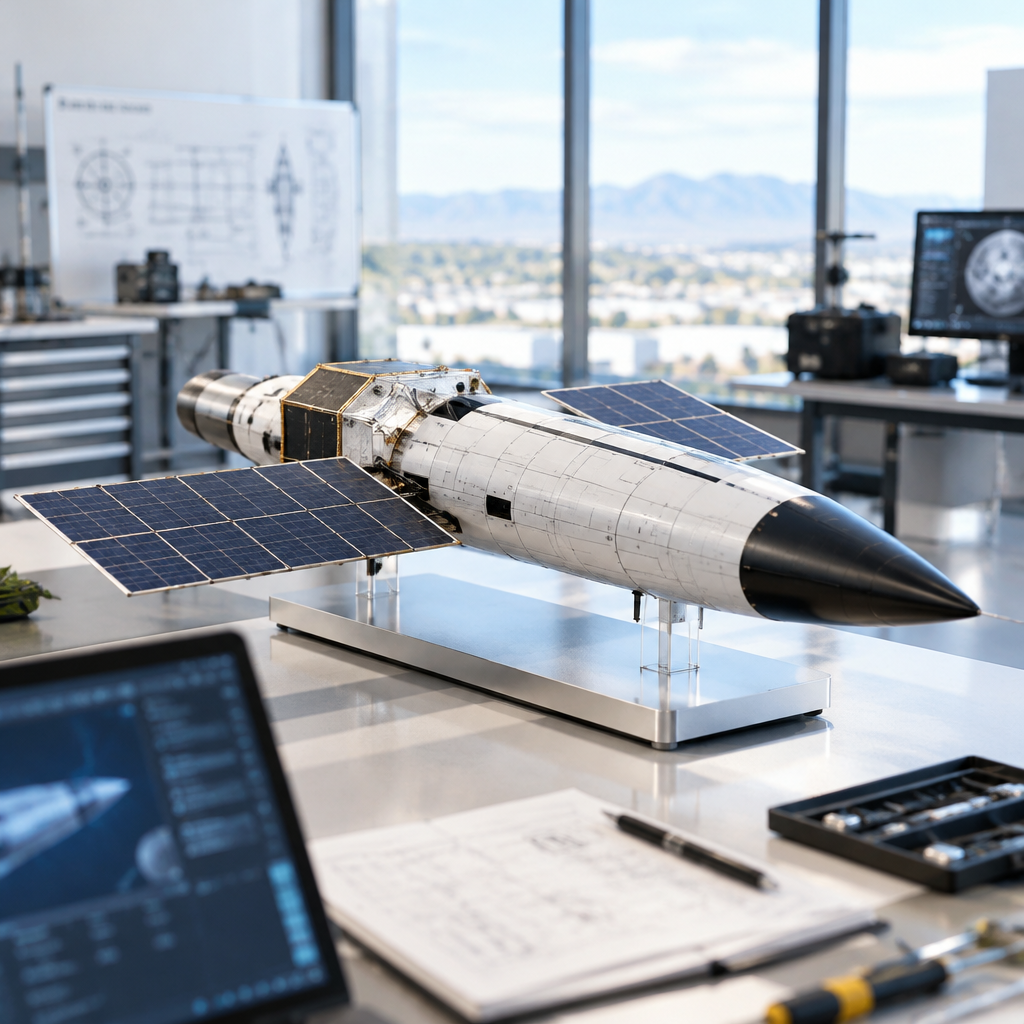
PODS would put conventional military payloads into low Earth orbit (LEO) and return them through the atmosphere when commanded, offering a different approach to long-range precision strike. ATMOS’s Phoenix program — built around a reusable orbital transfer and return vehicle (OTRV) and atmospheric re-entry technology — is named as the commercial starting point for those capabilities. ATMOS has demonstrated that its re-entry technology can survive orbital flight and atmospheric entry using an Inflatable Atmospheric Decelerator (IAD), and its Phoenix I capsule has flown. The companies say PODS is a dedicated defense initiative, separate from the civilian Phoenix program.
The concept deliberately recalls earlier ideas: the Soviet Fractional Orbital Bombardment System (FOBS), later Chinese work on FOBS, and U.S. proposals for orbital kinetic bombardment (often called "Rods from God"). PODS, by contrast, would draw on modern commercial orbital transportation and re-entry systems and focus on conventional, non–weapons-of-mass-destruction payloads.

This site is the portfolio.
OSINTSights runs on Cloudflare Workers, D1, R2, and Vectorize, with an AI pipeline on Hetzner ARM. Nubivance designed, built, and operates it. We do the same for clients.
See what we buildEngineering, targeting, and operational constraints
The announcement underscores a wide gulf between returning cargo from orbit and delivering a weapon precisely at a predictable time and place. Re-entry vehicles face extreme heating, rapidly changing aerodynamic conditions, and enormous stresses; maintaining predictable flight characteristics through that envelope is a substantial engineering challenge. Introducing military payloads adds further uncertainties: their survivability during re-entry, integration with the vehicle, and how accuracy would be achieved.
ATMOS CEO Sebastian Klaus reportedly described a system intended to reach targets anywhere on Earth in less than 60 minutes. The source notes satellites in LEO travel at roughly 17,500 miles per hour, but warns that predictable response times depend on orbital inclination, spacecraft positioning, the availability of suitably positioned vehicles, re-entry requirements, and more. Achieving genuinely responsive global coverage could therefore require a substantial constellation and significant launch and replenishment infrastructure.
German reporting cited by the companies suggests the concept could eventually involve "dozens" of capsules operating in LEO. It is unclear from the announcement whether PODS would use recoverable capsules that release payloads and return, or expendable one-way deliveries.
Strategic, legal, and survivability implications
The proposal raises legal and strategic questions that the companies acknowledge only in outline. The 1967 Outer Space Treaty prohibits placing nuclear weapons and other weapons of mass destruction in orbit, but it does not contain an equivalent blanket prohibition on conventional weapons. The announcement stresses that international law governing use of force and conduct of hostilities would remain applicable.
From a survivability perspective, satellites in LEO are relatively easy to track and follow predictable paths. The source observes that such predictability could make on-orbit platforms vulnerable to counterspace capabilities. That vulnerability must be weighed against the advantages the firms cite: rapid reach, unconventional approach trajectories, extreme speed, and what one analyst in the announcement called "unpredictability" — attributes that could make strikes hard to defend against.
The announcement also frames the initiative in a strategic context: it is presented as part of efforts to build sovereign European military capabilities and reduce dependence on external suppliers. The source notes that weaponization of space is becoming more common and references Chinese and Russian activities, while also saying "the United States has admitted to having orbital weapons now and the future Golden Dome will include space-based interceptors."
What this means for technologists, policymakers, and European armed forces
- Technologists and program managers: Expect feasibility studies focused on system architecture, payload integration, and re-entry guidance. ATMOS brings demonstrated IAD re-entry tech and a flown Phoenix I capsule; MBDA brings missile and guidance experience — the cooperation aims to combine those assets.
- Policymakers and regulators: They will confront questions about space norms and legal interpretation. The announcement makes clear that treaty constraints on weapons of mass destruction remain, but it leaves open how conventional orbital payloads would be regulated and perceived internationally.
- European armed forces and procurement leaders: The concept is presented as a "silver bullet" option for extremely high-value or time-sensitive targets, but the announcement flags large infrastructure, launch, and replenishment demands and no disclosed budget or timetable — factors that will shape procurement decisions.
The cooperation between ATMOS Space Cargo and MBDA Deutschland formalizes a test of where commercial orbital transport and military strike ambitions might meet. The immediate next step is study: feasibility work on architecture, payloads, and demonstrations. Whether that work produces a practical, cost-effective, and legally supportable operational capability remains to be seen — and the announcement leaves open core questions about numbers, survivability, and timing.