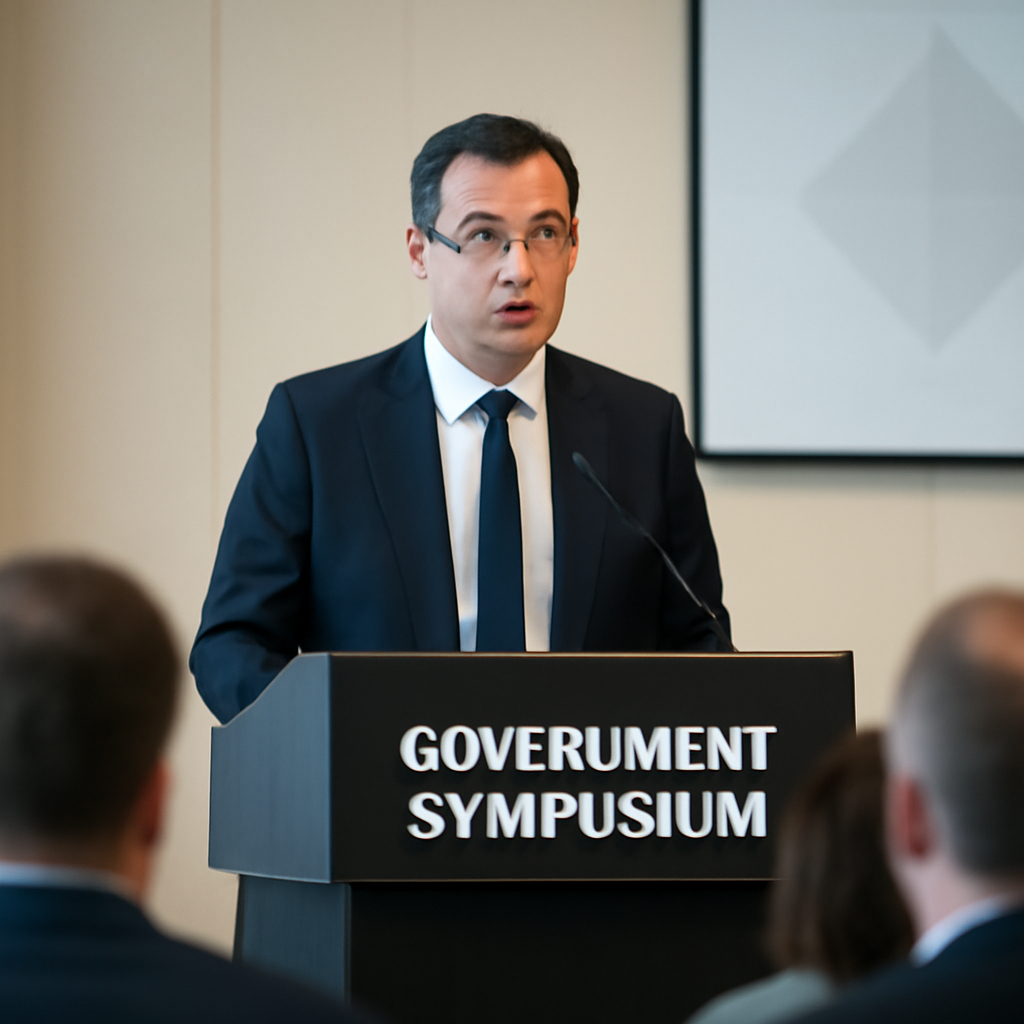
"Government executives, they tend to be using their personal devices. They're on Signal," Eftychis Gregos Mourginakis told Defense One at a symposium in Honolulu — a blunt opening line that frames the central tension his company designed Kibu to solve.
Kibu's architecture and verification features
Kibu is an encryption-first messaging app that its co-founder describes as going beyond device-to-device encryption to verify the identity of who — or what — is on the other end of a conversation. Per Mourginakis, the app combines biometric authentication with organizational identity controls; organizations can layer their own requirements, such as the Common Access Card (CAC) requirement, onto the platform.
The app supports special safety measures: it is not tied to a device SIM card, phone number, or even a PIN, and it offers "special passcodes in case the user has their own phone or device but is in a situation where someone else is trying to access it against their will." Different organizations can host Kibu in different cloud environments, and Mourginakis said that if an organization signs an agreement, "all of their end users on this platform are totally air-gapped."
AI-scaled deception: the specific threat Kibu targets
A current military official who tracks adversary disinformation campaigns told Defense One that "AI has made deception scalable. We’re no longer just fighting phishing emails, we're fighting synthetic voices, cloned faces, and entire fake identities convincing enough to fool the people who know the real person best." The official framed synthetic audio and video as a rising operational risk that traditional secure messaging does not address by itself.
Kibu's verification features are explicitly designed with that problem in mind: the app aims to ensure "that person—or AI agent—you’re talking to is who they say they are," using a mix of encryption, biometrics, and organizational controls to make impersonation harder to execute or accept.

This site is the portfolio.
OSINTSights runs on Cloudflare Workers, D1, R2, and Vectorize, with an AI pipeline on Hetzner ARM. Nubivance designed, built, and operates it. We do the same for clients.
See what we buildDirty networks, Signal, and allied communications in Poland
The operational context for Kibu includes an existing practice of using consumer apps across coalition lines. The reporting notes that U.S. operators in Poland and elsewhere have communicated with Ukrainian counterparts on Signal because of its availability on regular consumer phones. But those conversations "may occur over networks that the U.S. military doesn’t own, so-called dirty networks," a constraint highlighted repeatedly at the Global SOF Indo-Pacific Irregular Warfare Symposium.
Symposium participants emphasized a recurring problem for operations with allied militaries: when allied partners lack access to U.S. top-secret communications platforms, operators fall back to commercial tools that lack the layered identity and hosting controls Kibu promises.
How U.S. special operators are testing Kibu now
Mourginakis said a small number of U.S. special operators are now testing Kibu. The app is available to U.S. military operators and foreign military partners, positioning it as a bridging tool for coalitions that cannot rely on shared classified networks.
Beyond person-to-person messaging, Mourginakis described features that incorporate controlled AI use: individuals can build their own agents inside the environment "to communicate with unmanned weapons but still report back to the human operator." He added that those agents can be sandboxed and require biometric proof, and that the app supports group decision mechanics — "a decision quorum" — so a specified number of people must approve certain actions before they are committed.
What this means for U.S. military members, foreign partners, and civilian users
- U.S. military members: Small-scale tests with special operators show an appetite for tools that pair encryption with identity assurance and air-gapped hosting; operators working with allies on "dirty networks" may use Kibu to mitigate impersonation and synthetic-identity risk.
- Foreign military partners: Kibu's model of per-organization hosting and optional identity layers (for example, CAC integration) offers a path to secure coalition communications when partners lack access to U.S. classified comms infrastructure.
- Civilian users: Mourginakis suggests a market shift — "Now because of that and the rise of AI slop, the biggest premium service is going to be privacy, trust, security as a service" — signaling that privacy-focused apps may find consumer demand beyond purely military buyers.
For now, Kibu sits at the intersection of two pressures laid out at the Honolulu symposium: the increasing sophistication of AI-enabled impersonation, and the operational reality that many allied conversations happen outside U.S.-controlled networks. The app packages encryption, biometrics, sandboxed AI agents, quorum-based decision workflows, and flexible hosting into a single offering aimed first at special operators and foreign partners — and possibly at a privacy-conscious civilian market.
The question the facts leave hanging is practical and concrete: can a platform that promises air-gapped, organization-hosted environments and biometric verification scale from a small set of special-operations tests to broader military and civilian use while retaining the layered controls Mourginakis describes?
Read the original Defense One story: https://www.defenseone.com/technology/2026/08/privacy-focused-communication-app-aims-military-customers-and-beyond/415686/