"As demand is growing, not only to meet the current commitments we have with customers, but also looking to the future, looking ahead [at] what’s coming, we are in ramping up mode,” Marcio Monteiro, the chief marketing officer of Embraer’s defense division, said on June 10 in São José dos Campos.
Embraer’s production targets: six now, ten by decade’s end
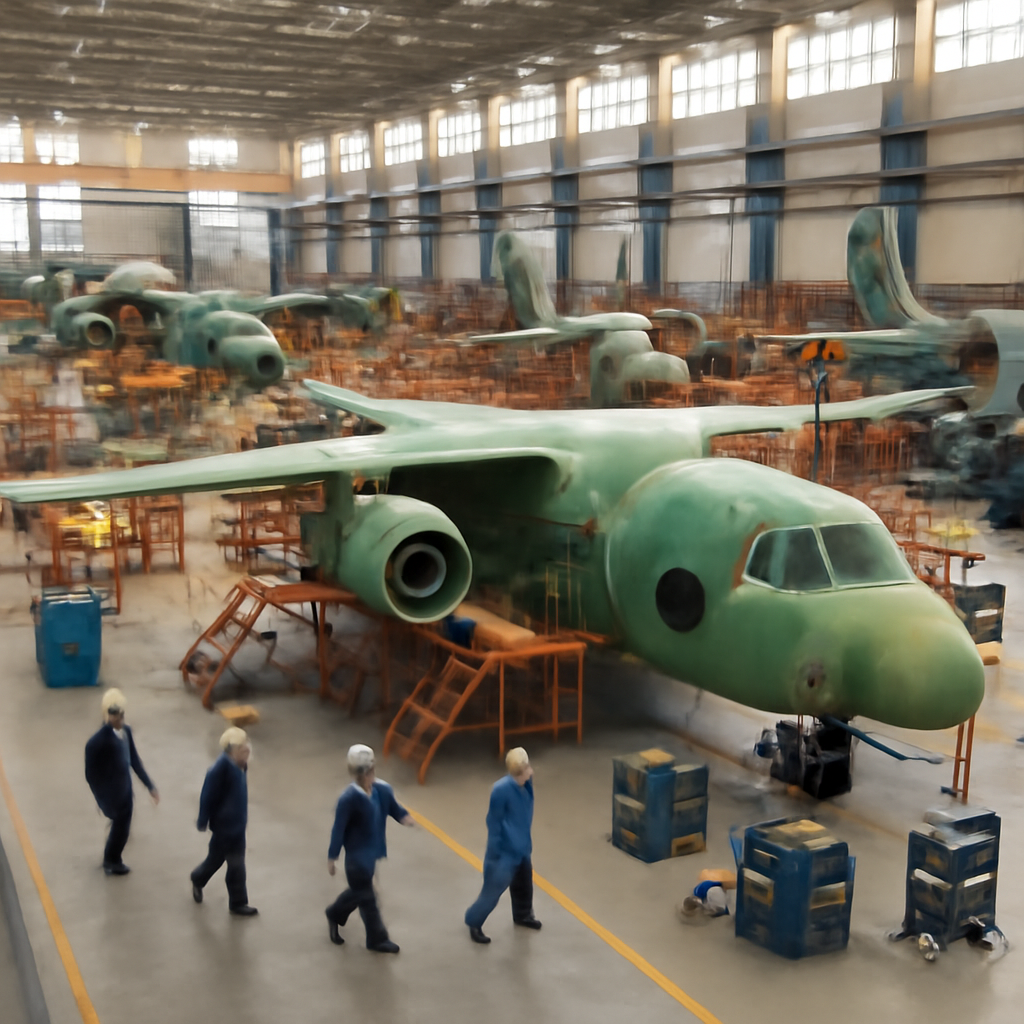
Embraer told reporters it plans a steady increase in KC-390 Millennium output. The company expects to build six aircraft this year and to reach a production rate of 10 aircraft per year “towards the end of the decade,” Monteiro said. That planned ramp reflects what Embraer describes as growing global demand and existing customer commitments.
Breaking Defense noted the briefing took place at Embraer’s facilities in Brazil and that, like other media, it accepted accommodations from Embraer for a media tour.
Commercial momentum: wins, deliveries and open competitions
The Millennium has recently recorded a run of competitive successes: the company cited wins in Sweden last year and in the UAE in May. Embraer expects deliveries this year to the Czech Republic, Uzbekistan and South Korea. One day after Monteiro’s remarks, Greek officials greenlit procurement of three Millenniums, and a competition in India remains open.
On market sizing, Embraer projects a total addressable market of as many as 450 KC-390s over the next two decades. Monteiro described that estimate as “conservative” and explicitly excluded the United States from that projection.

This site is the portfolio.
OSINTSights runs on Cloudflare Workers, D1, R2, and Vectorize, with an AI pipeline on Hetzner ARM. Nubivance designed, built, and operates it. We do the same for clients.
See what we buildNorthrop Grumman partnership: adding a boom to broaden refueling
The KC-390 today operates as a tactical airlifter and can refuel other aircraft using a hose-and-drogue system. Embraer is studying a new configuration in partnership with Northrop Grumman to outfit the aircraft with a dedicated refueling boom — a telescopic fuel rod that would enable the Millennium to refuel a wider range of aircraft.
Embraer and Northrop are conducting a study that Monteiro said is “drilling” into cost sharing for development and technical assessments of the boom’s configuration. Embraer wants to ensure the boom does not interfere with the KC-390’s multi-mission roles such as cargo transport, and that it would be retrofittable to previously delivered aircraft.
When that partnership was announced, Embraer and Northrop officials emphasized that a boom-equipped KC-390 would be useful to Millennium operators in Europe who need to refuel fleets that include F-35 stealth fighters.
Why the United States matters: assembly offers and procurement uncertainty
Embraer has signaled a willingness to open a dedicated US assembly line for the KC-390 if Washington places an order. Company officials said American demand would likely dwarf that of other customers, making the US market potentially lucrative — a factor that bears on whether to proceed with costly boom development.
At the same time, Monteiro acknowledged uncertainty: how dependent the boom business case would be on a US market order is a question the company hopes the study with Northrop will answer. He also noted that an Air Force program to field a next-generation tanker represents a more immediate opportunity but is “somewhat in limbo.”
A-29 Super Tucano production in Jacksonville and the limits of demand
Separately, Embraer and Sierra Nevada Corporation (SNC) manufacture the A-29 Super Tucano light attack aircraft in Jacksonville, Florida. Embraer projects a total addressable market of roughly 500 Super Tucanos over the next two decades, but company officials have repeatedly warned that a lack of orders threatens the future of the Jacksonville line.
“Of course that facility cannot stay without any orders, I mean, forever,” Monteiro said, adding that a time will come to discuss the plant’s future with American partners and the US government. For now, he emphasized, the facility is still “open and running.”
What this means for operators, the US Air Force, and Embraer
- Operators in Europe and other KC-390 customers: a boom-equipped KC-390 would expand refueling compatibility, notably with F-35 operators, but operators should watch whether a development program proceeds and whether retrofits become available for in-service airframes.
- The US Air Force and US special forces: their potential interest is central to Embraer’s commercial calculations — an American order could trigger a domestic assembly line and materially affect the boom business case.
- Embraer management and partners (Northrop, SNC): they face concrete choices about cost sharing, technical integration of a boom, and the commercial viability of the Jacksonville A-29 line if customer orders do not materialize.
Embraer’s position is straightforward: demand is rising now, but a number of strategic bets — developing a boom in partnership with Northrop Grumman, courting the American market with a potential US assembly line, and preserving the Jacksonville A-29 facility — hinge on outcomes the company and its partners must still quantify. The study Embraer is conducting with Northrop will be the immediate test of whether those bets make economic and operational sense.