"Conflicts are now a first resort in many cases. Diplomacy and dialog are being delegitimized," said Pierre Krähenbühl, and that warning framed two days of unusually frank conversation in Doha about the health of the international order.
Warnings from the International Committee of the Red Cross and conference context
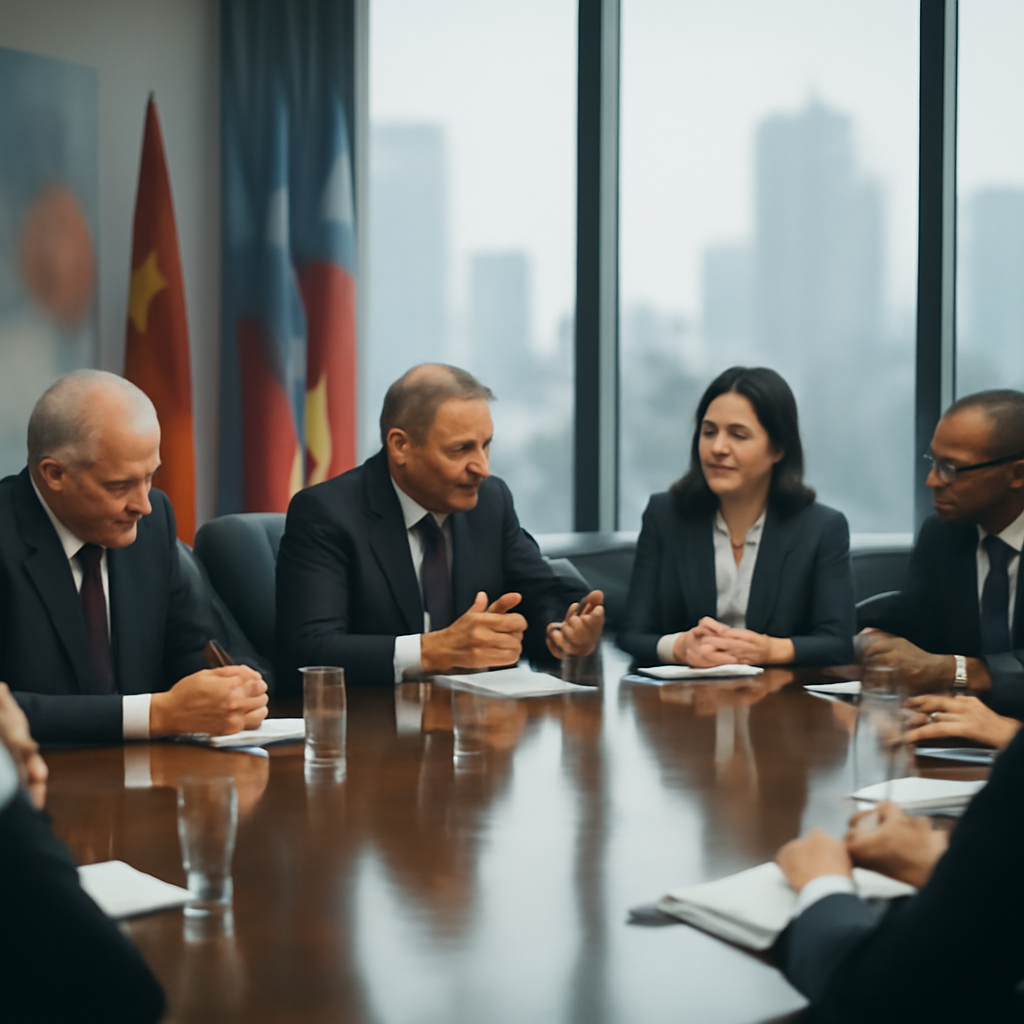
At the Global Security Forum in Doha — hosted by the Soufan Center and the Qatar International Academy for Security Studies — diplomats, government officials and humanitarian workers laid out a single, stark theme: international norms and humanitarian law are losing influence at the very moment increasingly capable military options have become easier to access. Krähenbühl, director-general of the International Committee of the Red Cross, delivered a blunt diagnosis that diplomacy is being displaced by force.
Sir John Sawers on U.S. commitment and allied recalculation
Sir John Sawers, former chief of Britain's MI6 intelligence agency, told the forum that partners in the Gulf are reassessing their reliance on Washington. He said the United States is showing a declining commitment to traditional security guarantees even as the eight‑month‑old U.S.-Israeli war against Iran has exposed Gulf partners to new threats. "Saudi Arabia, Qatar, and the United Arab Emirates are reconsidering their security relationships with Washington," Sawers said, adding that the attacks on those countries "have been provoked by a U.S‑instituted war of choice against Iran."
Sawers also framed the problem as institutional and psychological: one of the challenges to the rules-based order is "the United States losing confidence in the system which they designed and which has benefited America enormously." He rejected the notion that Europe's rearmament is merely a reaction to external political pressure, saying instead that European defense investment is driven by a greater threat from Russia and by a perception that "the reliability of the United States is less than it was before."

Audit-ready is a season. It shouldn't be.
Evidence in spreadsheets, controls drifting between audits, frameworks multiplying on flat headcount. Nubivance runs continuous compliance on Rapid7 Cyber GRC - SOC 2, HIPAA, ISO 27001, PCI, CMMC.
End the scrambleLebanon, Qatar and the erosion of mediator protection
Speakers from the Middle East described an erosion in the protections that once came with neutrality or mediation. Deputy Prime Minister Tarek Mitri of Lebanon argued that the pattern of alliances has shifted: "The war in Lebanon today and on Lebanon shows that there are countries, Israel is a case in point, that do not need alliances, for they are engaged in an offensive war, and alliances in today's world are largely defensive." Lebanon itself, Mitri noted, remains partly occupied by Israeli forces.
Qatar — the forum's host — used the platform to underscore a new vulnerability. Sheikh Saoud bin Abdulrahman Al Thani, Qatar's deputy prime minister and minister of state for defense affairs, said Doha's long effort to act as a mediator no longer shields it. "The capital came under attack by Israel in 2025, and six months later by Iran," he said, calling out three specific threats to Qatar: attacks on its sovereignty, disruptions to energy flows from Gulf Cooperation Council countries, and the spillover of regional conflicts.
Diplomatic exit routes offered — and tempered — by Tom Barrack
Tom Barrack, the U.S. special envoy for Syria and Iraq, laid out a limited diplomatic roadmap intended to reduce immediate violence: a ceasefire, reopening the Strait of Hormuz, and easing economic pressure on the Iranian people. But Barrack warned against expecting a tidy settlement. "What we know in the Middle East is there's no such thing as a deal. There's no event. This process is going to continue," he said, underlining that any agreement would likely be a protracted sequence rather than a single turning point.
Nick Warner's blunt assessment of the Iran war and what it implies
Nick Warner, former director-general of Australia's Office of National Intelligence and a former ambassador to Iran, delivered one of the forum's starkest lines: "And the answer to how does the war with Iran end is: it doesn't." Warner's statement echoed a broader pessimism at the conference about resolving the current conflicts through standard negotiated outcomes.
How Gulf governments, European capitals, and humanitarian organizations are responding
- Gulf governments (Saudi Arabia, Qatar, UAE): per Sir John Sawers and Sheikh Saoud, these states are reassessing security relationships with the United States and confronting direct threats to sovereignty, energy flows and regional spillover — prompting practical recalculations of whom to trust and how to secure national interests.
- European capitals: Sawers said Europe is increasing defense spending because the threat from Russia "is much greater than it was before" and because of doubts about U.S. reliability; that calculation is driving a rearmament dynamic separate from partisan pressure.
- Humanitarian organizations (ICRC and peers): led by the ICRC's Krähenbühl, humanitarian actors are sounding alarms that diplomatic mechanisms and norms protecting civilians are being delegitimized as force becomes a first resort.
The Doha conversations offered a clear throughline: military options are expanding in reach and appeal just as faith in long-standing diplomatic architectures weakens. Attendees described a world in which mediation no longer guarantees safety, alliances are being reappraised, and pathways out of conflict are likely to be long and contested rather than swift or definitive. The question left by these assessments is urgent and simple: if the guarantors and mediators that once underwrote stability are losing credibility or capability, who or what will take their place?